
Post-ICU Cognitive Rehabilitation: Motor-Cognitive Dual-Task Training
In short
Rehabilitate post-ICU cognitive impairment. Integrate physical exercise with cognitive dual-tasking, executive function, and memory drills in India.
In this guide (2 sections)
Post-Intensive Care Syndrome-Cognitive (PICS-C), manifesting as persistent deficits in executive function, working memory, attention, and processing speed, affects up to 80 percent of ICU survivors at discharge and remains clinically apparent in over one-third of patients at one-year follow-up. Combining physical exercise with simultaneous cognitive dual-task challenges leverages neuroplasticity to rebuild cognitive-motor integration.
Neuroinflammation, White Matter Microvascular Injury, and Dual-Task Costs
Critical illness damages the central nervous system through systemic neuroinflammation, blood-brain barrier disruption, microvascular hypoperfusion, and prolonged delirium. Neuroimaging reveals hippocampal atrophy and diffuse axonal white matter injury in the prefrontal cortex and corpus callosum. In daily life, walking and motor tasks require continuous prefrontal cognitive oversight. When cognitive reserves are depleted, patients experience severe dual-task interference: performing a mental task while walking drastically slows gait speed, destabilizes balance, and precipitates falls.
| Dual-Task Tier | Motor Task Component | Simultaneous Cognitive Challenge | Target Neurological Domain | |
|---|---|---|---|---|
| Tier 1: Seated Orientation | Supported edge-of-bed sitting or chair sitting | Naming family members, reciting days of week forward and backward | Attentional focus, basic semantic memory retrieval | |
| Tier 2: In-Bed Cycling | Motor-assisted cycle ergometry (20 RPM) | Counting backward by 2s from 30, naming fruits or vegetables | Working memory, motor-rhythm coordination | |
| Tier 3: Standing Balance | Standing at walker with narrow foot base | Spelling words backward ('W-O-R-L-D'), category generation drills | Postural control under executive attentional load | |
| Tier 4: Dynamic Walking | Corridor ambulation with or without walking aid | Serial 3 subtractions (100 - 3), conversational obstacle avoidance | Complex prefrontal cognitive-motor integration, fall prevention |
Structuring Motor-Cognitive Dual-Task Rehabilitation
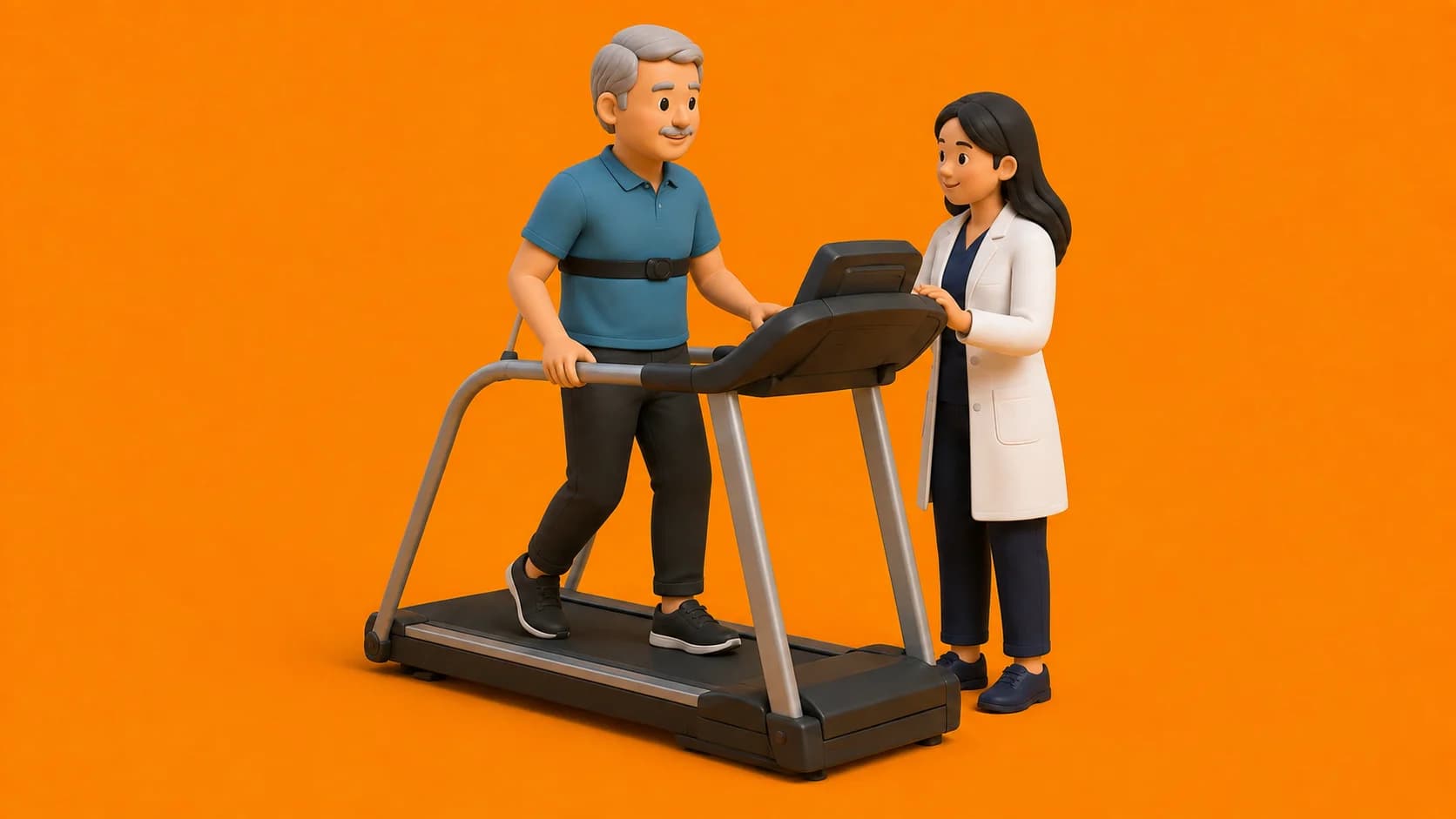
Rehabilitation is administered in a graded, error-controlled manner. The clinician first measures baseline performance of the physical motor task alone (such as walking velocity or standing balance duration) and the cognitive task alone. Dual-tasking is then introduced, challenging the patient to perform both simultaneously. The therapist provides feedback, encouraging the patient to maintain steady physical cadence without allowing balance to deteriorate.
Supported Seated Tapping with Alternating Number-Letter Sequencing
Objective: Reactivate prefrontal executive flexibility and improve motor coordination under cognitive load.
- 1Sit upright in a supportive chair with hands resting on thighs and feet flat on the floor.
- 2Begin tapping alternating feet rhythmically on the floor (right, left, right, left).
- 3While maintaining this steady foot-tapping rhythm, instruct the patient to alternate numbers and letters aloud: '1 - A, 2 - B, 3 - C, 4 - D, 5 - E.'
- 4Prompt the patient to maintain continuous rhythmic foot tapping without freezing when thinking of the next letter.
- 5Gradually extend the sequence up to '10 - J' over consecutive days.
Domestic Recovery in India and Multigenerational Support
In Indian joint families, recovering elders are surrounded by vibrant social interaction, which can be utilized as a natural cognitive rehabilitation environment. Family members can engage the elder in nostalgic storytelling, asking them to recall childhood memories, identify relatives in old photo albums, or solve simple arithmetic problems while performing their morning hallway walking drills.
Long-Term Trajectory and Cognitive Resilience
While cognitive recovery post-ICU is gradual, integrating physical exercise with dual-task training significantly accelerates neurocognitive recovery compared to sedentary cognitive training alone. Patients regain executive confidence, enabling safe return to managing household finances, driving, and professional duties.
Always maintain close hands-on contact guarding during standing or walking dual-task exercises. Cognitive distraction significantly increases postural sway and can trigger sudden unexpected balance loss.
Why is physical exercise so effective for post-ICU cognitive recovery?
Physical exercise stimulates systemic release of brain-derived neurotrophic factor (BDNF), vascular endothelial growth factor (VEGF), and irisin from active skeletal muscle, promoting hippocampal neurogenesis, synaptic plasticity, and cerebral capillary regeneration.
Do I need a doctor referral to consult a home physiotherapist in India?
Under the National Commission for Allied and Healthcare Professions (NCAHP) Act 2021, patients in India enjoy direct access to registered physiotherapists without requiring a mandatory doctor referral. At BookPhysio.in, you consult verified physiotherapists and pay directly per session without hidden fees or platform commissions.
Related condition guides



Related recovery guides & articles
BookPhysio.in Editorial Team
The BookPhysio.in editorial team writes and maintains this content, checking it against reliable clinical sources. Content follows our medical review policy: general information only, and no page claims a clinical review until a named registered physiotherapist has signed it off.
Read our medical review policy