
Post-Traumatic Dizziness Differentiation PCS vs Perilymph Fistula
In short
Differentiating central post-concussion dizziness from a structural perilymph fistula is vital to avoid dangerous exertional testing in inner ear ruptures.
In this guide (6 sections)
Dizziness is reported by over 80 percent of patients following a concussion, representing the single greatest predictor of prolonged recovery. However, post-traumatic dizziness is not always a functional central issue of post-concussion syndrome. Blunt head trauma, rapid barometric shifts, or severe whiplash forces can induce structural mechanical lesions within the peripheral auditory and vestibular apparatus, most notably a Perilymph Fistula (PLF). A perilymph fistula is an abnormal breach or micro-tear in the oval or round window membranes separating the fluid-filled inner ear from the air-filled middle ear cavity. Administering exertional treadmill testing or aggressive vestibular rehabilitation to a patient with an unmanaged perilymph fistula can precipitate permanent sensorineural hearing loss. Conducting a precise clinical differential examination is an absolute safety requirement.
Domestic and Cultural Realities in Indian Concussion Recovery
In India, patients experiencing post-traumatic dizziness are frequently prescribed long courses of vestibular suppressant medications (such as cinnarizine or betahistine) by general practitioners without undergoing differential vestibular testing. Furthermore, domestic habits, such as performing forceful nasal clearing during morning ablutions, practicing intense Kapalbhati or Bhastrika pranayama breathing exercises, or straining during bowel movements on Indian-style toilets, dramatically elevate intracranial and middle ear pressures. In a patient with an undetected perilymph fistula, these domestic pressure-increasing activities force perilymph fluid into the middle ear, provoking sudden violent vertigo, drop attacks, and progressive hearing loss.
Clinical Pathophysiology and Autonomic Dysregulation Mechanisms
The pathophysiological distinction between post-concussion dizziness and a perilymph fistula centers on pressure sensitivity versus motion and cardiovascular sensitivity. Post-concussion dizziness is driven by central sensory mismatch, vestibulo-ocular reflex disruption, or impaired cerebrovascular autoregulation during physical exertion. Symptoms correlate with heart rate elevation or visual motion complexity. In contrast, a perilymph fistula represents a mechanical hydraulic defect: physical breaches in the round or oval window permit fluctuations in middle ear pressure to transmit directly into the inner ear perilymphatic space. Patients exhibit classic signs: Tullio phenomenon (sound-induced vertigo triggered by loud noises, such as vehicle horns) and Hennebert sign (vertigo or nystagmus induced by pneumatic otoscopy or tragal ear canal compression). Furthermore, perilymph fistula is almost universally accompanied by fluctuating low-frequency sensorineural hearing loss and roaring tinnitus, features entirely absent in pure post-concussion syndrome.
Never conduct a Buffalo Concussion Treadmill Test if the patient exhibits sound-induced dizziness (Tullio phenomenon), pressure-induced vertigo (Hennebert sign), or sudden fluctuating hearing loss. These findings indicate a suspected perilymph fistula; all physical exertion is strictly contraindicated pending urgent ENT and otology review.
Targeted Sub-Symptom Threshold Progression Protocol
Gentle Non-Exertional Vestibular Screening and Safety Assessment
Objective: Screen for inner ear pressure sensitivity and rule out structural perilymph fistula prior to physical rehabilitation.
- 1Document detailed otological history: screen for recent loud pop sensations in the ear during trauma, fluctuating hearing loss, or roaring tinnitus.
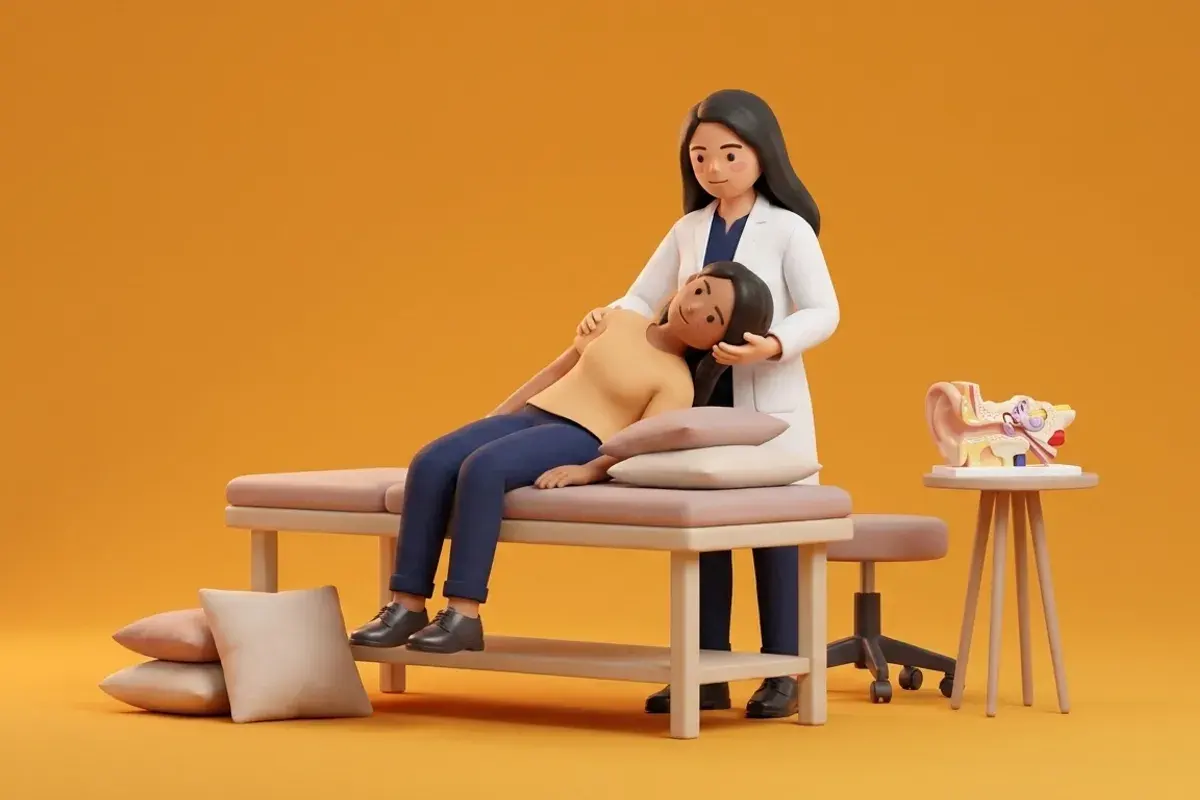
- 2Perform a gentle tragal pressure test: press the cartilaginous tragus firmly over the external auditory meatus to seal the canal, applying gentle pneumatic compression.
- 3Observe the patient’s eyes under Frenzel goggles or infrared video-oculography for conjugate deviation or horizontal-torsional nystagmus (positive Hennebert sign).
- 4Inquire whether sudden loud sounds (such as loud horn honking or alarms) induce instant dizziness or room-spinning sensations (Tullio phenomenon).
- 5If pressure and acoustic tests are completely negative, proceed with standard seated Vestibular Ocular Motor Screening (VOMS) and gentle cervical testing.
Clinical Protocol and Benchmark Staging
| Diagnostic Feature | Post-Concussion Syndrome (PCS) | Perilymph Fistula (PLF) | Clinical Safety Action |
|---|---|---|---|
| Primary Symptom Trigger | Cardiovascular exercise, elevated heart rate, complex visual motion | Pressure changes: straining, nose blowing, lifting, coughing, loud noise | PLF mandates complete physical rest, elevation of bed, and stool softeners |
| Auditory Findings | Hearing typically intact; bilateral high-pitch tinnitus or phonophobia | Fluctuating sensorineural hearing loss, aural fullness, roaring tinnitus | PLF requires immediate formal pure-tone audiometry and high-resolution temporal CT |
| Response to Exertion | Reproducible symptom flare at identifiable BCTT heart rate threshold | Severe instantaneous vertigo, nausea, and drop attack during valsalva | Exertional aerobic testing is safe in PCS; strictly contraindicated in PLF |
Red Flags and Specialist Medical Escalation
Immediate emergency otolaryngology (ENT) escalation is mandatory if a patient develops sudden profound unilateral deafness following head trauma, acute facial nerve paralysis, clear watery fluid draining from the external ear canal (CSF otorrhea), or intractable vertigo accompanied by continuous spontaneous nystagmus. These presentations indicate temporal bone basilar skull fractures or complete inner ear membrane rupture requiring urgent surgical intervention.
Frequently Asked Questions
How is a perilymph fistula medically treated if diagnosed?
Initial management involves strict bed rest with the head of the bed elevated at 30 to 40 degrees for 10 to 14 days, strict avoidance of all straining, coughing, and lifting, and use of stool softeners to allow spontaneous membrane healing. If conservative rest fails to seal the fistula and hearing loss progresses, surgical exploration and placement of a tissue graft over the oval or round window is indicated.
Can I book an autonomous vestibular physiotherapy assessment in India via BookPhysio.in?
Yes, patients across India can book direct consultations with verified vestibular and neuro-physiotherapists on BookPhysio.in without requiring a doctor referral. Under the National Commission for Allied and Healthcare Professions (NCAHP) Act 2021, registered physiotherapists are recognized independent primary contact practitioners. You pay transparently per session without advance packages or platform fees.
Related condition guides



Related recovery guides & articles
BookPhysio.in Editorial Team
The BookPhysio.in editorial team writes and maintains this content, checking it against reliable clinical sources. Content follows our medical review policy: general information only, and no page claims a clinical review until a named registered physiotherapist has signed it off.
Read our medical review policy