
Posterior Pelvic Tilt Re-Education for Lumbar Shear Reduction
In short
Mastering posterior pelvic tilt reduces damaging anterior shear forces in spondylolisthesis. Learn biomechanics, muscle recruitment, and postural training.
In this guide (4 sections)
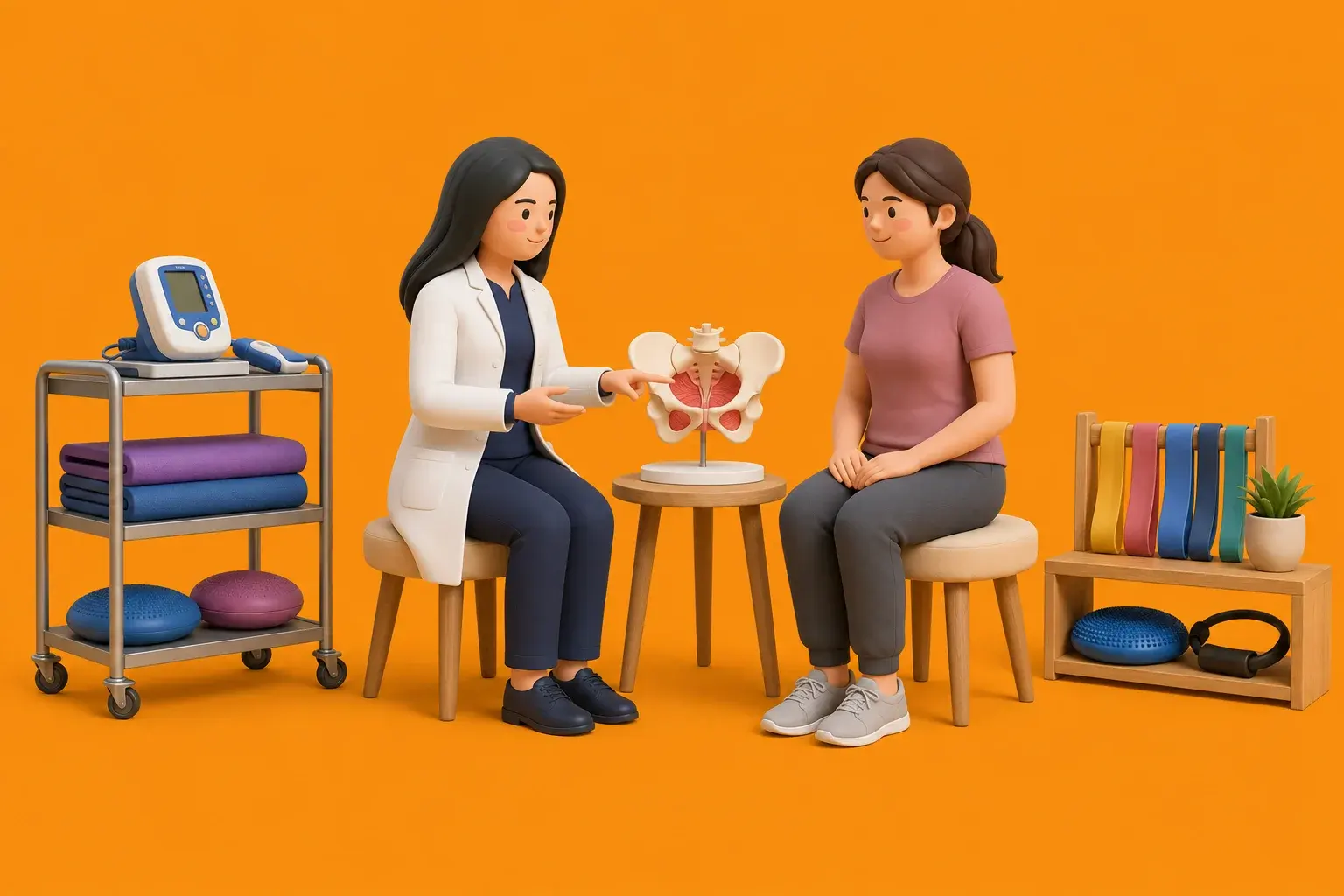
Posterior pelvic tilt re-education constitutes a foundational biomechanical intervention in the non-surgical management of lumbar spondylolysis and spondylolisthesis. The orientation of the human pelvis serves as the mechanical pedestal upon which the lumbar vertebral column rests, dictating the inclination of the sacral plateau. In individuals with excessive anterior pelvic tilt and accentuated lumbar lordosis, gravitational forces acting upon the upper body resolve into destructive anterior shear vectors that drive the fifth lumbar vertebra forward over the sacrum. By actively engaging the abdominal musculature and gluteal force couple to rotate the pelvis posteriorly, patients can significantly flatten the sacral slope, reducing anterior shear forces and decompressing vulnerable posterior spinal elements.
Indian Postural Habits, Prolonged Standing, and High Kitchen Sinks
In daily Indian household routines, postural habits frequently exacerbate anterior pelvic tilting and lumbosacral shear. Homemakers spend hours standing at high kitchen preparation counters or hand-washing dishes over sinks, naturally resting in a swayback posture with the pelvis shifted forward and tilted anteriorly. This passive resting habit allows the abdominal muscles to slacken completely, transferring the entire upper body weight onto the bony facet joints and the pars interarticularis. When walking through crowded outdoor markets or standing during extended religious pujas, individuals with weak gluteals unconsciously hyperextend their knees, further driving the pelvis into anterior tilt and triggering severe lower back exhaustion.
Sacral Slope Physics, Shear Vector Resolution, and Force Couple Mechanics
The physics governing anterior shear reduction through posterior pelvic tilting can be quantified using vector mechanics. The lumbosacral junction sits at an angle defined by the sacral slope, typically between thirty-five and forty-five degrees in healthy adults. Body weight acting vertically downward upon this inclined plane splits into two components: perpendicular compressive force and tangential anterior shear force. The shear force equals body weight multiplied by the sine of the sacral slope angle. When an anterior pelvic tilt increases the sacral slope to fifty degrees, the anterior shear vector surges dramatically. Performing a posterior pelvic tilt engages the rectus abdominis and gluteus maximus force couple, rotating the anterior superior iliac spines backward and reducing the sacral slope by ten to fifteen degrees, which instantly attenuates anterior shear.
Staged Kinematic Retraining, Standing Translation, and Gait Integration
Rehabilitation protocols for posterior pelvic tilt re-education follow a staged motor learning progression. Treatment begins in supported supine hooklying positions, utilizing tactile biofeedback to teach the patient to flatten the lumbar spine without breath-holding. Once the neuromuscular recruitment of the lower abdominals and gluteals is established, training advances to seated, quadruped, and standing postures. Clinicians instruct patients to adopt a soft, neutral pelvic stance during standing, imagining tucking their tailbone slightly between their heels while drawing the navel upward. Finally, this subtle posterior tilt is integrated into functional gait training, teaching patients to maintain reduced lumbosacral shear during walking, stair climbing, and household lifting.
Standing Wall-Supported Active Posterior Pelvic Tilt
Objective: Translate supine pelvic tilt motor control into functional upright standing alignment
- 1Stand with your heels placed four inches forward from a flat wall, resting your upper back and buttocks lightly against the wall.
- 2Notice the natural space or arch between your lower back and the wall surface.
- 3Place one hand across your lower abdomen and the other behind your lower back to feel the hollow.
- 4Gently tighten your lower abdominal muscles and squeeze your buttocks, rolling your pelvis backward.
- 5Flatten your lower back firmly into the wall, eliminating the hollow space completely, hold for 6 seconds, and release.
| Pelvic Tilt Position | Sacral Slope & Shear Force Vector | Clinical Impact on Spondylolisthesis |
|---|---|---|
| Anterior Pelvic Tilt (>45°) | Sacral slope is steepened; massive increase in anterior shear translation vector | Severe mechanical jamming of facet joints, pars pincer stress, accelerated slip progression |
| Neutral Pelvic Alignment (30-35°) | Balanced distribution between axial compression and manageable anterior shear | Physiological spinal alignment; optimal for long-term functional stability and athletic performance |
| Controlled Posterior Tilt (20-25°) | Sacral slope is flattened; dramatic reduction in tangential anterior shear forces | Decompresses posterior elements, widens neural foramina, provides immediate relief in acute slips |
| Excessive Posterior Slumping | Complete loss of lumbar lordosis with excessive posterior discal compression | Increases intradiscal pressure; risk of discogenic pain if maintained continuously |
While posterior pelvic tilting is highly effective for offloading extension shear in spondylolisthesis, overcorrecting into a continuous, rigid flat-back posture can create secondary problems. Habitually standing or walking with a completely tucked pelvis shifts compressive loads onto the anterior intervertebral disc margins, risking disc prolapse or hamstring contractures. Physiotherapists ensure the patient masters a balanced, dynamic neutral range rather than a frozen kyphotic posture.
Frequently Asked Questions
How does tucking my pelvis backward protect my fractured or slipped vertebra?
Your lower back vertebra rests on top of your sacrum, which naturally slopes downward like a steep ramp. In spondylolisthesis, gravity pulls your upper body weight down this ramp, forcing the slipped bone forward. When you tuck your pelvis backward into a slight posterior pelvic tilt, you physically flatten that ramp, tilting the sacrum into a more level position. This simple positional change instantly cuts down the forward sliding force, taking painful pressure off your unhealed pars bone and opening up space for compressed nerves.
Do I need a doctor referral to consult a spondylolisthesis physiotherapist on BookPhysio.in?
BookPhysio.in does not require a doctor referral. Under the National Commission for Allied and Healthcare Professions (NCAHP) Act 2021, patients across India enjoy direct access to autonomous registered physiotherapists. Through BookPhysio.in, you connect directly with verified clinicians and pay per session with transparent fees, completely free from advance package commitments, commission markups, or platform subscription charges.
Related condition guides



Related recovery guides & articles
BookPhysio.in Editorial Team
The BookPhysio.in editorial team writes and maintains this content, checking it against reliable clinical sources. Content follows our medical review policy: general information only, and no page claims a clinical review until a named registered physiotherapist has signed it off.
Read our medical review policy