
Telephysiotherapy for Peripheral Neuropathy: Validated Virtual Tests
In short
Virtual physiotherapy assessments provide accurate remote nerve screening. Learn validated camera angles, self-provocation tests, and clinical triage protocols.

In this guide (4 sections)
Geographical barriers, urban traffic gridlock, and mobility limitations frequently restrict access to specialized neuro-orthopedic clinical care. In India vast subcontinent, telephysiotherapy has emerged as a transformative healthcare delivery platform, connecting patients across tier-two and tier-three cities with expert hand and peripheral nerve physiotherapists. While hands-on physical palpation is traditionally viewed as mandatory, contemporary clinical evidence demonstrates that structured, video-based virtual consultations provide high diagnostic accuracy for upper limb entrapment neuropathies. Utilizing validated self-administered provocative tests, standardized camera positioning, and meticulous symptom mapping, clinicians can accurately triage nerve pathology, prescribe custom home rehabilitation, and monitor functional recovery remotely.
Bridging the Urban-Rural Healthcare Divide Across India
In India, specialized hand and neuro-orthopedic physiotherapists are predominantly concentrated within major metropolitan healthcare hubs like Delhi, Mumbai, Bengaluru, and Chennai. A patient residing in a distant tier-two or rural location with progressive hand tingling often faces arduous travel logistics, lost work wages, and high accommodation expenses simply to obtain an initial diagnostic opinion. Telephysiotherapy platforms like BookPhysio.in eliminate these geographic hurdles. Patients can consult registered, verified clinicians from the comfort of their living rooms, receiving immediate clinical triage, evidence-based splinting advice, and guided home exercise prescription without incurring travel disruption.
Diagnostic Validity of Virtual Provocative Tests and Sensory Mapping
Clinical validation studies confirm that video-based telephysiotherapy assessments achieve high sensitivity and specificity when compared directly with in-person clinical examinations. A structured virtual peripheral nerve battery evaluates four discrete clinical domains. First, subjective symptom mapping utilizes digital Katz hand diagrams, where the patient shades their exact distribution of numbness, clearly distinguishing median from ulnar dermatomes. Second, self-administered provocative tests, including the Self-Phalen Maneuver (pressing the backs of the hands together for 60 seconds) and the Self-Durkan Test (applying direct opposite-thumb pressure over the carpal tunnel for 30 seconds), reproduce local mechanical ischemia with diagnostic accuracy matching clinician-applied maneuvers. Third, motor power is evaluated via functional resistance tests (the paper pull test for Froment sign and resisted thumb palmar abduction). Fourth, video-guided visual inspection under oblique side-lighting reveals subtle thenar or interosseous guttering.
Structuring a Video Consultation: Camera Angles, Triage, and Guidance
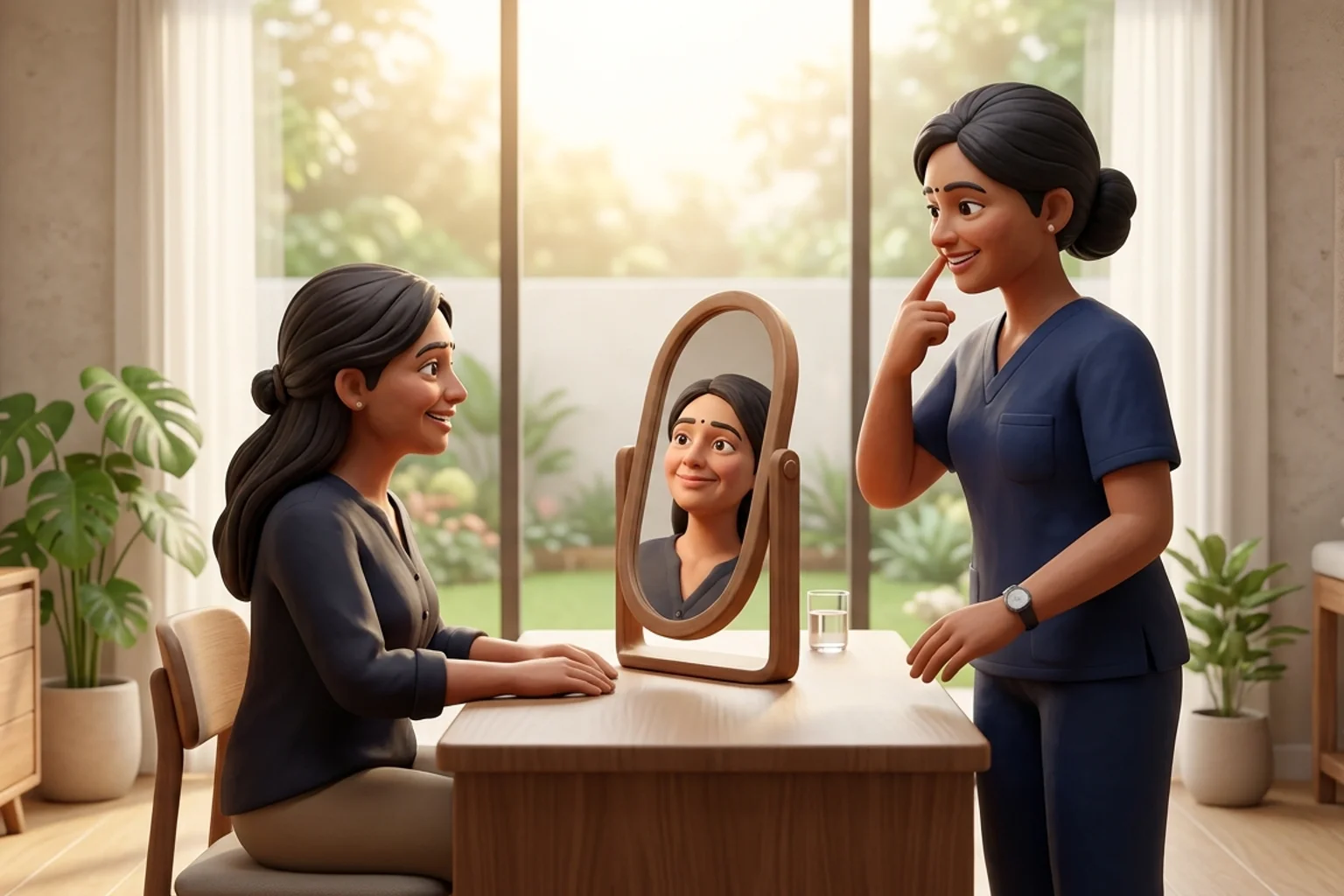
A successful telephysiotherapy consultation requires careful technical and environmental calibration. Prior to the session, the patient is instructed to position their webcam or smartphone at desk height with clear, bright side-lighting, ensuring that their neck, shoulders, elbows, and hands are fully visible in the video frame. The clinician guides the patient through active cervical spine range of motion to screen for Double Crush cervical radiculopathy, followed by guided self-palpation along the peripheral nerve beds. If the virtual evaluation confirms mild to moderate entrapment, the clinician demonstrates home neutral splinting modifications, prescribes Totten-Hunter nerve glides, and schedules remote video follow-ups spaced every 10 to 14 days.
Virtual Self-Administered Peripheral Nerve Screening Battery
Objective: Execute a standardized sequence of self-provocation tests and motor screens under virtual physiotherapist guidance
- 1Position your computer or phone camera 1 meter away, ensuring both of your hands and forearms are brightly illuminated and clearly visible on screen.
- 2Self-Phalen Test: Press the backs of your hands firmly together with wrists flexed at 90 degrees in front of your chest, holding steadily for 60 seconds.
- 3Self-Durkan Test: Use the firm thumb pad of your unaffected hand to press firmly into the center crease of your symptomatic wrist for 30 seconds.
- 4Paper Pinch Test: Grip a sturdy sheet of paper tightly between your thumb pad and the side of your index finger while gently pulling it away.
- 5Report immediately to your physiotherapist whether any tingling, electric buzzing, or thumb-bending compensations occurred during the maneuvers.
| Diagnostic Domain | Traditional In-Clinic Physical Test | Validated Virtual Telephysiotherapy Equivalent | Diagnostic Reliability |
|---|---|---|---|
| Carpal Canal Compression | Clinician-applied Durkan bilateral thumb compression test | Self-Durkan test: Patient applies firm opposite-thumb pressure over carpal tunnel | High concordance (>85 percent agreement with in-clinic test) |
| Flexion Provocation | Clinician-monitored 60-second passive wrist flexion (Phalen) | Self-Phalen maneuver with backs of hands pressed together in front of webcam | Identical diagnostic sensitivity (70 to 75 percent) |
| Ulnar Motor Deficit | Clinician attempts to pull paper from patient key pinch (Froment sign) | Virtual paper pull test: Patient pulls paper against opposite hand or family member | High visual accuracy; easily confirms compensatory thumb IP flexion |
| Thenar Muscle Bulk | Clinician palpation of thenar muscle tone and firmness | High-definition video inspection under oblique side-lighting for muscle guttering | Moderate to high; easily identifies moderate to severe thenar atrophy |
Telephysiotherapy has strict clinical boundaries. If a virtual examination reveals red flags, including sudden complete loss of hand motor power, trauma-induced wrist deformities, severe unexplained neck pain with hyperreflexia, or suspected acute carpal tunnel syndrome, the clinician must immediately abort virtual therapy and direct the patient to an in-person emergency department or orthopedic surgery hospital.
Frequently Asked Questions
How can a physiotherapist check my nerve problem accurately over a video call?
Your physiotherapist guides you through precise, validated self-tests that you perform on yourself while they watch on high-definition video. By observing your hand posture, seeing exactly where you point to your numbness, and watching how your fingers react when you press your wrist or pinch a sheet of paper, a skilled clinician can accurately diagnose your nerve condition.
Do I need a doctor referral to see a peripheral nerve physiotherapist on BookPhysio.in?
BookPhysio.in does not require a physician prescription. Under the National Commission for Allied and Healthcare Professions (NCAHP) Act 2021, patients across India enjoy direct access to autonomous registered physiotherapists. Through BookPhysio.in, you connect directly with verified clinicians and pay per session with transparent fees, completely free from advance package commitments, commission markups, or platform subscription charges.
Related condition guides


Related recovery guides & articles
BookPhysio.in Editorial Team
The BookPhysio.in editorial team writes and maintains this content, checking it against reliable clinical sources. Content follows our medical review policy: general information only, and no page claims a clinical review until a named registered physiotherapist has signed it off.
Read our medical review policy