
Retrofitted Mobility Trikes in India: Transfer Methods and Scooter Mounting
In short
Retrofitted mobility scooters with auxiliary rear wheels provide affordable personal transport across India, requiring specialised mounting and transfer techniques.
In this guide (6 sections)
Across India, the retrofitted motorized scooter trike, a standard 110cc to 125cc gearless two-wheeler modified with two auxiliary outrigger wheels, represents the most popular, cost-effective mode of independent personal transport for individuals with paraplegia. Fitted with hand-operated front and rear brakes, reverse gears, and custom rear wheelchair carrier racks, retrofitted trikes enable individuals to travel to work, universities, and markets over distances exceeding 20 to 30 kilometers. However, safely mounting and dismounting a scooter saddle from a wheelchair requires specific movement mechanics and thermal safety awareness to prevent falls and burns.
Domestic and Cultural Indian Realities
Operating a retrofitted trike in Indian conditions involves navigating chaotic urban traffic, monsoon waterlogging, and extreme summer temperatures. A major domestic risk involves transferring onto the scooter saddle on roadside verandas or public parking lots. The scooter saddle rests at approximately 28 to 30 inches from the ground, significantly higher than a standard 19-inch wheelchair seat, creating a steep 10-inch uphill transfer. Furthermore, the exposed steel exhaust silencer pipe on the right side of the scooter reaches temperatures exceeding 150 degrees Celsius; insensate calves brushing against an unshielded exhaust pipe suffer catastrophic, painless third-degree burns within seconds.
Clinical Biomechanics and Neurological Recovery
Mounting a retrofitted scooter requires a modified vertical pull-up pivot. The wheelchair is positioned parallel to the left side of the scooter, parking flush against the footboard. The patient locks both wheelchair brakes and folds away the near footplate. Placing the leading hand firmly on the centre of the scooter handlebars and the trailing hand on the wheelchair armrest or seat frame, the patient delivers a synchronized pull-push force. Leaning the head deeply forward, the user lifts the pelvis vertically, pivoting the buttocks up onto the front edge of the scooter saddle, followed by manually lifting the legs onto the central floorboard.
Functional Movement Analysis and Clinical Assessment
Candidate assessment requires grade 5/5 manual muscle strength in triceps, biceps, shoulder flexors, and grip muscles. Sitting balance without back support is evaluated: riding a scooter over road potholes and speed breakers requires the rider to maintain dynamic balance using hand grip on the handlebars and compensatory latissimus dorsi bracing. Reaction times for operating handlebar-mounted dual hand brakes must be tested to ensure rapid emergency stopping capability in traffic.
Targeted Rehabilitation and Functional Independence Protocol
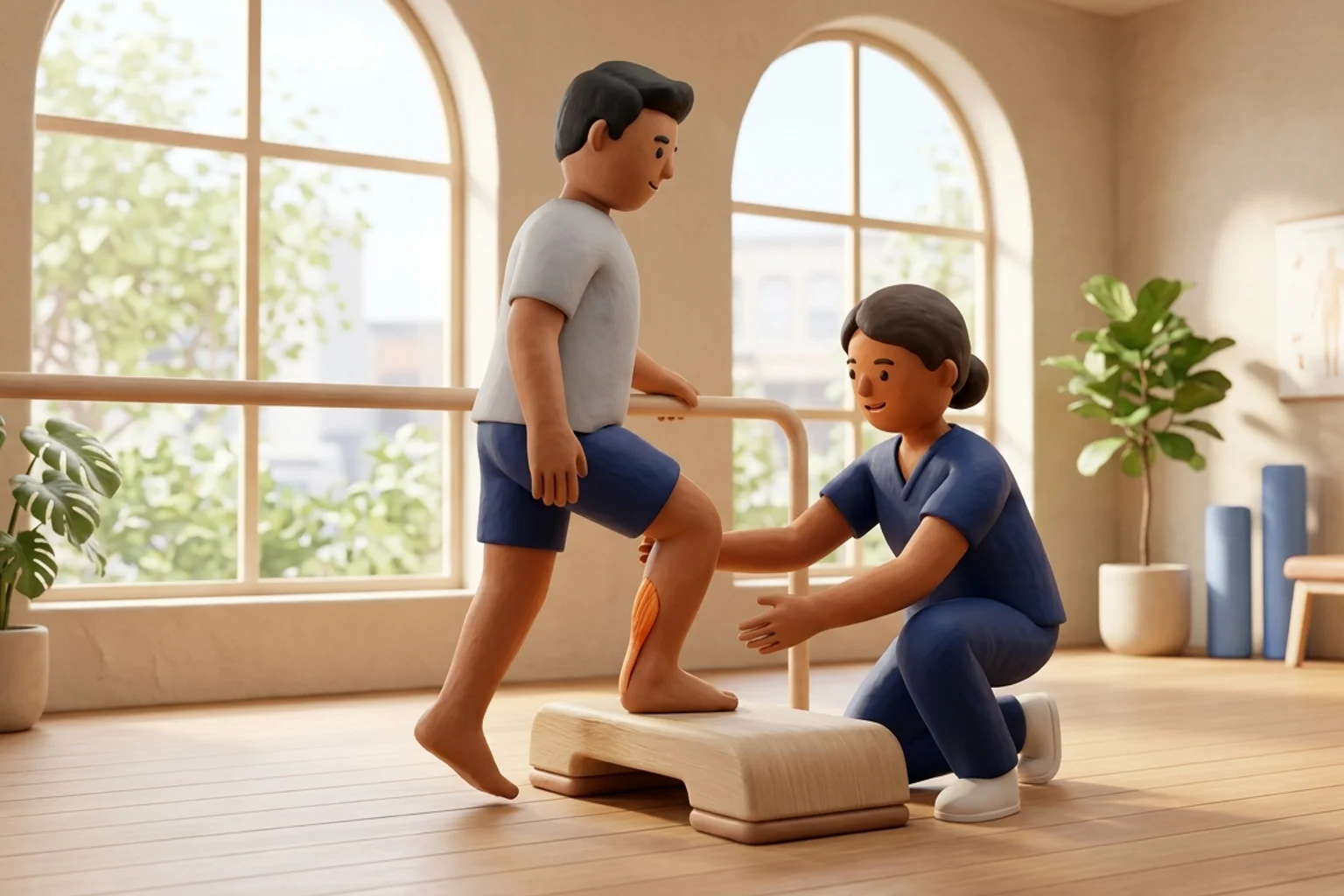
Rehabilitation incorporates five sequential steps. Step 1: Install a heat-resistant fiberglass or stainless-steel exhaust pipe guard, ensuring complete physical insulation of the silencer. Step 2: Practice high-level vertical depression lifts on graduated wooden steps. Step 3: Train mounting from the left (non-exhaust) side of the scooter, positioning the wheelchair wheels tightly locked. Step 4: Master folding the manual wheelchair and securing it onto the rear bumper rack using quick-release ratchet straps. Step 5: Road safety drills, including counter-steering and balance control through sharp turns.
Unequal-Height Seated Vertical Push-and-Pull Transfer Progression
Objective: Develop high vertical lift power required to ascend from wheelchair to scooter saddle
- 1Sit on a firm mat table adjacent to an lifted 8-inch wooden platform positioned to your left.
- 2Place your left hand flat on top of the lifted platform and your right hand flat on the mat.
- 3Lean your forehead deeply forward and downward over your knees, loading your arms.
- 4Simultaneously pull upward with your left arm while forcefully pushing downward with your right arm.
- 5lift your buttocks completely off the mat, pivoting your hips up and across onto the lifted platform.
- 6Hold the top position for 2 seconds, then reverse the movement slowly back down.
| Vehicle Modality | Operational Range and Terrain Capability | Financial Cost and Maintenance |
|---|---|---|
| Retrofitted 110cc Scooter Trike | High range (100+ km); easily handles potholes and speed breakers | Very affordable; low fuel cost; parts available at local mechanic shops |
| Outdoor Electric Power Wheelchair | Limited range (15-25 km); struggles on unpaved gravel or steep roads | Moderate to high cost; requires continuous electrical recharging |
| Hand-Controlled Modified Car | Unlimited highway range; full climate control and weather protection | High capital cost; high fuel and insurance expenses; parking hurdles |
| Electric Wheelchair Front Clip-On Handcycle | Moderate range (25-40 km); transforms manual chair into powered trike | Moderate cost; lightweight and portable; ideal for paved urban paths |
Red Flags and Emergency Escalation
Never operate a retrofitted scooter trike without a double-layer insulated heat shield over the exhaust silencer pipe: burns on insensate calves from exposed pipes cause massive tissue necrosis requiring skin graft surgery. Inspect the auxiliary side wheels weekly for frame cracks, loose axle bolts, or tyre deflation. In addition, wear heavy-duty high-top leather boots while riding to protect insensate feet from road debris, pebbles, and hot engine blocks.
Frequently Asked Questions
How do I protect my legs from severe burns when riding a retrofitted scooter?
Always mount and dismount from the left side of the scooter, completely away from the hot exhaust pipe. Have a local fabricator install a heavy-duty fiberglass or perforated metal heat shield over the silencer pipe with a 1-inch air gap, and always wear thick trousers and high-top protective boots while riding.
How do I schedule in-home transfer training for my retrofitted scooter with a physiotherapist?
Under the NCAHP Act 2021, registered physiotherapists in India can be engaged directly for community mobility and vehicle transfer training. On BookPhysio.in, you can book a qualified neuro-physiotherapist who will evaluate your scooter setup and train safe mounting mechanics at home. Fees are paid directly to the clinician at your home appointment.
Related condition guides



Related recovery guides & articles
BookPhysio.in Editorial Team
The BookPhysio.in editorial team writes and maintains this content, checking it against reliable clinical sources. Content follows our medical review policy: general information only, and no page claims a clinical review until a named registered physiotherapist has signed it off.
Read our medical review policy