
Physiotherapy for Whiplash Associated Disorders
Quick answer
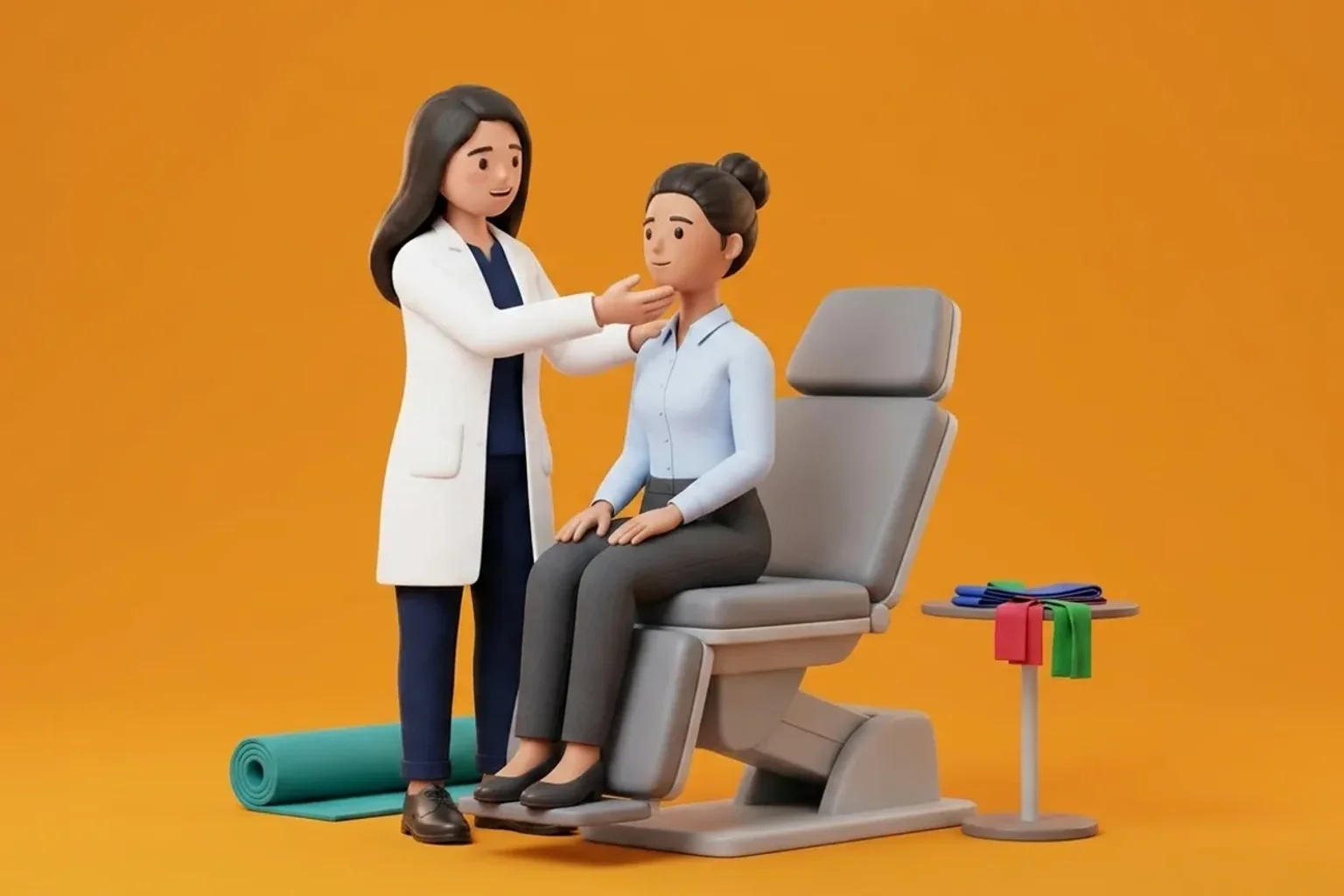
Physiotherapy is the frontline evidence-based treatment for whiplash-associated disorders (WAD). Early active neck movement, deep cervical flexor retraining, postural re-education, and graded activity exposure relieve pain, prevent chronic muscle guarding, and restore safe mobility without reliance on immobilising collars.
- Cervical acceleration deceleration neck strain
- Early movement speeds recovery over rest
- Soft collars delay cervical tissue healing
- Deep neck flexor retraining restores posture
- Graded exercise prevents chronic neck tension
What is whiplash?
Whiplash-associated disorder (WAD) occurs when the head and neck experience sudden acceleration and deceleration forces, most commonly from motor vehicle collisions, auto-rickshaw sudden stops, or sports contact across India. Outdated advice to rest in a soft collar actually delays tissue healing and worsens stiffness. Contemporary clinical guidelines recommend early active mobility within pain tolerance, deep neck flexor activation, scapular stabilisation, and graded daily activity resumption to prevent persistent pain and disability.

Orthopaedic Physiotherapy
Whiplash is assessed and treated under Orthopaedic physiotherapy (bones & joints). Bones, joints, muscles, and ligaments. Back pain, fractures, and post-surgery recovery.
How physiotherapy helps
- Gentle active cervical range of motion drills
- Deep cervical flexor and postural retraining
- Thoracic spine and scapular mobilisations
- Vestibular and gaze stabilisation exercises
- Graded return to work and driving guidance
Common signs
- Neck pain, stiffness, and reduced range of motion that typically begins 6 to 24 hours following the incident
- Cervicogenic headaches radiating from the suboccipital base of the skull forward towards the temples or eyes
- Pain and muscle guarding radiating across the trapezius, upper back, and shoulders
- Dizziness, lightheadedness, or mild visual fatigue associated with rapid head turns
- Difficulty concentrating, disturbed sleep, and heightened neck muscle tension during driving or desk work
In-clinic vs home visit physiotherapy
| What to compare | In-clinic | Home visit |
|---|---|---|
| Typical fee | ₹300 to ₹1,500 a session. It depends on your city. | ₹400 to ₹2,000 a session. It depends on your city. |
| Exact fee | Set by each physiotherapist and shown on their profile | Set separately for home visits and shown on their profile |
| Best for | Equipment-based rehab and first assessments | Limited mobility, post-surgery, and elderly care |
| Equipment | Full clinic setup | Portable equipment the physiotherapist brings |
| Travel | You travel to the clinic | The physiotherapist comes to you |
| Booking | Pick a clinic slot on search | Filter by home visit on search |
Clinical rehabilitation framework
Evidence-informed clinical progression and starter exercise targets for whiplash.
Clinical progression criteria & key observations
- Early active management (NOT a soft collar or prolonged rest) is one of the most consistent evidence-based messages in whiplash care: outdated "rest the neck" advice measurably worsens outcomes
- Psychological factors (fear of movement, catastrophising, post-traumatic stress symptoms) predict chronicity as strongly as the physical injury severity: screen for them from the first session, not as an afterthought
Starter exercise targets & evidence-based dosage
When to seek urgent care
Physiotherapy is safe for most people. See a doctor urgently if you have any of these.
- Midline cervical spine bony tenderness or acute inability to actively rotate the neck 45 degrees in either direction
- Progressive neurological signs including shooting arm pain, hand weakness, numbness, or clumsiness
- Dizziness accompanied by double vision, difficulty swallowing, slurred speech, or drop attacks (cervical arterial dysfunction)
- Loss of consciousness, memory loss, severe unremitting headache, or vomiting following the collision
Seek urgent medical care first. Physiotherapy comes after, when it is safe.
Frequently asked questions
How soon should I start physiotherapy after a whiplash injury?
Can I get physiotherapy for whiplash at home?
Should I wear a soft neck collar for whiplash?
How much does physiotherapy for whiplash cost in India?
Related conditions & care




Clinical guides & articles for whiplash
Evidence-informed articles, recovery timelines, and home care advice from our clinical library.
Cervical Spondylotic Myelopathy in Older Adults: Clinical Signs and Early Recognition
Cervical spondylotic myelopathy is the most common cause of non-traumatic spinal cord dysfunction in adults over 55. Learn upper motor neuron signs, gait changes, and safety guidelines.
Chronic Whiplash-Associated Disorders (WAD): Cold Hyperalgesia, Brachial Plexus Tension, and Recovery
Chronic whiplash-associated disorders combine cervical joint strain with central sensory sensitization; cold hyperalgesia screening predicts poor prognosis and guides gentle neural rehab.
Cervical Spondylotic Myelopathy (CSM): Hoffman Sign & Gait Ataxia Guide
Cervical spondylotic myelopathy is the most common cause of spinal cord dysfunction in older adults, causing clumsy hands and broad-based spastic gait that requires surgical vigilance.
Smooth Pursuit Neck Torsion (SPNT) Test: Differentiating Whiplash from Inner Ear Pathology
The Smooth Pursuit Neck Torsion test distinguishes cervical proprioceptive dysfunction from true labyrinthine disease by evaluating pursuit eye tracking during trunk rotation.
Find physiotherapists for whiplash by city
Verified physiotherapists treat whiplash in these cities. Home visit and in-clinic options vary by physiotherapist.
Find a physiotherapist for whiplash
Compare physiotherapists by fee, experience, and availability. Clinic visits and home visits across India.
This page is for general education and booking guidance. It does not diagnose your condition or replace medical care.
If your symptoms are severe, sudden, or getting worse, seek urgent medical care first. The same applies with fever, chest pain, breathlessness, fainting, new weakness, loss of bladder or bowel control, or unexplained bleeding.
Always consult a qualified physiotherapist or doctor about your condition.