
6-Minute Walk Test (6MWT): ATS Guidelines, Distance Formulas and MCID
In short
The 6-Minute Walk Test (6MWT) evaluates submaximal functional exercise capacity in cardiopulmonary and geriatric rehabilitation. Learn the ATS protocol and reference equations.

In this guide (5 sections)
What Is the 6-Minute Walk Test (6MWT)?
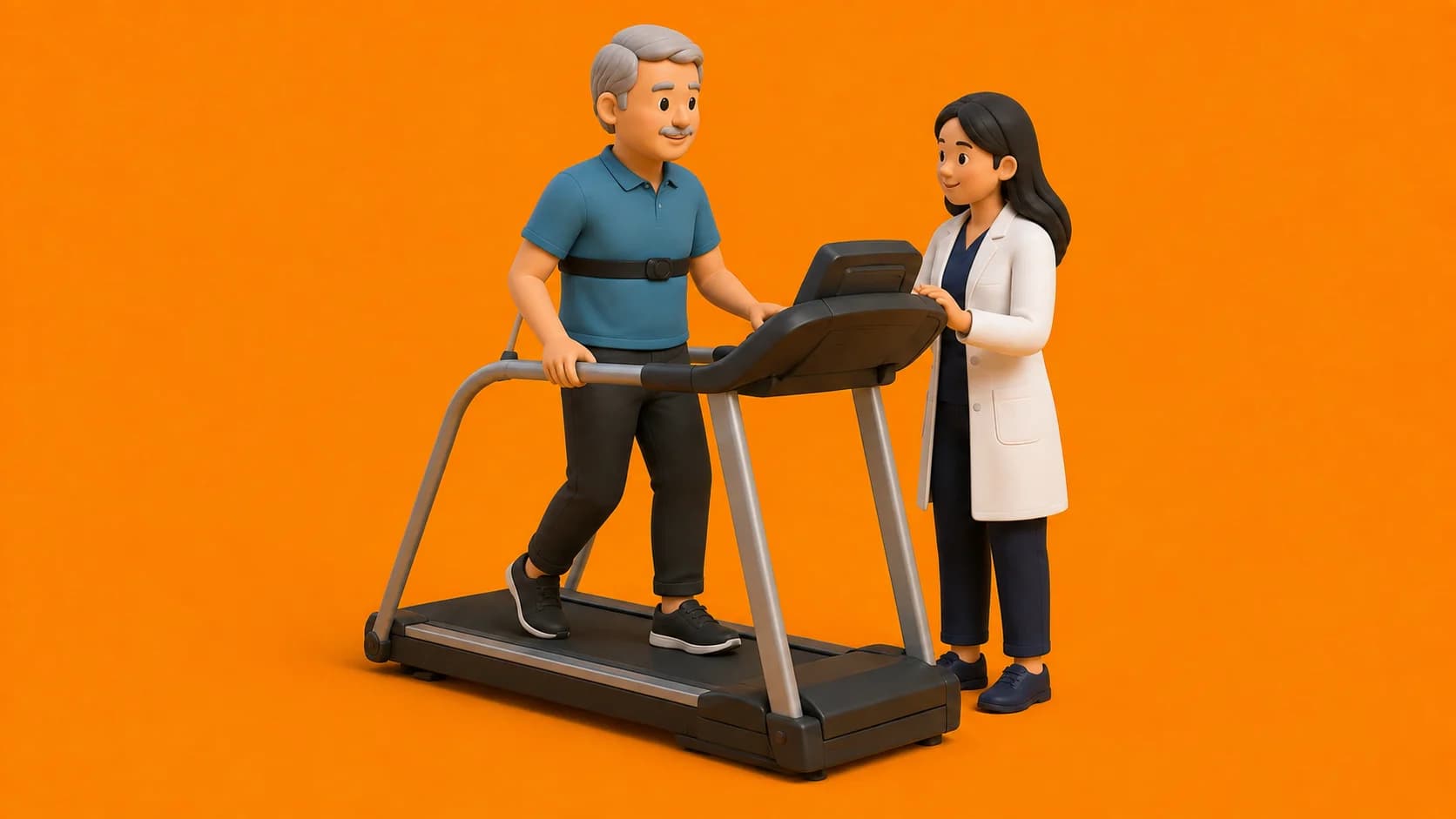
The 6-Minute Walk Test (6MWT) is a standardized, self-paced assessment of submaximal functional exercise capacity developed by the American Thoracic Society (ATS).
It measures the maximum distance in meters that an individual can walk on a flat, hard surface in 6 minutes, reflecting integrated cardiopulmonary, neuromuscular and metabolic function.
ATS Standardization Protocol and Track Setup
The testing course should be a flat, straight corridor at least 30 meters in length. The walkway is marked with coloured tape every 3 meters, with turnaround points marked by brightly coloured cones.
Standardized encouragement phrases must be spoken at exactly 1-minute intervals (for example: "You are doing well. You have 5 minutes to go"). Unscripted encouragement or pacing alongside the patient is strictly prohibited to prevent artificially inflating distance.
- Pre-test vitals: Baseline heart rate, blood pressure, SpO2 (pulse oximetry) and baseline Borg Dyspnoea and Fatigue ratings (CR-10 scale).
- Rest breaks: Patients are permitted to stop, rest against a wall or sit down if needed; the timer continues running without interruption.
- Post-test vitals: Immediate recording of end-exercise SpO2, heart rate, Borg scale and total completed distance in meters.
Safety Contraindications and Stopping Criteria
Cardiopulmonary safety is paramount during submaximal stress testing.
| Category | Clinical Manifestation / Criteria | Action Required | |
|---|---|---|---|
| Absolute Contraindications | Unstable angina or myocardial infarction within previous 1 month. | Do not initiate test; refer to cardiologist. | |
| Absolute Contraindications | Uncontrolled resting hypertension (systolic > 180 mmHg or diastolic > 100 mmHg). | Defer test until blood pressure is controlled. | |
| Immediate Stopping Criteria | New onset chest pain or angina-like tightness. | Stop test immediately, sit patient down, monitor vitals. | |
| Immediate Stopping Criteria | Severe oxygen desaturation (SpO2 dropping below 80 percent). | Stop test, administer supplemental oxygen if prescribed. | |
| Immediate Stopping Criteria | Staggering gait, dizziness, diaphoresis, pale or ashen appearance. | Terminate test, support patient, evaluate cardiovascular response. |
Predicted Distance Formulas and MCID
Enright and Sherrill published reference equations to calculate predicted 6MWD based on age, height and weight. For healthy adults, typical distances range from 450 to 700 meters.
The Minimal Clinically Important Difference (MCID) across chronic obstructive pulmonary disease (COPD), heart failure and pulmonary rehabilitation is 30 to 54 meters (with 30 meters representing the consensus threshold for clinical significance).
Frequently Asked Questions
Can the 6MWT be conducted in a shorter 20-meter corridor?
ATS guidelines specify a 30-meter track. Using a shorter track increases the number of turns, which decelerates gait speed and reduces total distance walked by 15 to 30 meters.
Can the patient walk with their supplemental oxygen cylinder?
Yes. If a patient requires ambulatory oxygen, they should walk with their prescribed flow rate, and the exact litres per minute and carrying method must be recorded.
Is a practice test necessary?
Yes. A training effect of 20 to 25 meters occurs due to reduced anxiety and improved pacing. In clinical trials, a practice walk is recommended before recording the baseline value.
Related condition guides
Related recovery guides & articles
BookPhysio.in Editorial Team
The BookPhysio.in editorial team writes and maintains this content, checking it against reliable clinical sources. Content follows our medical review policy: general information only, and no page claims a clinical review until a named registered physiotherapist has signed it off.
Read our medical review policy