
Antenatal Exercise Guidelines: ACOG Recommendations, Safe Heart Rates & Supine Precautions
In short
Pregnancy is not a time for prolonged bed rest. Learn how the latest ACOG antenatal exercise guidelines safely lower gestational diabetes risk, ease labor, and protect the baby.

In this guide (5 sections)
Evolution of Antenatal Exercise Guidelines
Historic obstetric guidelines in the 1980s imposed overly restrictive limitations on pregnant women, including an arbitrary maternal heart rate cap of 140 beats per minute and strict warnings against strenuous effort. Decades of clinical research have since overturned these outdated limits.
The current guidelines from the American College of Obstetricians and Gynecologists (ACOG) and the Canadian Society for Exercise Physiology (CSEP) advocate for at least 150 minutes of moderate-intensity aerobic physical activity spread throughout each week for all women with uncomplicated pregnancies.
Physiological Adaptations and Maternal Heart Rate Zones
During pregnancy, resting maternal cardiac output increases by 30 to 50 percent, resting heart rate rises by 10 to 15 beats per minute, and systemic vascular resistance falls. Because resting and exercising heart rates vary widely among pregnant individuals, monitoring intensity via the Borg Rating of Perceived Exertion (RPE) and the 'Talk Test' is clinically superior to strict heart rate monitors.
A moderate intensity corresponds to an RPE of 12 to 14 on the 6-20 Borg Scale (or 5 to 6 on a 1-10 scale), where the mother can comfortably maintain a spoken conversation without gasping for breath.
| Fitness Category | Age Group | Target Heart Rate Range | Target Borg RPE (6-20) | |
|---|---|---|---|---|
| Sedentary / Deconditioned | < 30 years | 120 to 135 bpm | 11 to 13 (Fairly light to somewhat hard) | |
| Sedentary / Deconditioned | >= 30 years | 115 to 130 bpm | 11 to 13 (Fairly light to somewhat hard) | |
| Previously Active | < 30 years | 135 to 150 bpm | 13 to 14 (Somewhat hard; can converse) | |
| Previously Active | >= 30 years | 130 to 145 bpm | 13 to 14 (Somewhat hard; can converse) | |
| Trained Athlete | Any age | 145 to 160 bpm | 14 to 16 (Paced effort under clinical guidance) |
The Supine Hypotensive Syndrome and Positional Adjustments
After approximately 16 to 20 weeks of gestation, the enlarged gravid uterus can compress the inferior vena cava (IVC) and abdominal aorta when the mother lies completely flat on her back (supine position). This compression impedes venous return to the maternal right atrium, causing an acute drop in cardiac output and arterial blood pressure, which presents as dizziness, nausea, and diaphoresis.
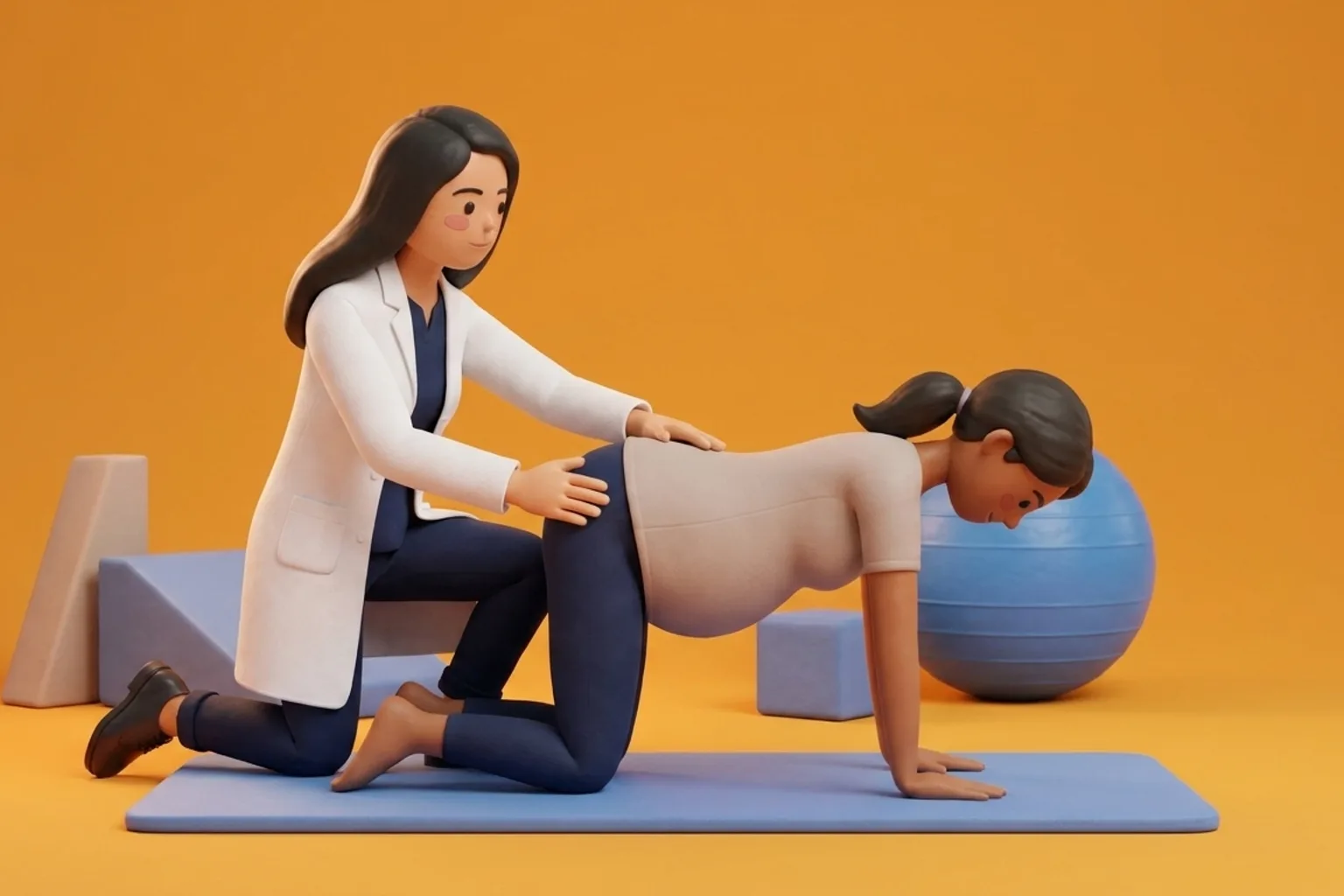
To prevent supine hypotension, exercises historically performed on the back (such as bridging or chest presses) should be modified using a 30 to 45 degree incline wedge, all-fours (quadruped), seated, or left side-lying positions.
- Core Temperature Regulation: Avoid exercising in hot, humid environments; stay hydrated to prevent maternal core temperature from rising above 39 degrees Celsius.
- Avoidance of Valsalva Maneuver: Continuous, smooth exhalation on exertion prevents spikes in intra-thoracic and intra-amniotic pressure.
- Pelvic Stability Integration: Incorporate gluteal bridges on an incline, wall squats, and side-lying clam shells to support the softening pelvic ring.
Absolute and Relative Red Flags to Stop Exercise
Exercise must cease immediately and obstetric evaluation obtained if the patient experiences: vaginal bleeding, regular painful uterine contractions, amniotic fluid leakage, dizziness or presyncope, shortness of breath before exertion, chest pain, or calf swelling and localized pain (ruling out DVT).
Frequently Asked Questions
Can exercise induce early labor or miscarriage?
In healthy, uncomplicated pregnancies, clinical evidence proves that moderate exercise does not increase the risk of preterm birth, low birth weight, or miscarriage. In fact, it reduces preterm complications by improving maternal cardiovascular fitness.
What sports should be avoided during pregnancy?
Activities with high fall risks or direct abdominal contact are strictly contraindicated, including contact martial arts, football, basketball, downhill skiing, horseback riding, and scuba diving.
Can I continue lifting weights while pregnant?
Yes. Progressive resistance training with proper breathing (avoiding breath-holding) is highly recommended. It prevents lower back pain and builds the endurance required for labor and carrying your newborn.
Related condition guides

Related recovery guides & articles
BookPhysio.in Editorial Team
The BookPhysio.in editorial team writes and maintains this content, checking it against reliable clinical sources. Content follows our medical review policy: general information only, and no page claims a clinical review until a named registered physiotherapist has signed it off.
Read our medical review policy