
Diastasis Recti Postpartum: Closing the Abdominal Gap Safely Without Crunches
In short
Abdominal separation after pregnancy requires functional deep-core rehabilitation rather than cosmetic crunches. Discover how to rebuild midline tension safely.

In this guide (5 sections)
Diastasis recti abdominis (DRA) is the physiological separation of the two rectus abdominis muscle bellies along the linea alba connective tissue, affecting over 60 percent of women during late pregnancy and the early postnatal period. In India, where postpartum traditions often emphasize tight sari binding, commercial tummy tuck belts, or aggressive home massages, new mothers are frequently told that their core is permanently ruined unless repaired surgically. Modern women's health physiotherapy proves that functional recovery is determined by linea alba tension generation and deep core recruitment, not simply gap width in centimetres.
The abdominal wall functions as a dynamic pressure cylinder comprising the diaphragm at the top, the pelvic floor at the bottom, the transversus abdominis encircling the torso like a muscular corset, and the rectus abdominis at the front. When expanding uterine volume stretches the collagen fibers of the linea alba, the connective tissue thins and loses elastic recoil. Attempting to force the gap closed with traditional sit-ups or aggressive crunches drastically increases intra-abdominal pressure, bulging the compromised midline outwards and increasing the risk of pelvic organ prolapse.
1. Pathophysiology: Inter-Recti Distance vs Linea Alba Tension
Clinical research has revolutionized our understanding of diastasis recti. Previously, clinicians focused exclusively on measuring Inter-Recti Distance (IRD) with calipers or ultrasound. However, a woman can possess a 2.5-centimetre gap with excellent fascial tension that efficiently transfers loads during daily tasks, while another woman may have a 1.8-centimetre gap with completely lax, squishy tissue that bulges and causes chronic back instability.
The primary objective of postpartum physiotherapy is not to forcefully staple the rectus bellies together, but to teach the transversus abdominis to generate lateral tension across the linea alba. When the deep corset contracts correctly, the thinned tissue stiffens, creating a firm bridge that stabilizes the lumbar spine and pelvic ring.
| Clinical Feature | Diastasis Recti Abdominis | Umbilical Hernia | General Postpartum Wall Laxity |
|---|---|---|---|
| Underlying Pathology | Stretching and thinning of the linea alba without fascial tear | True structural defect or hole in the abdominal wall fascia | Generalised muscle deconditioning and hormonal ligamentous laxity |
| Palpation on Head Lift | Soft, continuous ridge or trench along the midline above or below navel | Localized, distinct, circumscribed bulge protruding through umbilical ring | Diffuse weakness across entire abdominal wall without distinct midline gap |
| Pain Profile | Usually painless; associated with pelvic instability or lower back ache | Sharp, focal ache; tenderness if intestinal contents become trapped | Generalised fatigue and postural ache after prolonged standing |
| Primary Treatment | Targeted pelvic health physiotherapy and transversus abdominis training | Surgical repair if symptomatic or incarcerated; physio for support | Progressive total-body postpartum strength and functional conditioning |
2. Postpartum Cultural Traditions and Belly Binding Realities in India
In many Indian households, traditions such as the Jaapa period involve hiring traditional birth attendants (dais or maalishwalis) who vigorously massage the abdomen with mustard or sesame oil and tightly bind the torso with cotton saris or rigid corsets. While gentle, elastic pelvic support can provide comforting sensory feedback during the initial two to three weeks following a caesarean section or vaginal delivery, rigid or excessively tight binding carries significant physiological risks.
When the upper abdomen is compressed forcefully like a tube of toothpaste, intra-abdominal pressure is displaced downwards onto the healing, vulnerable pelvic floor. This excessive downward pressure exacerbates urinary incontinence, pelvic heaviness, and uterine prolapse. Furthermore, passive corseting leads to muscle atrophy because the deep core muscles become reliant on external fabric rather than active neuromuscular firing. Safe recovery requires replacing tight binding with progressive neuromuscular activation.
3. Three-Phase Rehabilitation Protocol for Midline Tension
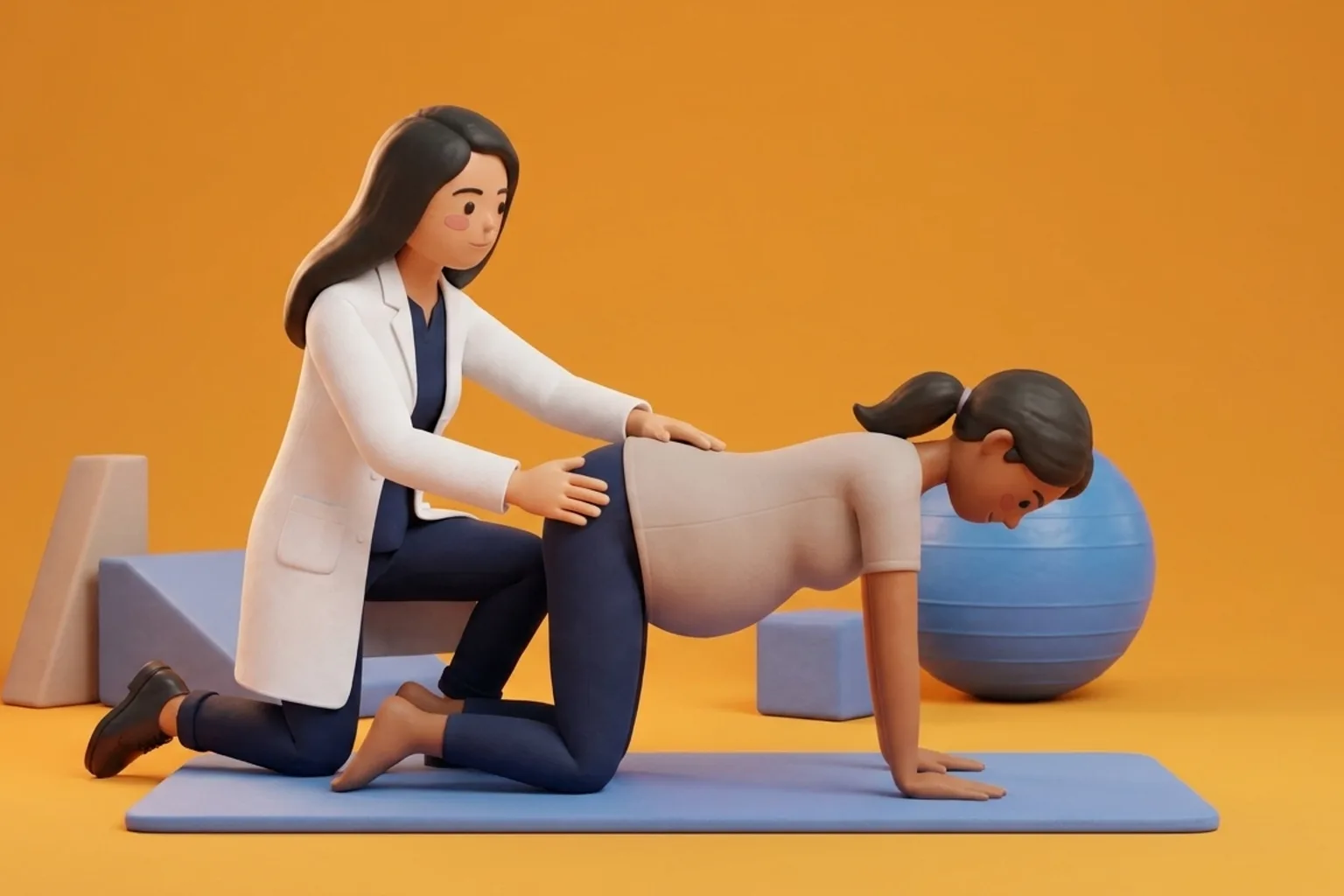
Safe diastasis recti rehabilitation begins with gentle breath-led activation and progresses through functional loading. Exercises must be monitored to ensure no doming, tenting, or trenching occurs along the midline during execution.
Three-Phase Progressive Core Rebuilding Protocol
Objective: Re-establish neuromuscular recruitment of the transversus abdominis, eliminate abdominal doming, and restore functional lifting tolerance.
- 1Phase 1 (Breath-Synchronized Transversus Abdominis Drawing-In): Lie supine with knees bent and feet flat. Place your fingertips two centimetres medial to your anterior superior iliac spines. Inhale gently into the lower ribs. On a slow, unhurried exhale through pursed lips, gently draw the lower abdomen inward as if zipping up a snug pair of trousers. Feel the muscle beneath your fingers firm up without tucking your pelvis or flaring your ribs. Hold for 5 seconds. Repeat for 10 repetitions, 2 to 3 sets daily.
- 2Phase 2 (Submaximal Limb Loading - Heel Slides and Bent-Knee Fallouts): From the supine neutral position, engage the deep core with an exhalation. While maintaining steady midline tension, slowly slide one heel along the floor until the leg is extended, then slide it back with control. Ensure the midline does not dome upwards. Progress to gentle bent-knee fallouts, rotating one knee outward 30 degrees while stabilizing the pelvis. Perform 10 repetitions per side, 2 sets daily.
- 3Phase 3 (Functional Upright Integration and Lifting Dynamics): Transition to quadruped bird-dog holds and modified side planks from the knees. Practice the functional "bracing with exhalation" technique when lifting your infant from the crib or floor: exhale, engage the deep core, hinge at the hips, and lift through the gluteal muscles rather than curling your spine.
- 4Safety Cue: If you observe a triangular ridge (doming) protruding along the center of your stomach during any movement, immediately stop or reduce the load. Doming signifies that intra-abdominal pressure is overcoming the tensile strength of the linea alba.
4. Red Flags and Safe Medical Gatekeeping
While diastasis recti is a benign musculoskeletal condition, certain presentations require immediate medical evaluation. If you notice a firm, tender lump at the navel that does not disappear when lying down, or if the bulge becomes red, hot, or accompanied by severe abdominal pain, nausea, and vomiting, you may have an incarcerated umbilical hernia requiring urgent surgical attention. Additionally, non-healing caesarean incision drainage, foul odour, or systemic fever must be evaluated by your obstetrician before starting any physical rehabilitation.
Frequently Asked Questions
Will traditional sit-ups and crunches help close my postpartum belly gap?
No. Traditional sit-ups and crunches are strongly contraindicated during early and intermediate diastasis recti recovery. Crunches primarily recruit the superficial rectus abdominis while creating high intra-abdominal pressure that pushes the linea alba outward, perpetuating the gap and worsening doming. Recovery requires training the deep transversus abdominis and pelvic floor to create lateral fascial tension.
How do I self-check for diastasis recti at home accurately?
Lie on your back with knees bent and feet flat on the floor. Place your fingertips horizontally across your midline, roughly two inches above your navel. Slowly raise your head and shoulders just a few inches off the bed as if beginning a mini-curl. Feel the borders of the rectus muscle hug your fingers. Note how many finger-widths fit between the borders and whether the floor of the trench feels firm or soft and squishy.
Is it too late to heal diastasis recti years after giving birth?
It is never too late. While the immediate postpartum window offers heightened hormonal tissue pliability, fascial remodelling and neuromuscular recruitment can be retrained years or even decades after childbirth. Many women in their 40s and 50s successfully eliminate doming, resolve back ache, and restore core stability through structured women's health physiotherapy.
Can I wear a postpartum recovery belt while doing my core exercises?
No. You should not wear a constrictive belt while performing active core exercises. The purpose of rehabilitation is to stimulate your own deep muscles to act as an internal corset. Relying on an external binder during exercise dampens sensory feedback and prevents the transversus abdominis from learning to stabilize the abdominal wall independently.
What is the cost of specialized postnatal physiotherapy through BookPhysio.in?
BookPhysio.in connects new mothers with verified women's health physiotherapists across Indian cities. Transparent session fees range between ₹400 and ₹1,500 for in-clinic evaluations and ₹600 to ₹2,000 for convenient home visits, which are especially helpful during the early postpartum period. Patients pay directly to the treating physiotherapist at each session with zero platform booking commission.
Related condition guides


BookPhysio.in Editorial Team
The BookPhysio.in editorial team writes and maintains this content, checking it against reliable clinical sources. Content follows our medical review policy: general information only, and no page claims a clinical review until a named registered physiotherapist has signed it off.
Read our medical review policy