
Call Centre Ergonomics in India: Headset vs Phone Cradling, Cervical Myofascial Strain & Vocal Breathing
In short
Cradling a phone receiver between your ear and shoulder causes excruciating neck spasms. Discover clinical workstation ergonomics and breathing fixes for call centre professionals.
In this guide (5 sections)
The Occupational Health Landscape of Indian BPO and BPM Sectors
India's Business Process Management (BPM) and call centre industry employs over 4 million professionals in major IT corridors like Gurugram, Bengaluru, Hyderabad, and Pune. Associates frequently work 9-hour night shifts in fast-paced environments, handling 80 to 150 customer calls per shift while simultaneously typing on computer keyboards.
This high-pressure sedentary workload creates a widespread cluster of occupational complaints: severe cervical myofascial pain, tension headaches, temporomandibular joint (TMJ) dysfunction, vocal cord strain, and carpal tunnel syndrome.
The Biomechanical Hazard of 'Phone Cradling'
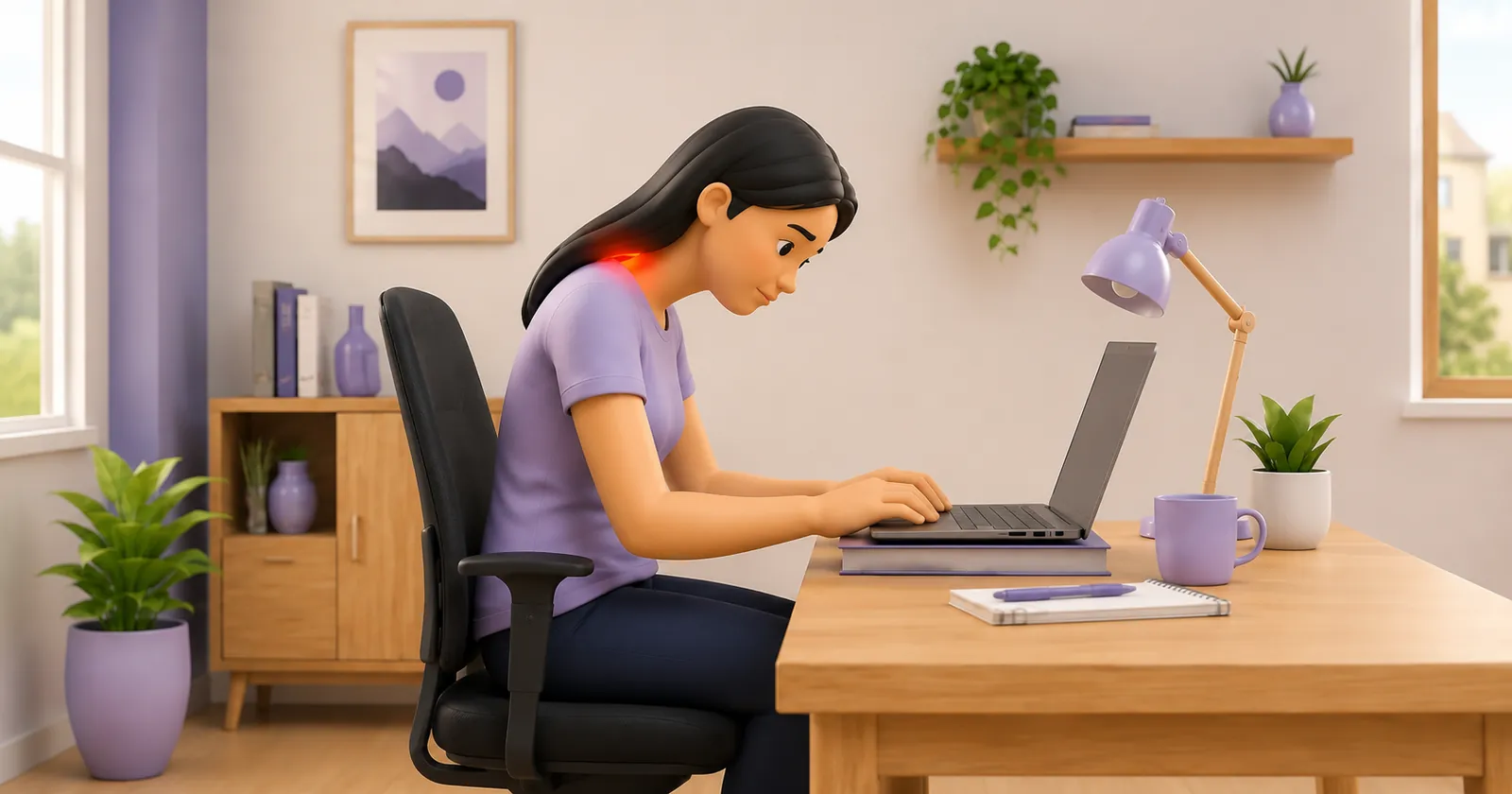
When headsets are not used or are improperly configured, agents instinctively cradle the telephone handset between their shoulder and ear to free both hands for typing.
Sustained neck lateral flexion combined with shoulder elevation generates acute, severe isometric contraction of the levator scapulae, upper trapezius, and scalene muscles. This posture pinches the cervical nerve roots (C5-C6) and strains the brachial plexus, producing radiating numbness down the arm and severe tension headaches.
| Ergonomic Feature | Recommended Standard | Biomechanical & Auditory Benefit | |
|---|---|---|---|
| Headset Style | Binaural (Dual-Ear) with active noise cancellation | Allows lower listening volume (protects hearing); balances neck weight | |
| Microphone Boom Position | 2 to 3 cm from corner of mouth (not in front of lips) | Prevents breath-pop distortion; eliminates forward neck craning | |
| Headset Band Adjustment | Padded headband adjusted snugly over skull vertex | Prevents clamping pressure on temporalis muscle and TMJ | |
| Decibel Volume Limiting | Capped at < 75 to 80 dB with acoustic shock protection | Prevents acoustic startle reflex and hearing fatigue | |
| Handset Cradling | Strictly prohibited in all operational procedures | Completely eliminates unilateral cervical lateral flexion strain |
Diaphragmatic Vocal Breathing for Neck Relaxation
Speaking continuously for 8 hours requires significant respiratory effort. Many call centre workers develop shallow apical chest breathing, recruiting secondary neck accessory muscles (sternocleidomastoids and scalenes) to lift the rib cage on every breath.
This constant accessory breathing keeps the cervical spine in a state of chronic muscular fatigue. Retraining agents in diaphragmatic breathing relaxes the neck while providing steady vocal power without straining vocal cords.
- The Belly-Breath Voice Technique: Inhale deeply into the lower abdomen before answering a call; speak on the smooth, relaxed exhalation to reduce vocal cord strain.
- Monitor Height Alignment: Position the top of your CRM monitor screen at resting eye level to prevent forward head text-neck posture while reviewing accounts.
- Hydration and Laryngeal Lubrication: Keep a water bottle at the desk and sip room-temperature water frequently to maintain mucosal lubrication in the larynx.
Active Upper Body Decompression Drills
Between call queues, agents should perform 5 slow shoulder shrug-and-roll circles, gentle chin retractions, and bilateral forearm wrist flexor stretches to restore blood flow.
Frequently Asked Questions
Why does cradling a telephone receiver between my shoulder and ear cause severe pain?
Holding a phone with your shoulder forces your neck into extreme lateral tilt and cramps your shoulder up, pinching nerves and cutting off blood flow to the levator scapulae and trapezius muscles.
Are single-ear (monaural) or dual-ear (binaural) headsets better?
Dual-ear (binaural) headsets are far superior. They block ambient call centre background chatter, allowing you to listen at much lower, safer volume levels and keeping your head balanced straight.
How can I prevent voice loss and throat fatigue during long shifts?
Breathe from your diaphragm instead of your chest, position your microphone boom 2 finger widths from the corner of your mouth so you do not have to shout, and sip water between calls.
Related condition guides

Related recovery guides & articles
BookPhysio.in Editorial Team
The BookPhysio.in editorial team writes and maintains this content, checking it against reliable clinical sources. Content follows our medical review policy: general information only, and no page claims a clinical review until a named registered physiotherapist has signed it off.
Read our medical review policy