
Cardiac Rehabilitation: Safe Exercise Walking Timeline After Bypass Surgery and Stents
In short
Resuming exercise after bypass surgery or stent placement requires disciplined cardiovascular progression and strict sternal precautions. Discover safe recovery pacing.

In this guide (5 sections)
Coronary Artery Bypass Grafting (CABG) and percutaneous coronary intervention (angioplasty with drug-eluting stents) are life-saving interventions for coronary artery disease (CAD), an epidemic affecting South Asians at a rate three to four times higher than Western populations, frequently striking Indian adults under the age of 50. While surgical bypass restores myocardial perfusion, the physiological and psychological trauma of open-heart surgery leaves patients feeling fragile, breathless, and terrified that even minor physical exertion might trigger another cardiac crisis.
A dangerous post-surgical pattern in Indian families is enveloping the recovering patient in total, passive bed rest, serving high-calorie ghee-laden recovery foods, and discouraging all physical movement. Prolonged cardiac immobilization leads to rapid skeletal muscle deconditioning, deep vein thrombosis, pulmonary atelectasis, and depression. Phase-based cardiac rehabilitation physiotherapy is an internationally validated, Class I guideline-recommended medical intervention that reduces 5-year cardiac mortality by over 25 percent and safely restores cardiovascular fitness.
1. Sternal Precautions: Protecting the Healing Median Sternotomy
In patients who underwent open-heart CABG via a median sternotomy, the breastbone is divided longitudinally and re-approximated using stainless steel wires. Complete biological bone healing of the sternum requires 6 to 8 weeks. During this critical osteogenic window, asymmetric tensile shear forces can disrupt sternal stability, leading to sternal dehiscence (separation of the wire closure), chronic chest pain, or mediastinitis.
Modern cardiac physiotherapy utilizes the evidence-based "Keep Your Move in the Tube" protocol, which restricts loads to movements where the upper arms remain close to the torso. Patients must observe strict sternal precautions: no lifting, pushing, or pulling objects weighing more than 3 to 5 kilograms; no reaching both arms backward behind the back or out to the sides simultaneously; no pushing up from low chairs using armrests (cross arms across the chest and push through your legs instead); and always hugging a firm sternal cough pillow firmly against your chest whenever coughing or sneezing.
| Rehab Phase | Recovery Window | Exercise Target & MET Range | Target Heart Rate & Borg RPE Guide |
|---|---|---|---|
| Phase I (Inpatient Acute Hospital) | Days 1 to 5 post-op in hospital ward | Deep breathing, ankle pumps, sitting out of bed, ward hallway walking (2-3 METs) | Resting HR + 15-20 bpm; Borg RPE 9 to 11 ("very light" to "light") |
| Phase II (Outpatient Early Home) | Weeks 2 to 6 post-discharge at home | Interval flat walking: 10 to 20 minutes, gradual pace progression (3-4 METs) | Resting HR + 20-30 bpm; Borg RPE 11 to 13 ("fairly light" to "somewhat hard") |
| Phase II Consolidation | Weeks 7 to 12 post-discharge | Continuous brisk walking: 30 to 45 minutes; low-resistance stationary cycle (4-5 METs) | 60% to 75% heart rate reserve; Borg RPE 12 to 14 ("somewhat hard") |
| Phase III (Long-Term Maintenance) | Month 4 and beyond for life | Community walking, light resistance bands, swimming, recreational sports (5+ METs) | Aerobic maintenance 150 min/week; Borg RPE 13 to 15 ("challenging but sustainable") |
2. The Borg Rating of Perceived Exertion (RPE) and "Talk Test"
Many cardiac patients are prescribed beta-blocker medications (such as metoprolol or bisoprolol) to blunt sympathetic stimulation, lower blood pressure, and reduce myocardial oxygen demand. Because beta-blockers chemically suppress heart rate, standard pulse rate formulas (such as 220 minus age) do not accurately reflect cardiovascular exercise intensity in medicated patients.
Cardiac physiotherapists train patients to use the validated Borg Rating of Perceived Exertion (RPE) scale (6 to 20 scale) combined with the practical "Talk Test". During Phase II home walking, patients should exercise at an RPE of 11 to 13 ("fairly light" to "somewhat hard"). At this physiological intensity, you should breathe slightly faster than normal and feel your body warming up, but remain fully capable of speaking a complete sentence without gasping for breath. If you are gasping or unable to speak, you are working too hard and must slow your pace.
3. Three-Phase Home Cardiac Walking Protocol
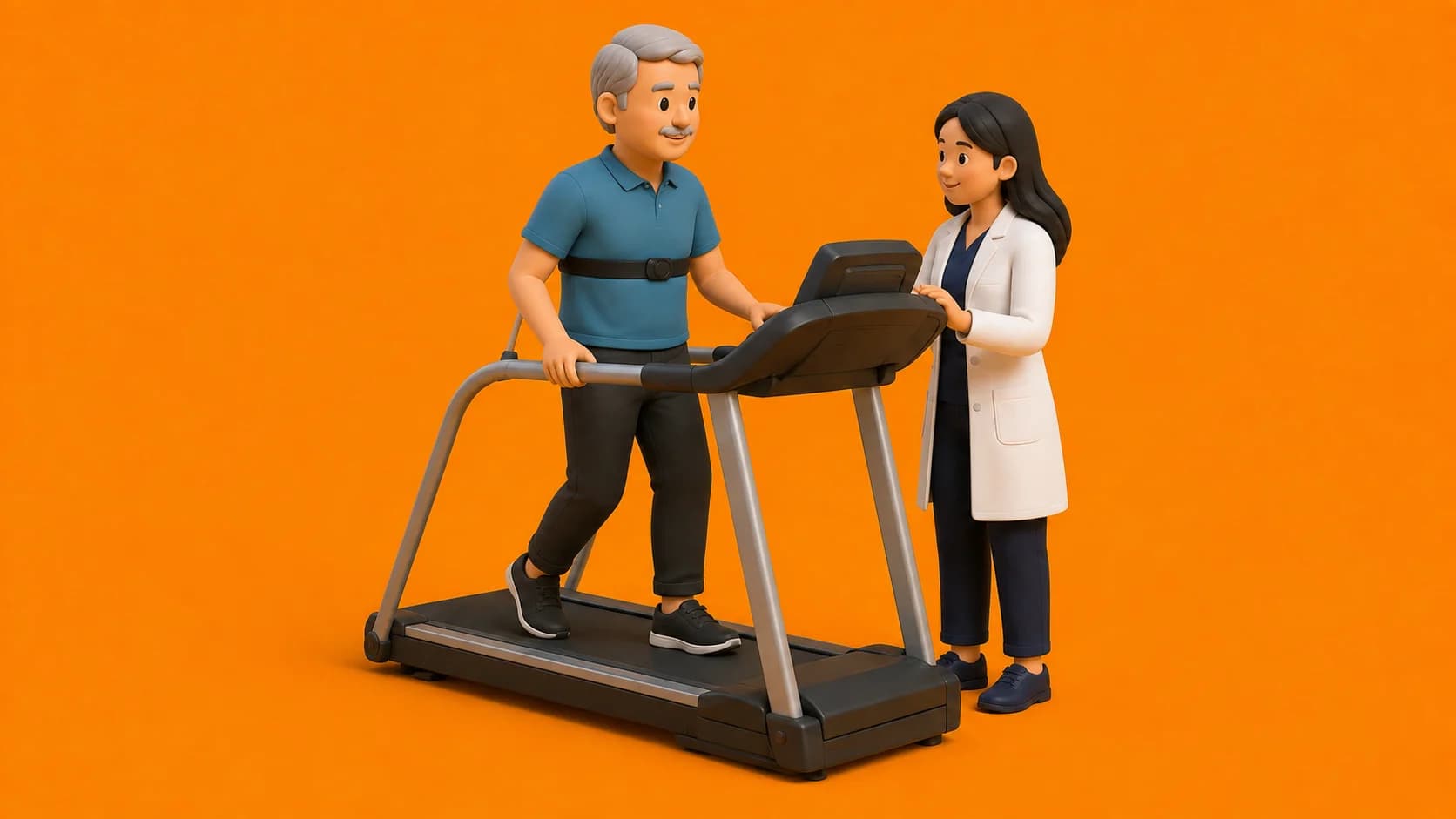
Rehabilitation progresses from short interval walking in comfortable home corridors to continuous outdoor aerobic conditioning.
Three-Phase Progressive Post-Cardiac Walking Protocol
Objective: Gradually expand functional aerobic capacity (METs), lower resting blood pressure, and build exercise confidence safely.
- 1Phase 1 (In-Home Interval Walking - Weeks 2 to 3): Walk on flat, smooth indoor floors for 5 minutes at a comfortable, conversational pace. Rest seated for 3 minutes. Repeat for a second 5-minute bout. Perform this 10-minute total walking routine twice daily. Pair with gentle thoracic expansion breathing (sniffing air in through your nose, expanding lower ribs, and exhaling slowly through pursed lips).
- 2Phase 2 (Continuous Paced Walking - Weeks 4 to 6): Progress to 15 to 20 minutes of continuous walking once daily. Begin with a 3-minute warm-up walk at an easy pace. Walk at your target Borg 12 ("somewhat hard") pace for 12 to 15 minutes. Finish with a 3-minute slow cool-down walk. Never stop abruptly from a brisk walk: stopping suddenly allows venous blood to pool in the legs, which can cause sudden lightheadedness or syncope.
- 3Phase 3 (Outdoor Endurance and Resistance Integration - Weeks 7 to 12): Once sternal healing is confirmed at 6 to 8 weeks, progress to 30 to 40 minutes of continuous brisk outdoor walking on flat park pathways. Introduce light upper body resistance band exercises (gentle bicep curls, seated rows, wall push-ups) using 1 to 2 kg resistance to rebuild peripheral muscle endurance without breath-holding Valsalva manoeuvres.
- 4Weather Warning: In India, avoid walking outdoors during intense midday heat or high air pollution smog (AQI > 200). Heat and particulate matter substantially elevate cardiac myocardial workload. Walk in the early morning or indoors in air-conditioned spaces.
4. Critical Red Flags: When to Immediately Stop Exercise
Safety is paramount in cardiac rehabilitation. Stop exercising immediately, sit down, and notify your physician or seek emergency medical care if you experience any of the following warning signs: retrosternal chest tightness, heaviness, or burning radiating to the jaw, neck, left arm, or back (angina); sudden profound shortness of breath out of proportion to your exertion level; irregular, fluttering heartbeats (palpitations) accompanied by dizziness or cold sweats; or a sudden clicking, grinding sensation in your sternum accompanied by sharp chest pain (indicating sternal wire loosening or dehiscence).
Frequently Asked Questions
How soon after bypass surgery can I climb stairs at home in India?
In many Indian homes with bedrooms on the first or second floor, stairs are unavoidable. Hospital physiotherapists practice stair climbing before discharge (typically Days 4 to 6). At home, climb stairs slowly: step up one step at a time, pause to breathe, and avoid rushing. Have someone accompany you during the first two weeks. Keep your arms close to your body and hold the handrail lightly for balance without pulling your entire body weight up with your arms.
Why does my leg where the vein was harvested hurt more than my chest incision?
This is very common. The saphenous vein harvested from your leg for bypass grafts involves a long incision that disrupts local cutaneous sensory nerves and lymphatic vessels. It is completely normal for the harvest leg to feel numb, swollen, and tight for several months. Wearing a light graduated compression stocking during the day, performing ankle pumps, and elevating the leg on pillows while resting will relieve swelling.
Can I do yoga (pranayama and asanas) after bypass surgery?
Gentle, slow breathing techniques (such as Anulom Vilom and slow deep diaphragmatic breathing) are outstanding for lowering blood pressure and anxiety. However, forceful breathing techniques (such as Kapalbhati or Bhastrika) and breath-holding practices (Kumbhaka) are strictly contraindicated because they dramatically elevate intra-thoracic pressure and blood pressure. Avoid all inverted or strenuous asanas during the initial 12 weeks.
When can I resume sexual intimacy after bypass surgery?
In general, sexual activity can be safely resumed 6 to 8 weeks after bypass surgery, once you can comfortably climb two flights of stairs or walk briskly on flat ground for 15 minutes (equivalent to 3 to 4 METs) without chest discomfort or shortness of breath. During early recovery, choose positions that avoid placing weight on your healing sternum.
How do I access home cardiac rehabilitation physiotherapy through BookPhysio.in?
BookPhysio.in connects recovering cardiac patients with certified cardiopulmonary physiotherapists across India. Clinicians provide home visits (₹600 to ₹2,000) or clinic sessions (₹400 to ₹1,500), monitoring vitals, ECG rhythms, and oxygen saturation during structured walking progression with zero platform booking commission.
Related condition guides

BookPhysio.in Editorial Team
The BookPhysio.in editorial team writes and maintains this content, checking it against reliable clinical sources. Content follows our medical review policy: general information only, and no page claims a clinical review until a named registered physiotherapist has signed it off.
Read our medical review policy