
Chest Physiotherapy: Postural Drainage Lobar Positions, Percussion and Manual Vibrations
In short
Conventional chest physiotherapy utilizes gravity, manual percussion, and expiratory vibrations to mobilize stubborn pulmonary secretions. Learn lobar positions and safety rules.
In this guide (5 sections)
The Physiology of Conventional Chest Physiotherapy
Conventional Chest Physiotherapy (CCPT) encompasses postural drainage, manual percussion (clapping), and expiratory vibrations.
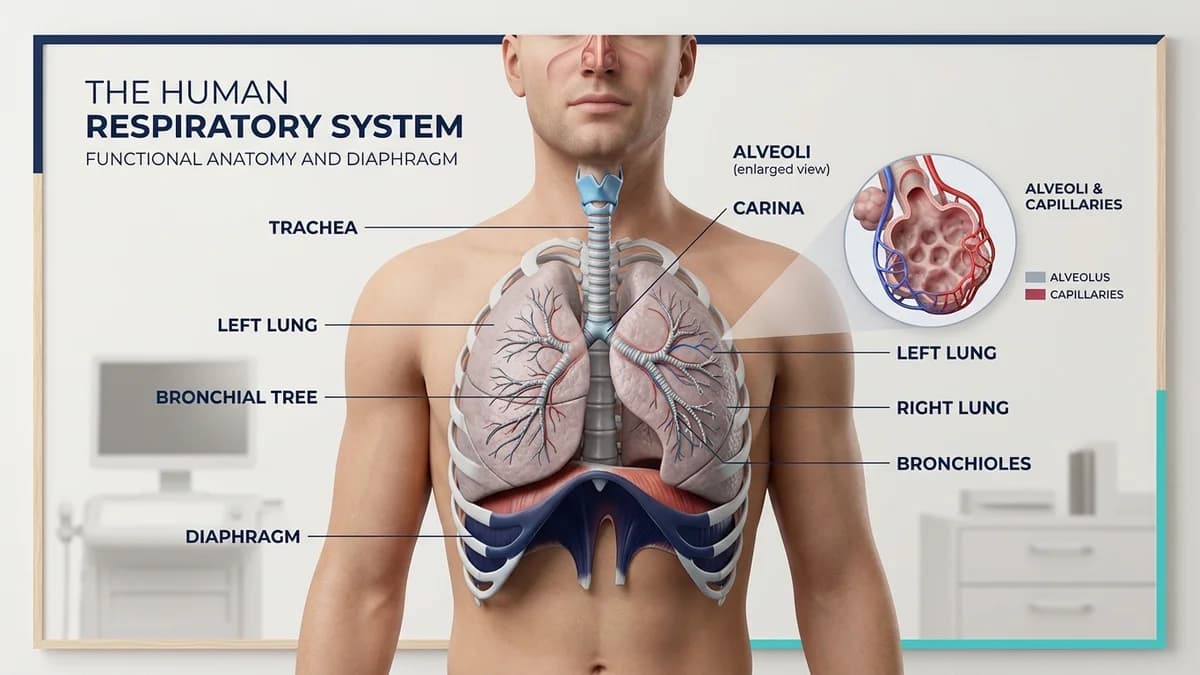
Postural Drainage (PD) positions the patient so that the segmental bronchus of the affected lung lobe is perpendicular to gravity, allowing mucus to drain downward from peripheral bronchopulmonary segments into major bronchi, where cough or suctioning can evacuate it.
Manual percussion applies rhythmic mechanical energy across the chest wall using cupped hands, transmitting shockwaves that dislodge tenacious mucus plugs from the bronchial mucosa.
Lobar Anatomy and Specific Postural Drainage Positions
Targeted positioning requires precise knowledge of the 18 bronchopulmonary segments and their anatomical orientation.
| Lung Lobe & Segment | Optimal Drainage Posture | Percussion Site | Bed Elevation / Angle | |
|---|---|---|---|---|
| 1. Apical Segments (Upper Lobes) | Sitting upright, leaning slightly backward or forward | Directly above clavicles on upper trapezius | Bed flat; patient comfortably seated. | |
| 2. Anterior Segments (Upper Lobes) | Supine with pillows under knees for comfort | Directly over upper anterior ribs between clavicle and nipple | Bed completely flat. | |
| 3. Posterior Segments (Upper Lobes) | Side-lying tilted 45 degrees forward, hugging a pillow | Over upper posterior scapular region | Bed flat; arms forward. | |
| 4. Lingula & Right Middle Lobe | Quarter turn from supine with body tilted | Directly over right or left nipple / lateral chest wall | Foot of bed elevated 15 degrees (approx 30 cm). | |
| 5. Basal Segments (Lower Lobes) | Prone or lateral decubitus positioning | Over lower posterior rib cage below inferior angle of scapula | Foot of bed elevated 20 degrees (approx 45 cm). |
Percussion Technique, Vibrations and Safety Rules
Manual percussion is performed using cupped hands with flexed wrists, creating an air cushion that produces a hollow, popping sound rather than a stinging slap.
Expiratory vibrations are applied manually during active exhalation, placing flat hands across the rib cage and applying gentle oscillatory compression directed downward and inward.
- Percussion Frequency and Rhythm: Clap rhythmically at 3 to 5 Hz (180 to 300 claps per minute) for 3 to 5 minutes per segment, maintaining wrist relaxation.
- Never Percuss Over Bony Prominences: Strictly avoid clapping directly over the spine, sternum, scapulae, kidneys, liver, or female breast tissue.
- Padded Towel Protection: Always place a soft towel or cotton vest over the patient skin to avoid erythema or bruising during percussion.
- Head-Down (Trendelenburg) Contraindications: Steep head-down positioning is strictly contraindicated in patients with elevated intracranial pressure, recent stroke, uncontrolled hypertension, GERD, massive hemoptysis, or pulmonary edema.
Elderly and Osteoporotic Patient Adaptations
In frail, osteoporotic Indian older adults, forceful manual percussion can fracture brittle ribs. Physiotherapists replace aggressive clapping with gentle palm vibrations, mechanical percussor vests, or active breathing cycles (ACBT).
Treatment is coordinated before meals or at least 90 minutes post-feeding to eliminate vomiting and aspiration risks.
Frequently Asked Questions
How do you know if chest percussion is being done correctly?
Correct percussion produces a deep, hollow 'clop' sound without skin stinging or pain. If the patient complains of sharp skin discomfort or slapping sounds are heard, the hands are flat rather than properly cupped.
Can chest physiotherapy be given to a patient with rib fractures?
Direct percussion over rib fractures is strictly contraindicated due to risk of displacing bone fragments and puncturing the pleura. Gentle breathing control, supported coughing, and positioning are utilized instead.
What is the difference between percussion and manual vibration?
Percussion is clapping applied throughout inspiration and expiration to loosen secretions. Vibration is a fine oscillatory downward compression applied strictly during exhalation to move secretions centrally.
Related condition guides


Related recovery guides & articles
BookPhysio.in Editorial Team
The BookPhysio.in editorial team writes and maintains this content, checking it against reliable clinical sources. Content follows our medical review policy: general information only, and no page claims a clinical review until a named registered physiotherapist has signed it off.
Read our medical review policy