
Coccydynia Post-Partum: Levator Ani Manual Release, Coccyx Wedge Cushions & Sitting Strategies
In short
Sitting down or rising from a chair feels like being stabbed in the tailbone. Discover how specialized pelvic floor physiotherapy and coccyx offloading cushions resolve postpartum coccydynia.
In this guide (5 sections)
Anatomical Pathophysiology of Postpartum Coccydynia
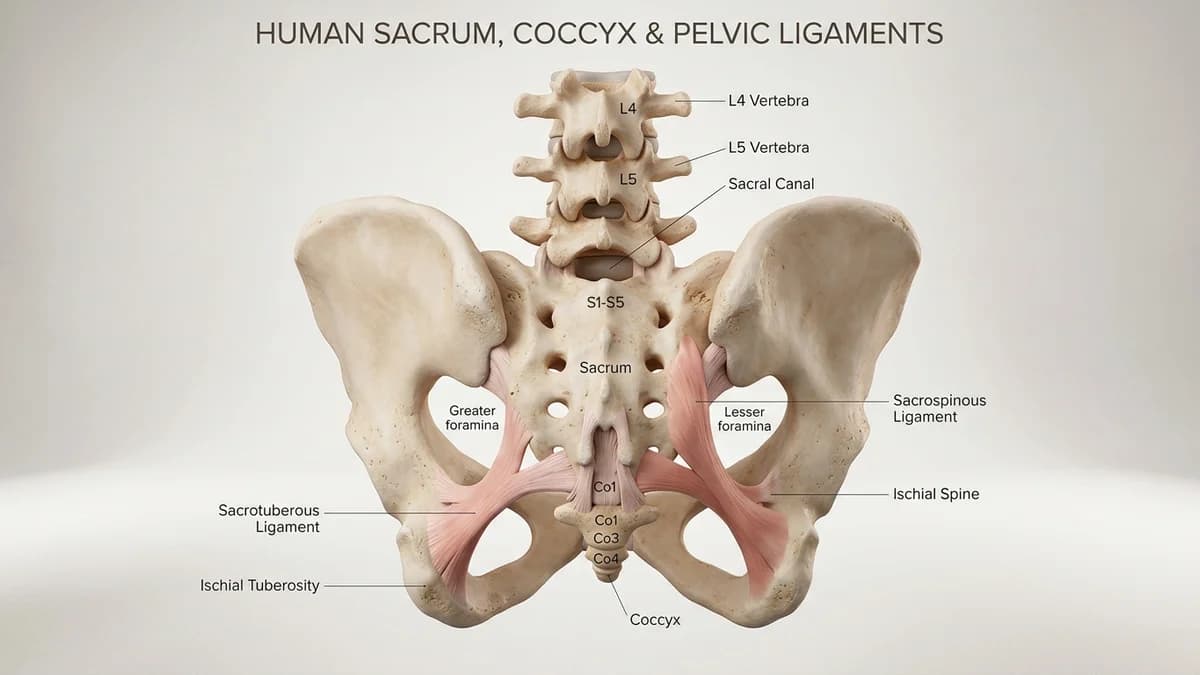
Coccydynia refers to localized, disabling pain in the region of the coccyx (tailbone), which is frequently exacerbated by sitting on firm surfaces or transitioning from sitting to standing. In women, the coccyx is more prominent, wider, and prone to mechanical injury due to the broader female pelvic gynecoid architecture.
During vaginal delivery, the coccyx must undergo backward movement (nutation/counternutation extension) of up to 2 to 3 centimeters to allow the fetal head to pass through the pelvic outlet. If the infant's head exerts excessive pressure, particularly in rapid deliveries, instrumental forceps/ventouse births, or fetal macrosomia, the sacrococcygeal ligaments can be sprained, the joint subluxated or hypermobile, or rarely, micro-fractured.
The Muscular Connection: Levator Ani and Anococcygeal Ligament
The coccyx does not float in isolation; it serves as the essential anterior anchor for the gluteus maximus and the posterior insertion point for the levator ani muscle complex (specifically the iliococcygeus and pubococcygeus) and the anococcygeal raphe.
Following acute joint trauma, the surrounding pelvic floor muscles contract reflexively to splint and protect the injured bone. This permanent muscular spasm exerts a relentless anterior and lateral pulling force on the coccyx, pulling it into painful flexion and perpetuating severe joint inflammation long after initial tissue healing should have occurred.
| Coccyx Dysfunction Type | Dynamic Radiographic / Palpation Finding | Characteristic Pain Trigger | Primary Physiotherapy Intervention | |
|---|---|---|---|---|
| Coccygeal Hypermobility | Flexion angle > 25-30 deg on dynamic sitting X-ray | Acute sharp pinch immediately upon sitting down | Pelvic floor stabilization and specialized wedge cushion | |
| Rigid / Flexed Subluxation | Coccyx pulled anteriorly into pelvic cavity; rigid | Deep throbbing ache while sitting; severe pain on rising | Internal manual intra-rectal mobilization and levator ani release | |
| Referred Myofascial Spasm | Normal joint mobility; exquisite trigger points in levator ani | Diffuse pelvic aching, pain during defecation | Myofascial trigger point release, dry needling, heat therapy | |
| Coccygeal Spicule / Bone Spur | Hard, sharp bony spur palpated at coccyx apex | Direct localized burning on any contact surface | Total offloading cushion; surgical consult if recalcitrant |
Specialized Internal Levator Ani Manual Mobilization
A critical breakthrough in coccydynia treatment is intra-rectal or internal vaginal mobilization performed by a certified pelvic health physiotherapist. The clinician gently grasps the coccyx between the index finger (internal) and thumb (external), assessing joint mobility and applying gentle, sustained traction to restore physiological extension.
Simultaneously, the therapist performs myofascial release on the hypertonic pubococcygeus and coccygeus muscle bands, releasing the forward spasm and immediately restoring sitting tolerance.
- The Coccyx Cut-Out Cushion (U- or Wedge-Shaped): Do not use a traditional circular 'donut' cushion, which compresses the sit bones and forces pelvic floor pressure into the center. Use a wedge cushion with a posterior cut-out that allows the tailbone to suspend in mid-air with zero contact pressure.
- Sitting Posture Ergonomics: Lean slightly forward with your weight distributed across your anterior thighs and ischial tuberosities (sit bones) rather than slumping back onto the sacrum.
- Pelvic Floor Down-Training Breathing: Practice slow diaphragmatic breathing to release resting tension in the posterior pelvic floor sling.
Functional Bowel and Transfer Mechanics
Passing firm stool pushes against the anterior face of the coccyx, provoking severe pain. Maintaining soft bowel consistency and using a footstool to straighten the anorectal angle prevents mechanical agony during bowel movements.
Frequently Asked Questions
Why does my tailbone hurt most when I try to stand up from a chair?
As you rise, the gluteus maximus contracts forcefully and the pelvic floor lifts, pulling directly on the irritated sacrococcygeal ligaments. Leaning forward and pushing up with your hands off the armrests reduces this painful muscular tug.
How many sessions of pelvic floor therapy are needed for tailbone pain?
Most patients experience significant pain reduction within 3 to 6 sessions of specialized manual release, joint mobilization, and ergonomic offloading.
Is it safe to get a cortisone injection in the tailbone?
Injections are considered secondary options for refractory cases that do not respond to conservative physiotherapy. Physiotherapy is always the non-invasive first-line recommendation.
Related condition guides


Related recovery guides & articles
BookPhysio.in Editorial Team
The BookPhysio.in editorial team writes and maintains this content, checking it against reliable clinical sources. Content follows our medical review policy: general information only, and no page claims a clinical review until a named registered physiotherapist has signed it off.
Read our medical review policy