
Pudendal Neuralgia: Alcock Canal Entrapment, Pudendal Nerve Gliding & Sitting Offloading
In short
Excruciating burning, stabbing, or numbness in the genitals and rectum that makes sitting impossible. Learn how pelvic floor physiotherapy releases trapped pudendal nerves.
In this guide (5 sections)
Anatomy and Course of the Pudendal Nerve
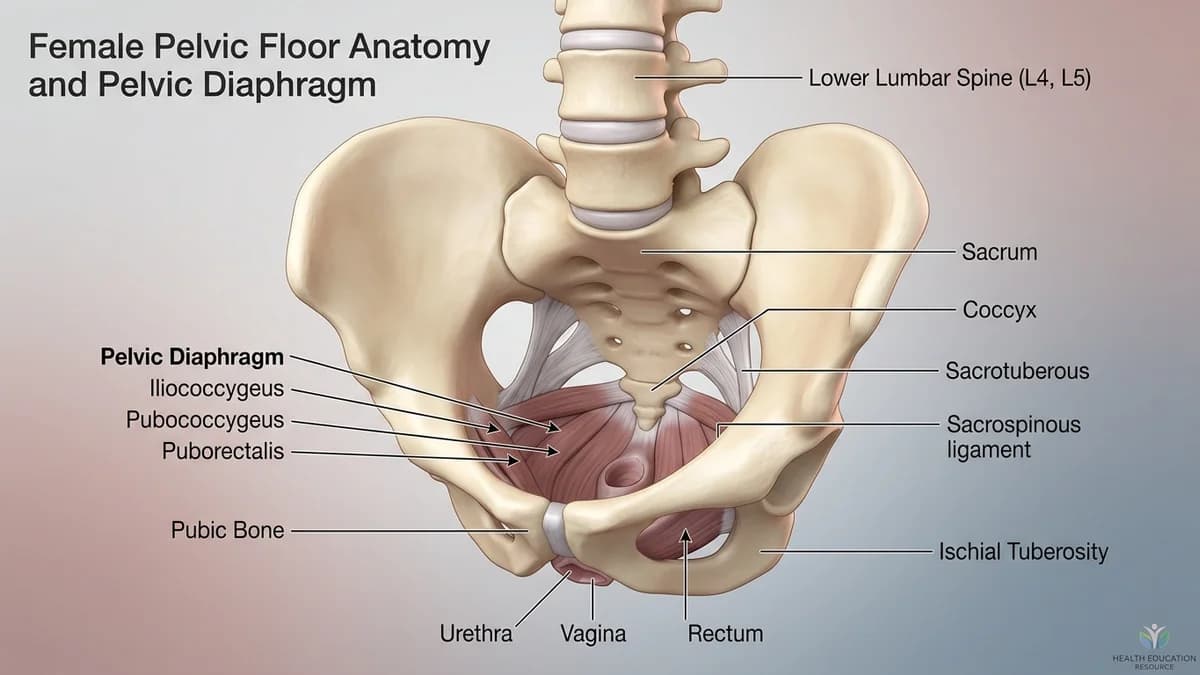
The pudendal nerve arises from the ventral rami of the second, third, and fourth sacral nerve roots (S2-S4). It courses through the greater sciatic foramen beneath the piriformis muscle, crosses the ischial spine between the sacrospinous and sacrotuberous ligaments, enters the lesser sciatic foramen, and passes through the pudendal canal (Alcock's canal), a tunnel formed by the duplication of the obturator internus fascia.
It divides into three terminal sensory and motor branches: the inferior rectal nerve (innervating the perianal skin and external anal sphincter), the perineal nerve (innervating the vulva, scrotum, and superficial perineal muscles), and the dorsal nerve of the clitoris or penis. Mechanical entrapment or friction anywhere along this complex pathway triggers debilitating neuropathic pain.
Diagnostic Gold Standard: The Nantes Criteria
Pudendal neuralgia is frequently misdiagnosed for years. In 2008, Prof. Jean-Jacques Labat and colleagues established the 'Nantes Criteria' as the universally accepted clinical framework for diagnosis.
Crucially, the criteria establish that pain is strictly positional: it worsens significantly upon sitting and is dramatically relieved by standing, lying down, or sitting on a hollow toilet seat with zero direct perineal contact.
| Criterion # | Essential Clinical Feature | Clinical Significance | |
|---|---|---|---|
| 1 | Pain situated in the anatomical territory of the pudendal nerve | Perineum, vulva, clitoris/penis, or rectum; never above the pelvic brim | |
| 2 | Pain is predominantly aggravated by sitting | Sitting causes direct compression against Alcock's canal or ischial spine | |
| 3 | The pain does not wake the patient at night | Sleep unloads perineal structures, halting compressive ischemia | |
| 4 | No objective sensory impairment on standard clinical exam | Preserves light touch; presents as burning, allodynia, or paresthesias | |
| 5 | Positive diagnostic pudendal nerve block | Infiltration with local anesthetic provides immediate temporary relief |
Conservative Physiotherapy and Neurodynamic Mobilization
Surgical decompression is reserved only for refractory structural entrapment. The overwhelming majority of patients achieve lasting relief through conservative pelvic health physiotherapy.
Therapy focuses on decompressing the surrounding musculoskeletal tunnels: releasing spasms in the obturator internus and piriformis muscles, mobilizing the sacrospinous and sacrotuberous ligaments, and performing gentle pudendal neurodynamic glides.
- Pudendal Nerve Flossing and Glides: Gentle, controlled movements of the hip into internal rotation and adduction with spinal flexion promote gentle longitudinal sliding without over-stretching the nerve.
- Obturator Internus Trigger Point Release: Internal intra-vaginal or intra-rectal manual release of the lateral pelvic wall reduces fascial tightness around Alcock's canal.
- The Split-Cushion Sitting Solution: Utilize a customized split cushion or two parallel yoga blocks that support the thighs and sit bones while leaving a 4-inch open channel for the perineum to float suspended.
Lifestyle Modifications and Cycle Precautions
Patients must temporarily cease bicycling, horse riding, and rowing, which apply direct mechanical crushing pressure to the pudendal canal. Standing desks and ergonomic workstation transitions allow sustained healing.
Frequently Asked Questions
Can cycling cause pudendal neuralgia?
Yes. Chronic compression of the pudendal nerve against the saddle during prolonged cycling (known as 'Cyclist's Syndrome') is a well-documented cause of numbness and burning pain in the groin.
Why does sitting on a toilet seat feel completely comfortable?
A toilet seat has an open center that allows your perineum and pudendal nerve to hang suspended without any direct surface contact or pressure.
Is pudendal neuralgia curable without surgery?
Yes. The vast majority of patients recover fully through specialized pelvic physiotherapy, nerve glides, ergonomic sitting modifications, and nervous system down-regulation without requiring surgery.
Related condition guides


Related recovery guides & articles
BookPhysio.in Editorial Team
The BookPhysio.in editorial team writes and maintains this content, checking it against reliable clinical sources. Content follows our medical review policy: general information only, and no page claims a clinical review until a named registered physiotherapist has signed it off.
Read our medical review policy