
Tailbone Pain (Coccydynia): Physiotherapy Exercises, Sitting Ergonomics and Relief
In short
Persistent tailbone pain makes sitting excruciating. Learn how specialized physiotherapy, pelvic floor relaxation, wedge cushion positioning, and targeted exercises relieve coccydynia without injections.
In this guide (8 sections)
Tailbone pain, known clinically as coccydynia, can make ordinary daily tasks like sitting at a work desk, driving, or rising from a low chair excruciating. Clinical trials confirm that non-invasive physiotherapy, pelvic floor relaxation, and ergonomic adaptations resolve coccyx pain in over 85 percent of cases without corticosteroid injections or surgery.
Why the tailbone becomes acutely painful
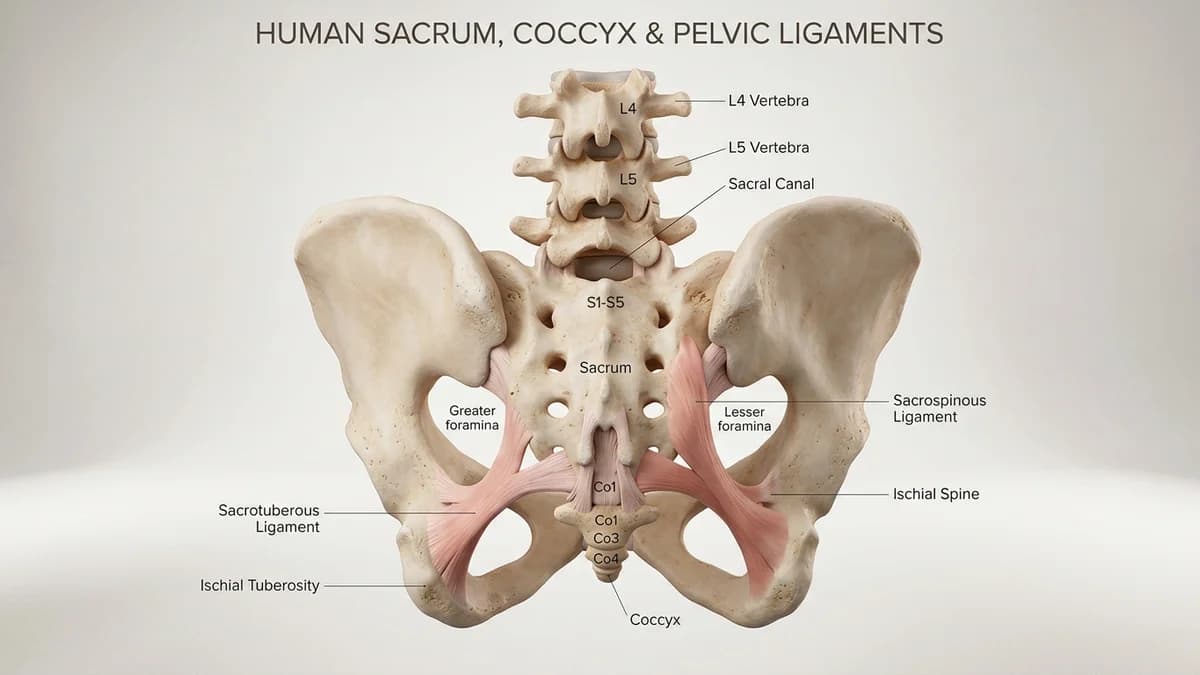
The coccyx is a small triangular bone consisting of 3 to 5 fused segments at the base of the spine. Although small, it serves as an essential anchor point for key pelvic floor muscles (including the levator ani and coccygeus) and the sacrotuberous and sacrospinous ligaments. When you sit leaning backward, your weight shifts from the ischial tuberosities (sitting bones) directly onto the coccyx.
Common causes of coccydynia include a direct backward fall onto hard ground, micro-trauma from prolonged sitting on unyielding surfaces, childbirth strain where the baby’s head pushes the coccyx backward, or hypertonic pelvic floor muscle spasms pulling the coccyx forward into an abnormal angle.
| Etiology | Biomechanical Mechanism | Physiotherapy Treatment Focus |
|---|---|---|
| Post-Traumatic Fall | Coccygeal joint hypermobility, contusion, or subluxation after direct impact. | Unloading the joint via coccyx cutout cushions and gentle sacrococcygeal mobilization. |
| Postpartum Strain | Overstretching of pelvic floor ligaments during vaginal delivery. | Pelvic floor re-education, transverse core stabilization, and adductor gentle loading. |
| Hypertonic Levator Ani | Chronic pelvic floor spasm pulling the coccyx forward into continuous flexion tension. | Pelvic floor down-training, myofascial trigger point release, and deep diaphragmatic breathing. |
Targeted home exercises for tailbone relief
Practice these gentle stretches twice daily on a comfortable, supportive exercise mat.
Single-Knee-to-Chest Coccyx Decompression
Objective: Gently open the posterior sacrococcygeal space and relieve ligamentous strain.
- 1Lie on your back on a firm, comfortable surface with your knees bent and feet flat on the floor.
- 2Slowly draw your right knee up toward your right armpit, clasping your hands behind your thigh or around your shin.
- 3Keep your left foot flat on the floor or extend the left leg straight if comfortable.
- 4Take slow, deep breaths, imagining your tailbone gently lengthening away from your head.
- 5Hold comfortably for 30 seconds, lower gently, and repeat with the opposite leg.
Supported Figure-4 Piriformis Stretch
Objective: Relieve lateral rotational tension on the sacrum and attaching pelvic ligaments.
- 1Lie on your back with both knees bent.
- 2Cross your right ankle over your left knee, creating a figure-4 shape with your legs.
- 3Gently grasp the back of your left thigh and draw both legs toward your chest until a gentle stretch is felt deep in the right buttock.
- 4Maintain a neutral neck and spine without clenching your jaw or holding your breath.
- 5Hold for 30 seconds and repeat on the opposite side.
Child’s Pose with Wide Knees (Balasana Variation)
Objective: Allow the pelvic floor muscles around the coccyx to lengthen and fully release.
- 1Kneel on the floor with your big toes touching and knees spread wider than your hips.
- 2Hinge your hips back toward your heels and walk your hands forward on the floor, resting your forehead on a cushion or mat.
- 3Focus on breathing deeply into your lower abdomen and lower pelvis, allowing the sitting bones to widen naturally on each inhalation.
- 4Remain in this relaxing posture for 1 to 2 minutes.
Sitting ergonomics: The coccyx cutout cushion
Sitting on an ordinary flat chair places direct pressure on the painful coccyx. Avoid round "donut" cushions: while popular for haemorrhoids, donut rings pinch the buttocks inward and pull tighter on the levator ani, often worsening coccydynia. Instead, use a wedge-shaped coccyx cushion with a triangular rear cutout that leaves the tailbone floating suspended in empty air, transferring all body weight onto the pelvic ischial tuberosities.
In-clinic vs home visit physiotherapy for tailbone pain
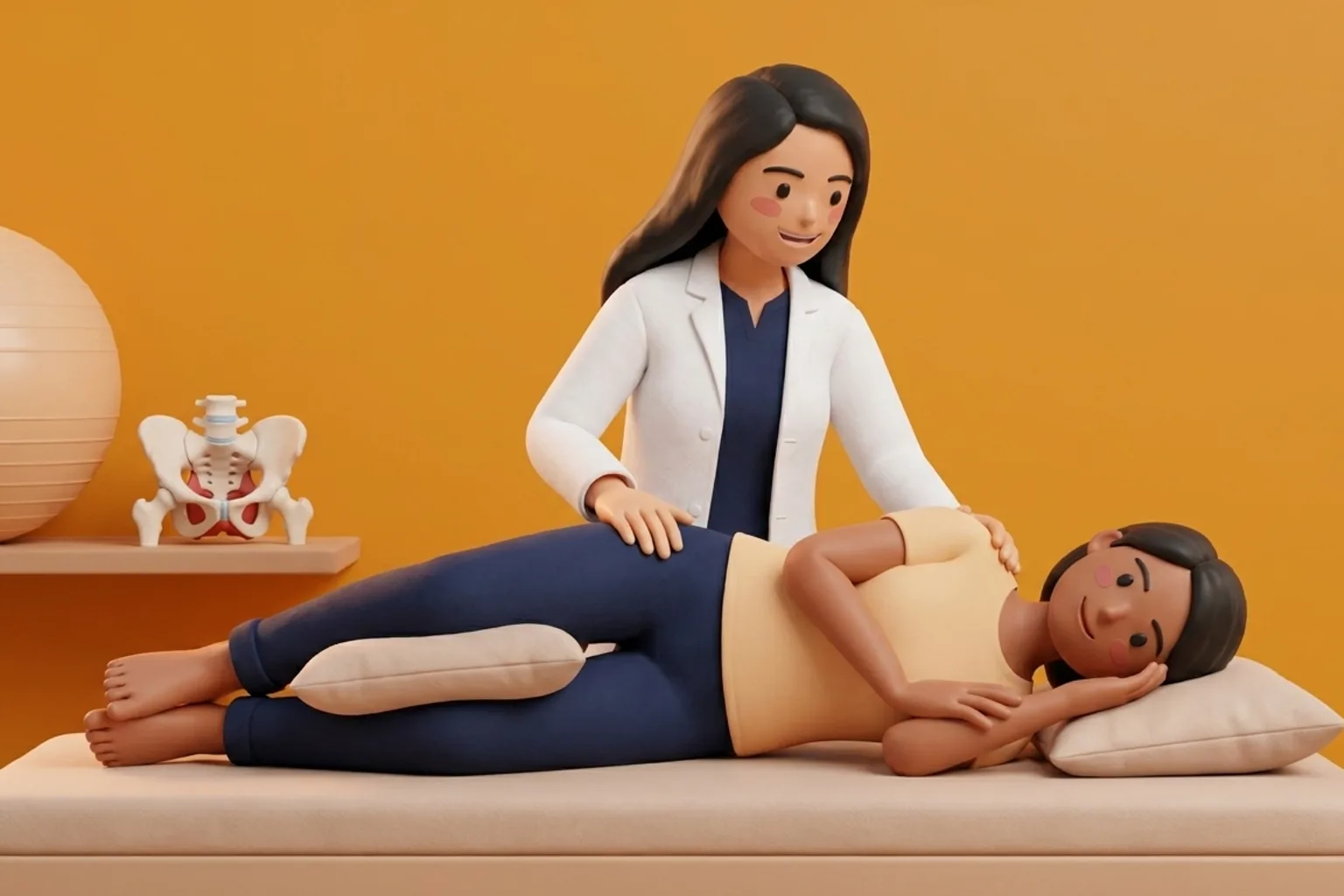
In an outpatient physiotherapy clinic, specialized pelvic health physiotherapists can evaluate sacrococcygeal joint mobility and perform external or internal myofascial release of the levator ani and obturator internus muscles. For individuals experiencing severe pain where driving or riding in vehicles triggers agonizing flare-ups, home visit physiotherapy allows direct treatment and immediate ergonomic assessment of your office chair and car seating.
On BookPhysio.in, coccydynia and pelvic physiotherapy sessions typically range from ₹400 to ₹1,500 for clinic visits and ₹500 to ₹1,800 for home visits in Indian cities, paid directly to your practitioner with zero platform fee.
Indian transport and workplace ergonomics: Autorickshaws and hard wooden chairs
Urban Indian living conditions present severe mechanical triggers for coccydynia. Commuting in autorickshaws or on two-wheelers over poorly maintained roads with speed breakers and potholes delivers sharp, repetitive axial shocks directly into the coccyx. In traditional offices and homes, sitting on unpadded wooden chairs, dining benches, or firm floor mats concentrates body weight onto the tender tailbone.
The definitive domestic solution is an ergonomic coccyx wedge cushion featuring a rear U-shaped cutout. The cutout suspends the tailbone in open space, eliminating direct surface contact and allowing inflamed periosteal tissues to rest and heal during sedentary work and driving.
Pelvic floor levator ani hypertonicity and internal coccygeal release
The coccyx serves as the primary structural anchor for the levator ani (specifically the pubococcygeus and iliococcygeus) and coccygeus muscles. Following a direct fall or prolonged seated trauma, these pelvic floor muscles enter chronic protective spasm, pulling the mobile coccyx anteriorly into painful flexion. Pelvic health physiotherapists perform specialized external and internal manual myofascial release, releasing hypertonic pelvic muscle bands and restoring normal coccygeal alignment.
Frequently asked questions
How long does coccydynia take to heal with physiotherapy?
Most acute cases resulting from prolonged sitting or minor falls improve within 4 to 8 weeks of consistent physiotherapy, pelvic floor relaxation, and ergonomic cushioning. Chronic cases of longer duration typically resolve across 8 to 16 weeks of structured rehabilitation.
Should I use heat or ice for tailbone pain?
During the first 48 to 72 hours after an acute fall, apply a gel ice pack wrapped in a thin towel for 15 minutes at a time to reduce acute swelling. For chronic aching pain aggravated by muscle tension, a warm heat pad applied for 15 minutes promotes pelvic muscle relaxation and improves blood flow.
When is tailbone pain a sign of something more serious?
Consult a medical doctor immediately if tailbone pain is accompanied by unexplained numbness in the saddle area (genitals or buttocks), sudden loss of bowel or bladder control, a visible draining sinus or lump near the natal cleft (pilonidal sinus), or unexplained progressive weight loss and fever.
Evidence reviewed 7 October 2026. General information only.
Sources reviewed
Foye PM, Coccydynia: Tailbone Pain (Physical Medicine and Rehabilitation Clinics of North America); Maigne JY et al., Causes and mechanisms of common coccydynia: role of body mass index and coccygeal mobility (Spine); JOSPT Pelvic Girdle Evidence Summaries; Cleveland Clinic Coccydynia Clinical Review.
Can coccydynia be cured without surgical tailbone removal (coccygectomy)?
Yes. Over 90 percent of coccydynia cases resolve completely with conservative management: coccyx wedge cushions, pelvic floor myofascial release, dry needling, gentle mobilisations, and anti-inflammatory pacing. Surgical removal of the tailbone (coccygectomy) is a rare, last-resort intervention reserved only for severe fracture non-unions.
How do I connect with a pelvic and spine physiotherapist via BookPhysio.in?
BookPhysio.in connects patients across India with certified physiotherapists specializing in coccydynia, pelvic floor relaxation, and ergonomic spine care. Sessions are available at clinic (₹400 to ₹1,500) or via home visits (₹600 to ₹2,000) with direct per-visit payment and zero platform commission.
Related condition guides

BookPhysio.in Editorial Team
The BookPhysio.in editorial team writes and maintains this content, checking it against reliable clinical sources. Content follows our medical review policy: general information only, and no page claims a clinical review until a named registered physiotherapist has signed it off.
Read our medical review policy