
Deadlift Lower Back Pain: Disc Herniation vs Facet Joint Strain Assessment
In short
Sharp lower back pain after heavy deadlifts requires accurate diagnosis. Discover whether your pain is discogenic or facet joint strain, and rebuild safe lifting mechanics.
In this guide (5 sections)
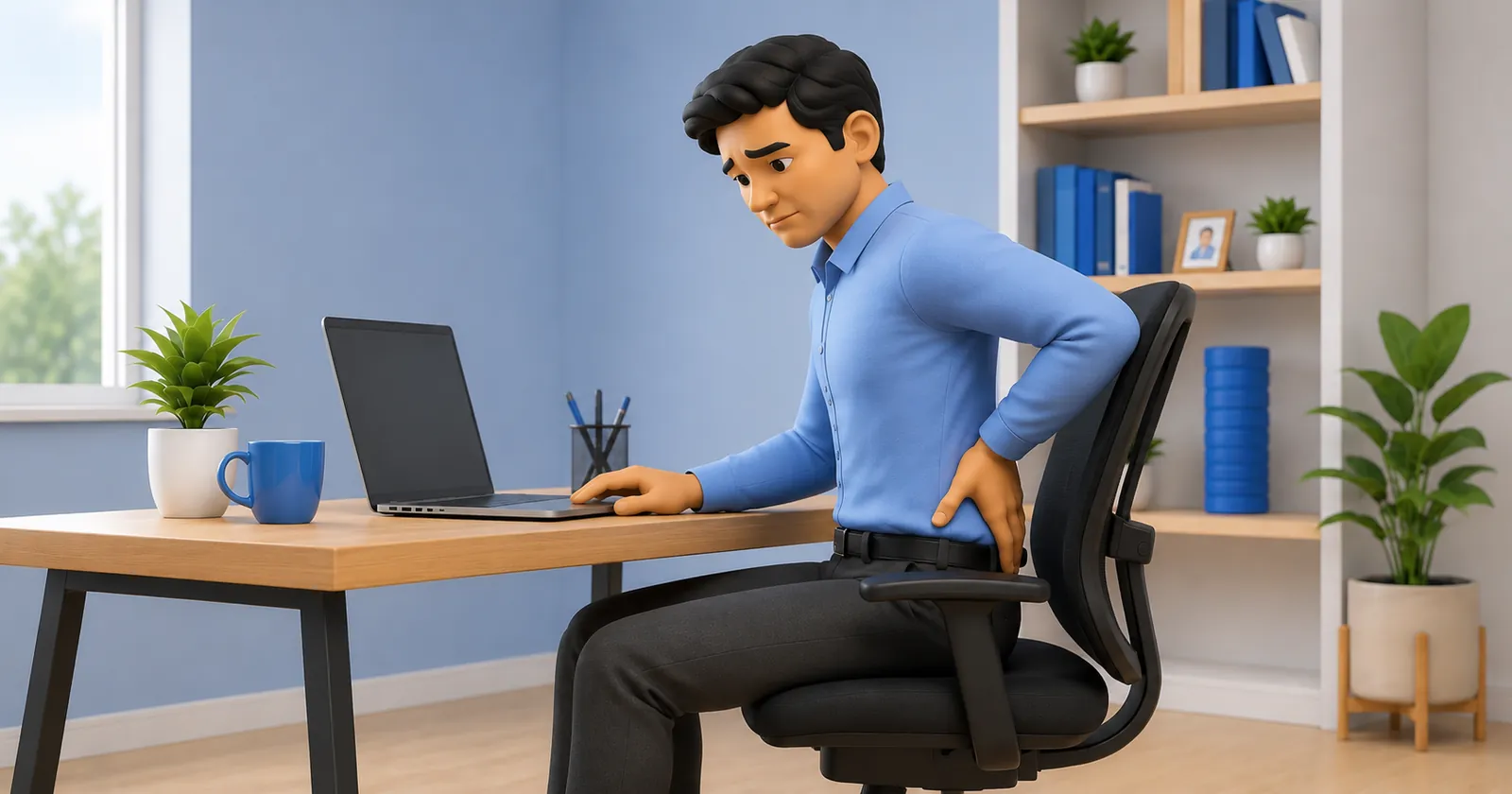
The barbell deadlift is universally hailed as one of the most effective compound movements for building total-body strength, posterior chain power, and bone density. However, in gymnasiums and fitness centers across India, the deadlift is also the single most frequent cause of acute lower back injuries among recreational lifters. Attempting heavy maximal lifts with compromised spinal mechanics frequently leaves lifters incapacitated with severe lumbar pain, prompting fears of permanent spinal damage.
Understanding the precise anatomical source of deadlift-induced back pain is critical for effective rehabilitation. Lower back pain following a deadlift typically stems from one of two distinct biomechanical mechanisms: a Discogenic Injury (lumbar disc herniation, annular tear, or flexion intolerance) caused by pulling with a rounded lower back, or a Facet Joint Sprain (extension intolerance) caused by aggressively hyper-extending the spine at the top lockout. Sports physiotherapy accurately differentiates the source and rebuilds a resilient, pain-free hip hinge.
1. Biomechanics: Flexion-Driven Discs vs Extension-Driven Facets
During a heavy deadlift, the lumbar spine experiences massive compressive loads exceeding 7,000 to 10,000 Newtons, combined with anterior shear forces. When a lifter pulls with a neutral spine, these compressive loads are distributed safely across the entire surface of the vertebral bodies and hydrated intervertebral discs.
However, when a lifter allows their lumbar spine to round into flexion under heavy load (the classic "cat-back" or "stripper deadlift"), the anterior vertebral margins pinch together, squeezing the gelatinous nucleus pulposus posteriorly against the sensitive outer fibers of the annulus fibrosus, resulting in disc bulging or tear. Conversely, when a lifter finishes the deadlift by forcefully leaning their upper torso backward into hyperextension, they jam the posterior zygapophyseal (facet) joints together under compressive load, pinching the richly innervated facet synovium.
| Diagnostic Feature | Lumbar Disc Herniation / Annular Tear | Lumbar Facet Joint Sprain | Erector Spinae Muscle Strain |
|---|---|---|---|
| Mechanism of Injury | Rounding the lower back into flexion under heavy pull; bar drifting forward | Violent hyperextension lockout at top of lift; leaning backward | Muscular fatigue failure; sudden jerk or loss of brace mid-lift |
| Directional Intolerance | Flexion-Intolerant: pain worsens with forward bending, sitting, putting on shoes | Extension-Intolerant: pain worsens with arching backward, standing tall | Pain during active muscle contraction or passive stretch; no radiculopathy |
| Pain Distribution | Deep central lower back ache; radiating pain into buttock, thigh, or foot (sciatica) | Localized, unilateral or bilateral lumbar ache; sharp catch when arching | Diffuse muscular soreness in lower back paraspinal muscle bellies |
| Physiotherapy Focus | McKenzie extension drills, McGill Big 3 core stabilization, sitting posture | Flexion-biased relief, opening facet joint spaces, gluteal core integration | Soft tissue release, gentle active mobility, progressive reload |
2. Gym Lifting Errors: Ego Lifting and the Disconnected Hip Hinge
Several technical errors drive deadlift injuries in Indian gyms. The most common error is the Disconnected Hip Hinge: many lifters treat the deadlift as a combination squat and back extension, allowing the barbell to drift 4 to 6 inches away from their shins. For every inch the barbell drifts away from the body, the mechanical lever arm on the lower back multiplies exponentially.
The second major contributor is lack of proper intra-abdominal bracing. Lifters frequently breathe into their chest rather than taking a deep 360-degree diaphragmatic breath into the belly, failing to activate the transversus abdominis and thoracolumbar fascia. Proper deadlift technique requires pulling the slack out of the barbell, engaging the latissimus dorsi ("squeezing oranges in your armpits"), and driving the floor away through the heels.
3. Three-Phase Deadlift Rehabilitation and Re-Patterning Protocol
Rehabilitation focuses on calming the irritated spinal structures using directional preference, followed by progressive rebuilding of the hip hinge.
Three-Phase Gym Deadlift Lower Back Rehabilitation Protocol
Objective: Relieve spinal disc or facet irritation, re-establish flawless hip hinge motor control, and safely reload the barbell.
- 1Phase 1 (Directional Preference and McGill Big 3 Stabilization): If your back is flexion-intolerant (disc pain), perform gentle prone press-ups (McKenzie extension): lie face down, push upper body up onto hands keeping pelvis flat on bed for 10 repetitions. If extension-intolerant (facet pain), perform gentle double-knee-to-chest holds. Practice the McGill Big 3 daily: curl-up, side plank from knees, and bird-dog to build 360-degree spinal endurance without spinal movement.
- 2Phase 2 (The Dowel-Rod Hip Hinge Mastery): Stand tall holding a light wooden dowel or PVC pipe vertically along your spine. The rod must touch three points simultaneously: the back of your head, your upper thoracic spine, and your tailbone (sacrum). Hinge backward from your hips as if touching your buttocks to a wall behind you, maintaining all three contact points without allowing your lower back to flatten or arch. Perform 3 sets of 10 repetitions daily.
- 3Phase 3 (Progressive Reloading - The Trap Bar and Elevated Pulls): Transition back to barbell lifting using a Trap Bar (Hex Bar) with high handles, or elevate the barbell on 4-inch blocks. The trap bar centers the center of mass inside your body, drastically reducing lumbar shear forces. Start with 40% of previous working weight, pulling sets of 5 repetitions with a strict reset between each rep.
- 4Lockout Cue: Finish the deadlift by squeezing your gluteal muscles hard to push your hips into the bar. Never lean your upper shoulders backward at lockout.
4. Critical Red Flags: Recognizing Cauda Equina Syndrome
While the majority of gym back injuries resolve completely with conservative care, a large disc herniation can occasionally compress the cauda equina nerve bundle: a true surgical emergency. Seek emergency hospital care immediately if you develop "saddle anaesthesia" (loss of sensation around your groin, buttocks, or perineum when wiping after using the toilet), sudden loss of voluntary bladder or bowel control (incontinence or retention), or progressive bilateral leg weakness where you stumble or cannot lift your feet (bilateral foot drop). Surgical decompression within 24 to 48 hours is vital to prevent permanent paralysis.
Frequently Asked Questions
Should I wear a weightlifting belt to protect my lower back while deadlifting?
A weightlifting belt is a valuable tool, but it is not a substitute for proper technique. A belt works by giving your abdominal wall a rigid surface to brace against, increasing intra-abdominal pressure. However, wearing a belt will not protect your back if your lumbar spine rounds into flexion under heavy loads. Master proper bracing and form before relying on a belt.
Can I do Romanian Deadlifts (RDLs) if standard deadlifts hurt my back?
Romanian Deadlifts (RDLs) done with a light kettlebell or dumbbells are often superior for early rehabilitation because they start from a standing position and focus entirely on the pure hip hinge without the awkward floor pull. Keep the weights light, slide the dumbbells down your thighs, and stop at mid-shin level before your spine loses neutral alignment.
How long should I wait after a back injury before deadlifting again?
Most lifters can begin re-patterning light hip hinges within 10 to 14 days of an acute strain, once normal walking and sitting are pain-free. Returning to heavy deadlifts typically requires 6 to 10 weeks of progressive loading to allow annular disc fibers or facet joint capsules to remodel solidly.
Does an MRI showing a "disc bulge" mean I can never lift heavy weights again?
No, definitely not. Asymptomatic disc bulges are present in over 50 to 60 percent of healthy adults who have zero back pain. A disc bulge on an MRI is a normal sign of spinal adaptation, much like grey hair or skin wrinkles. With proper core stabilization, hip hinge mechanics, and progressive overload, lifters routinely return to pulling heavy weights safely.
How does BookPhysio.in connect strength athletes with sports physiotherapists in India?
BookPhysio.in connects lifters and gym-goers with certified sports physiotherapists who specialize in barbell biomechanics, lifting technique audits, and return-to-sport protocols. Transparent fees range between ₹400 and ₹1,500 for clinic visits and ₹600 to ₹2,000 for home visits, with zero platform commission and direct payment to clinicians.
Related condition guides

BookPhysio.in Editorial Team
The BookPhysio.in editorial team writes and maintains this content, checking it against reliable clinical sources. Content follows our medical review policy: general information only, and no page claims a clinical review until a named registered physiotherapist has signed it off.
Read our medical review policy