
Spondylolisthesis: Core Stabilization Exercises, Flexion vs Extension, and Avoiding Surgery
In short
Vertebral slippage (spondylolisthesis) requires specific core stabilization. Learn why flexion-biased exercises protect the slipped vertebra, how deep core muscles brace the spine, and when to avoid hyperextension.
In this guide (9 sections)
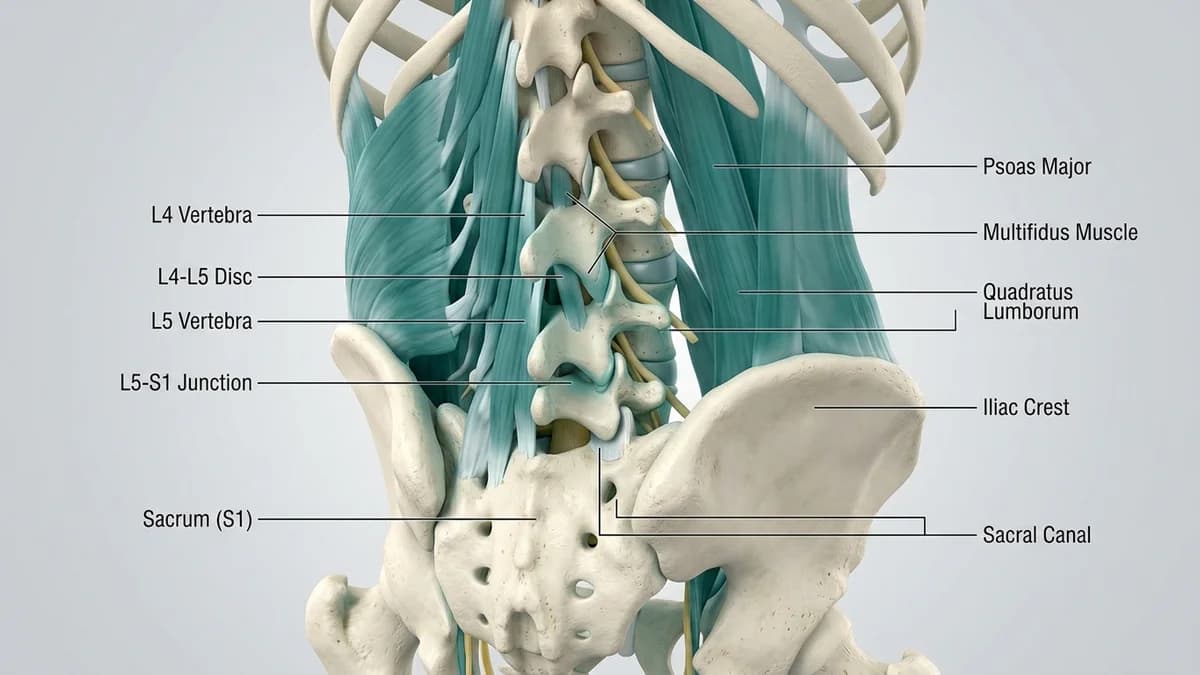
Spondylolisthesis occurs when one lumbar vertebra slips forward relative to the vertebra beneath it, most commonly at the L4-L5 or L5-S1 levels. High-quality clinical trials demonstrate that targeted physiotherapy focusing on deep core muscle stabilization and flexion-biased movement patterns provides long-term stability and pain relief in over 80 percent of low-grade cases without spinal fusion surgery.
Understanding spondylolisthesis grades and causes
Spondylolisthesis is categorized into two main clinical types: isthmic spondylolisthesis (caused by a defect or stress fracture in the pars interarticularis bone, common in young gymnasts, cricketers, and dancers) and degenerative spondylolisthesis (caused by age-related facet joint arthritis and disc dehydration in adults over 50).
Radiologists measure slippage using the Meyerding classification system:
| Classification | Degree of Slippage | Clinical Management |
|---|---|---|
| Grade 1 | 1 to 25 percent forward slippage. | First-line conservative physiotherapy; excellent functional prognosis. |
| Grade 2 | 26 to 50 percent forward slippage. | Targeted core motor control, activity modification, progressive loading. |
| Grade 3 | 51 to 75 percent forward slippage. | Specialist medical review; structured rehabilitation with surgical consultation if neurological signs appear. |
| Grade 4 | 76 to 100 percent forward slippage. | High mechanical instability; often indicated for surgical stabilization. |
Why flexion exercises help while extension hurts
The biomechanics of spondylolisthesis are critical: backward spinal extension (arching your lower back) increases the forward shear force on the slipped vertebra and narrows the spinal canal and neural foramina. Conversely, slight spinal flexion (posterior pelvic tilting) flattens the lumbar lordosis, opens the neural foramina by up to 20 percent, and takes mechanical pressure off irritated nerve roots.
Evidence-based core stabilization exercises
Focus on activating the transverse abdominis, multifidus, and pelvic floor to act as an internal natural corset that anchors the lumbar vertebrae.
Supine Posterior Pelvic Tilt with Abdominal Bracing
Objective: Train deep core activation while flattening the lumbar arch to decompress neural foramina.
- 1Lie on your back with knees bent and feet flat on the floor, about hip-width apart.
- 2Place your fingertips just inside your hip bones to feel your abdominal muscles.
- 3Gently draw your belly button toward your spine and tilt your pelvis backward so your lower back flattens gently into the floor.
- 4Breathe smoothly while maintaining the flat contact for 5 to 8 seconds.
- 5Release smoothly back to neutral.
Williams Flexion Knee-to-Chest Hold
Objective: Gently flex the lumbar spine and stretch tight lumbosacral extensor muscles.
- 1Lie on your back with knees bent.
- 2Bring both knees up toward your chest, clasping your hands around your shins or under your knees.
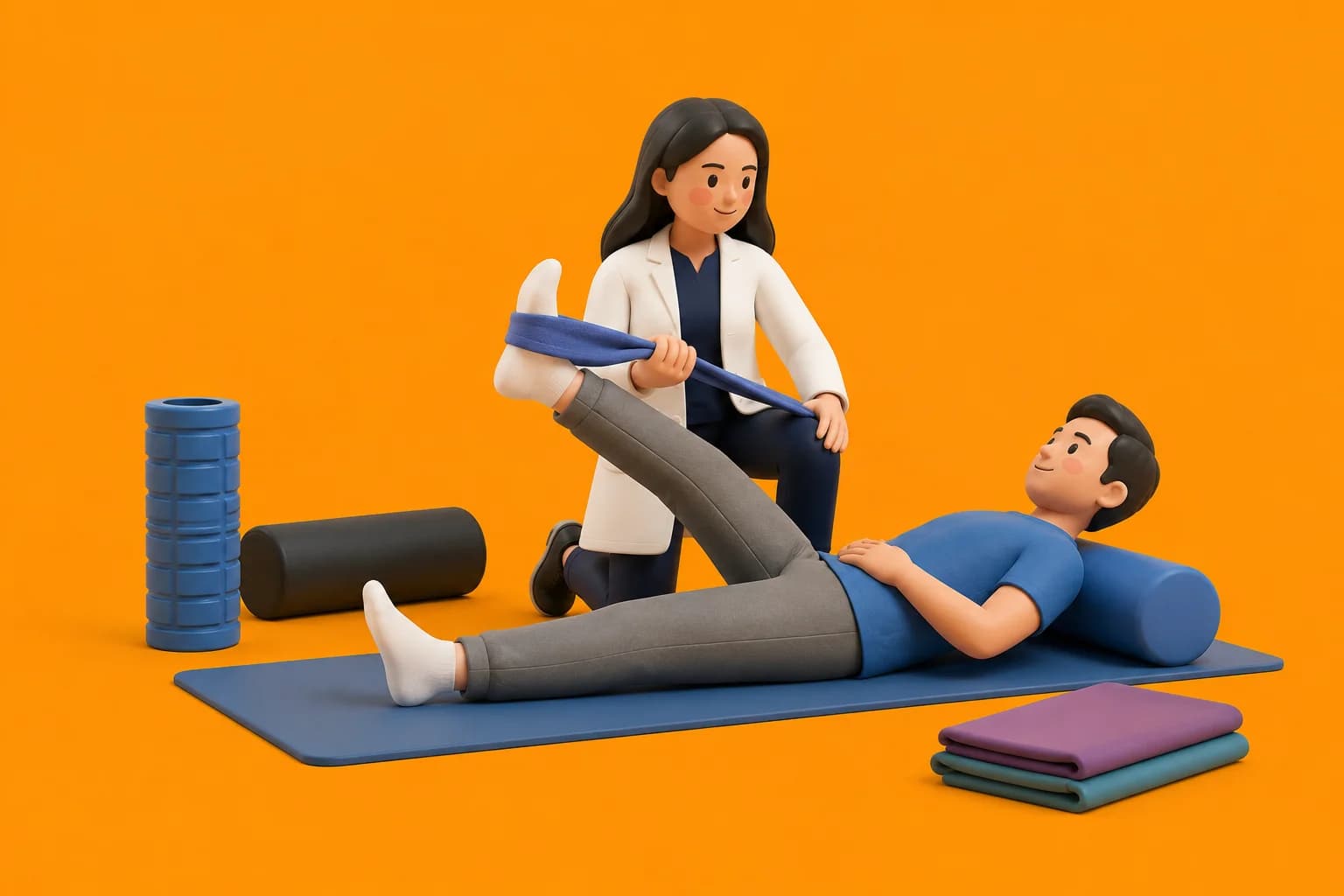
- 3Gently hug your knees toward your chest until a comfortable stretch is felt across your lower back and glutes.
- 4Hold the position calmly for 20 to 30 seconds while breathing deeply.
- 5Lower one leg at a time back to the floor.
Dead Bug with Supported Neutral Spine
Objective: Strengthen anterior abdominal stabilizers against extension forces during leg movement.
- 1Lie on your back with knees bent at 90 degrees in a tabletop position and arms pointing straight up toward the ceiling.
- 2Flatten your lower back gently into the floor using a posterior pelvic tilt.
- 3Slowly lower your right arm overhead while tapping your left heel to the floor.
- 4Only lower as far as you can maintain your lower back firmly anchored to the floor without arching.
- 5Return to the starting position and repeat with the opposite arm and leg.
Harmful movements to avoid with spondylolisthesis
- Avoid deep backbends and hyperextension: Exercises like the Cobra pose in yoga, standing back extensions, or Roman chair hyperextensions drive the upper vertebra further forward and pinch exiting nerve roots.
- Avoid unsupported straight leg raises: Lifting both straight legs while lying on your back creates huge anterior shear leverage from the psoas muscle on L4 and L5.
- Avoid heavy overhead barbell pressing: Pressing weights overhead while standing compresses the lumbar spine and tends to push the pelvis into an anterior pelvic tilt.
In-clinic vs home visit physiotherapy
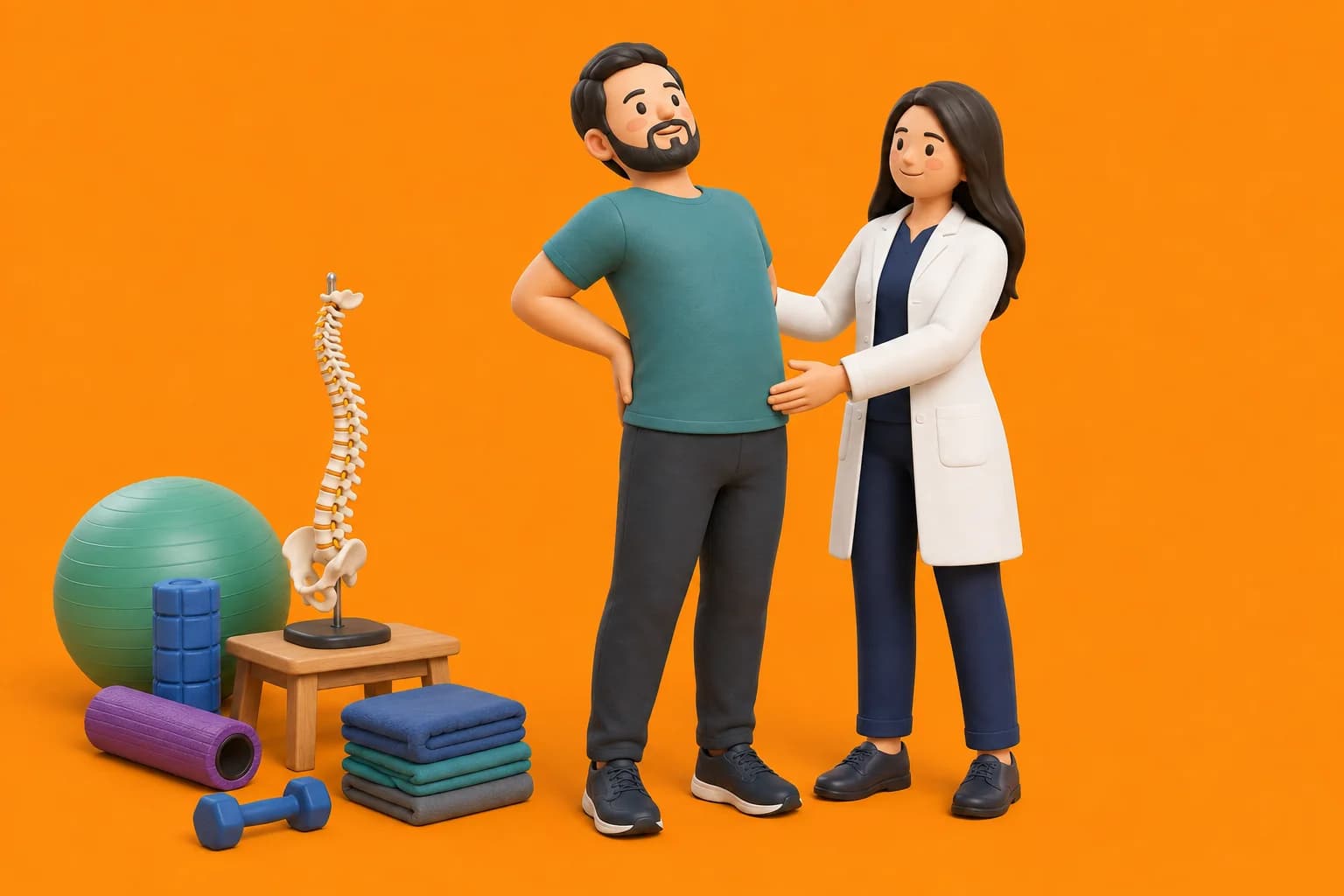
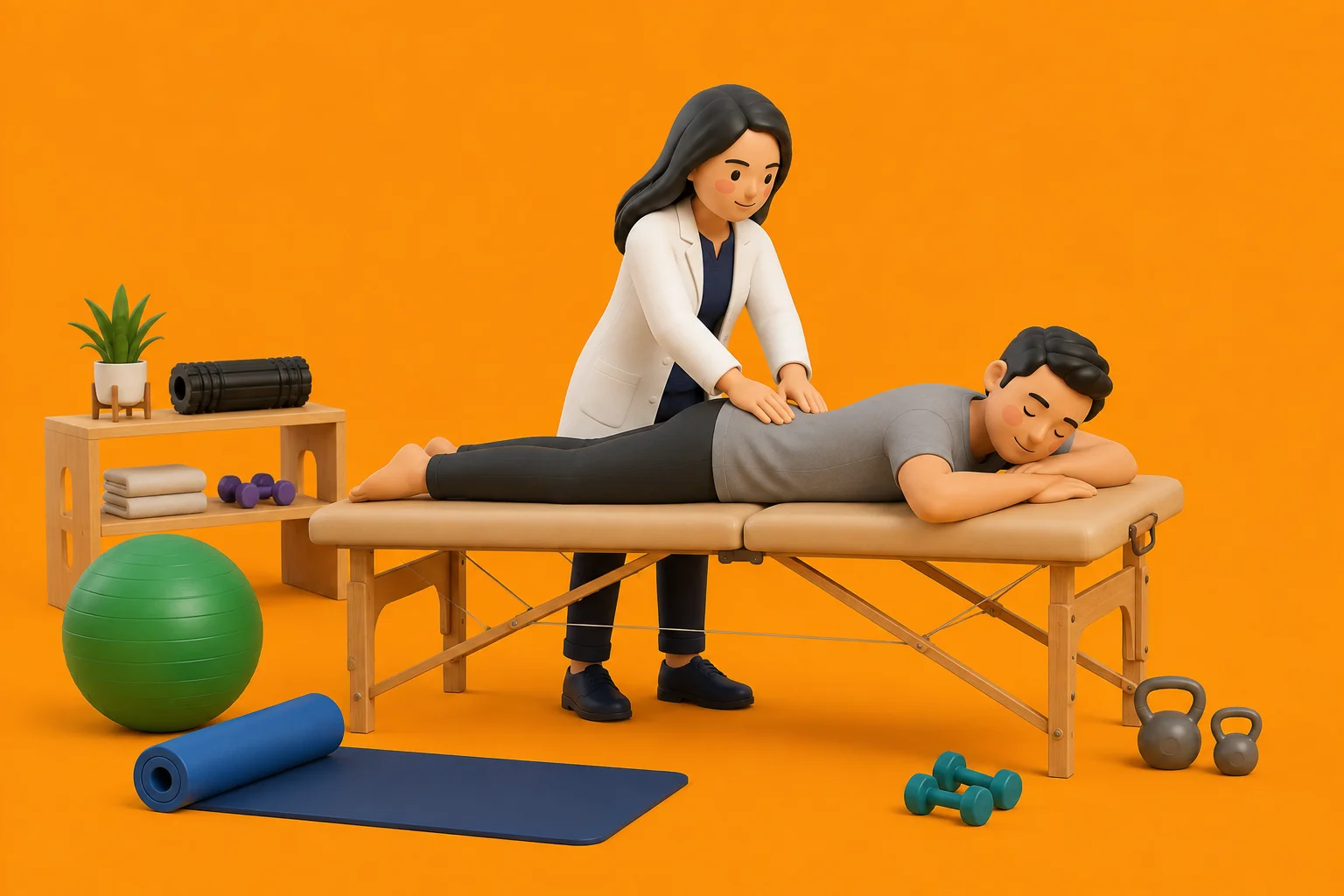
In an outpatient clinic, therapists use real-time ultrasound biofeedback to verify transverse abdominis recruitment and guide spinal unloading on traction tables. For acute flare-ups where walking or sitting is uncomfortable, home visit physiotherapy allows a specialist to evaluate your bed firmness, teach safe log-roll transfers, and initiate gentle core bracing without exhausting travel.
On BookPhysio.in, spondylolisthesis consultations range from ₹400 to ₹1,500 for clinic visits and ₹500 to ₹1,800 for home visits across Indian cities. You pay your clinician directly with zero platform fee.
Pars interarticularis stress fractures in young Indian fast bowlers and athletes
Isthmic spondylolisthesis in young Indian adolescents and sports athletes is overwhelmingly driven by repetitive hyperextension and rotation: particularly in young cricket fast bowlers during front-foot delivery stride, gymnasts, and dancers. Repetitive micro-trauma causes a fatigue stress fracture of the pars interarticularis (spondylolysis), allowing the superior vertebral body to slide anteriorly.
Early detection with high-resolution SPECT-CT or lumbar MRI allows bone stress healing before slippage progresses. Sports physiotherapy focuses on neutral spinal positioning, eliminating hyperextension bowling flaws, and building profound anterior abdominal muscular endurance to replace the lost bony mechanical block.
Williams flexion vs neutral stabilization: Why back extensions are dangerous
A critical clinical rule in spondylolisthesis rehabilitation is the avoidance of aggressive spinal hyperextension (such as prone cobra poses or backward bending). Extending the lumbar spine jams the posterior neural arch and forces the slipped vertebra further forward, narrowing the spinal canal and compressing nerve roots. Modern physiotherapy utilizes neutral-spine stabilization (McGill Big 3) paired with gentle flexion-biased exercises that widen the intervertebral foramina and relieve nerve tension.
Frequently asked questions
Can a slipped vertebra in spondylolisthesis slide back into place?
No. Exercises do not physically push the vertebra backward into its original anatomical position. However, strong core stabilizers create dynamic muscular locking that permanently stops further slippage and completely relieves nerve compression and back pain.
Is walking good for spondylolisthesis?
Yes, short, frequent walks on flat surfaces are excellent for lumbar nutrition and general endurance. If walking triggers leg numbness or aching (neurogenic claudication), leaning slightly forward on a shopping trolley or taking seated rest breaks relieves symptoms.
When is surgery required for spondylolisthesis?
Spinal fusion surgery is typically considered only for high-grade slippage (Grade 3 or 4), progressive neurological deficits (such as foot drop or progressive leg weakness), loss of bowel or bladder control (cauda equina syndrome), or severe pain that fails to improve after 3 to 6 months of supervised physiotherapy.
Evidence reviewed 7 October 2026. General information only.
Sources reviewed
North American Spine Society (NASS) Evidence-Based Clinical Guidelines for Multidisciplinary Spine Care: Diagnosis and Treatment of Degenerative Lumbar Spondylolisthesis; O’Sullivan PB et al., Evaluation of specific stabilizing exercise in the treatment of chronic low back pain with radiologic diagnosis of spondylolysis or spondylolisthesis (Spine); Kalichman L et al., Spondylolysis and spondylolisthesis: prevalence and association with low back pain in the adult community-based population (Spine).
Can physiotherapy slip an L5-S1 spondylolisthesis back into place?
Physiotherapy cannot anatomically reverse a structural bony vertebral slippage back into its original position. What physiotherapy does is create an internal "muscular cast" (strengthening the transversus abdominis, multifidus, and gluteals) that locks the segment in place, halts further forward progression, and eliminates pain completely.
How do I schedule a spine physiotherapy assessment on BookPhysio.in?
BookPhysio.in connects patients across India with certified spine physiotherapists experienced in spondylolisthesis, core stabilization, and athletic return-to-play testing. Clinic appointments range from ₹400 to ₹1,500 and home visits range from ₹600 to ₹2,000, with direct per-visit payment and zero platform commission.
Related condition guides
BookPhysio.in Editorial Team
The BookPhysio.in editorial team writes and maintains this content, checking it against reliable clinical sources. Content follows our medical review policy: general information only, and no page claims a clinical review until a named registered physiotherapist has signed it off.
Read our medical review policy