
Sciatica pain relief: exercises, movement guidelines, and home rehabilitation
Conditions and RecoveryIn short
Sciatica and nerve root compression can cause sharp pain, tingling, and numbness radiating down the leg. Learn which daily movements aggravate disc irritation, how gentle nerve sliders and extension-bias exercises restore mobility, and when home physiotherapy is appropriate.
In this guide (7 sections)
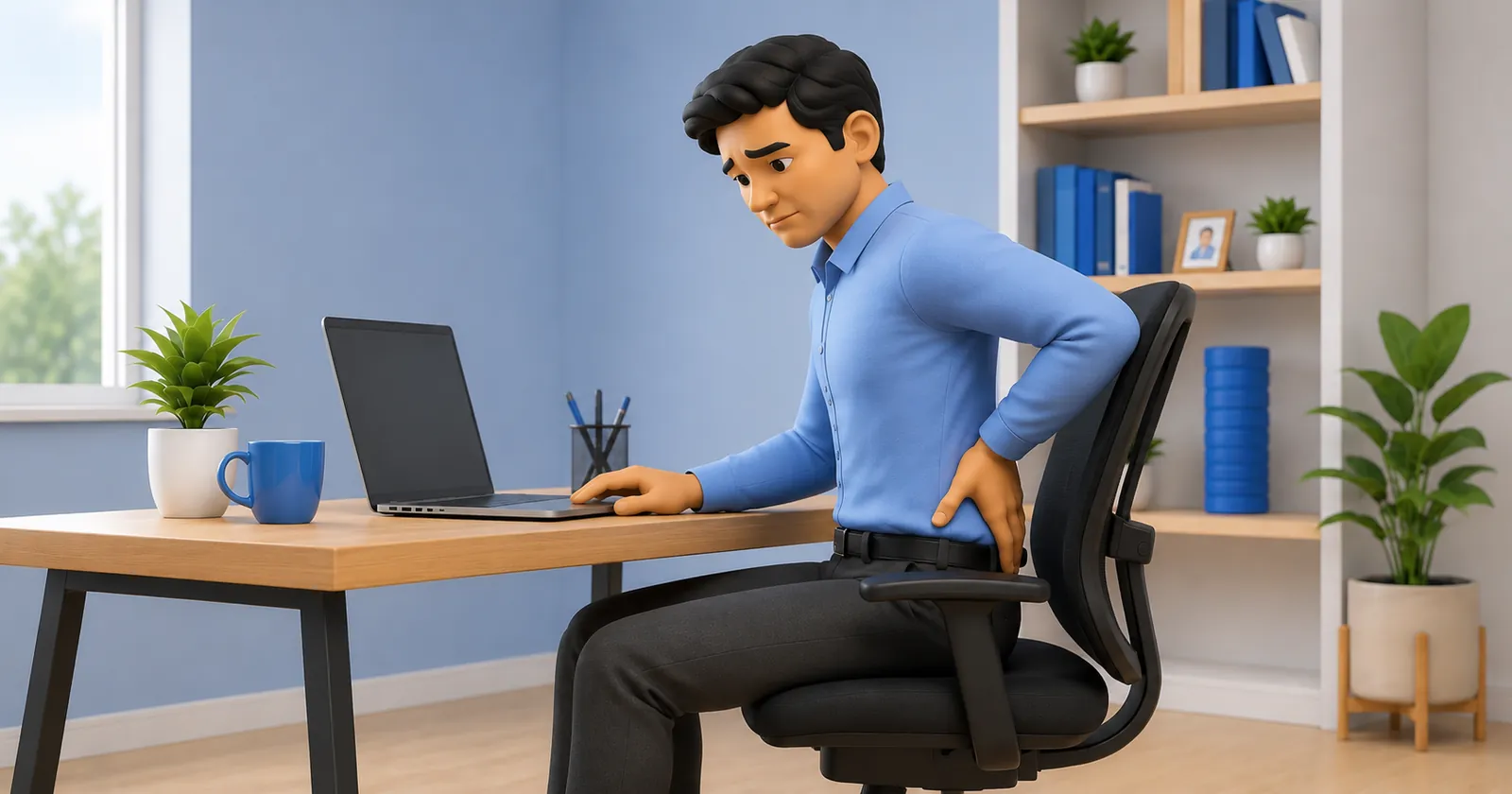
Sciatica pain occurs when the sciatic nerve is compressed or irritated, typically by a lumbar disc bulge, spinal stenosis, or piriformis spasm. While sharp, shooting leg pain can feel alarming, conservative physiotherapy at home helps reduce nerve sensitivity and restore functional mobility in most non-surgical cases.
Common sciatica symptoms and the nerve path
The sciatic nerve originates from the L4 to S3 spinal nerve roots in your lower back, travels through the deep gluteal region, and branches down the back of your thigh into your calf and foot. Compression produces characteristic dermatomal symptoms: burning aches in the buttock, tingling in the outer calf, or sharp electric shocks during transitional movements.
Five daily movements to avoid during an acute flare-up
During the acute inflammatory stage, certain common movements increase intradiscal pressure or create tensile stretch across the sensitized nerve root. Modifying these five habits helps prevent aggravating symptoms:
| Aggravating Movement or Posture | Biomechanical Mechanism | Safer Functional Alternative |
|---|---|---|
| Toe touching & forward flexion | Increases anterior disc pressure and posterior nerve tension | Hip hinge with soft knees keeping your lumbar spine neutral |
| Slumped sitting on soft sofas | Reverses natural lordosis and compresses lower lumbar roots | Sit on a firm chair using a rolled towel behind your lower back |
| Aggressive straight-leg hamstring stretches | Tolerates muscular stretch poorly while inflaming the sciatic sheath | Supported gentle nerve flossing with intermittent flexion and extension |
| Prolonged static bed rest | Reduces spinal disc nutrition and leads to paraspinal muscle guarding | Short 5 to 10-minute gentle walks on flat indoor surfaces every 2 hours |
| Lifting objects away from the body | Multiplies leverage force across L4-L5 and L5-S1 disc spaces | Hold items directly against your chest and bend from your hips and knees |
Gentle home exercise progression: the traffic-light rule
Rehabilitating sciatica requires listening to your body rather than forcing through discomfort. Clinicians use a simple traffic-light rule during home exercise sessions:
- Green light (Mild muscular stretch or dull ache): Safe to proceed. Discomfort settles completely within minutes of concluding the set.
- Amber light (Tension that does not worsen): Proceed with caution. Reduce range of motion or speed if discomfort lingers beyond 15 minutes.
- Red light (Peripheralizing or shooting pain down the leg): Stop immediately. Pain traveling further into the calf or foot indicates nerve irritation. Rest and consult your clinician.
Supported Prone Lying with Extension Bias
Objective: Promote centralisation of lumbar disc loading and ease radiating nerve pressure.
- 1Lie face down on a firm mattress or exercise mat with arms relaxed by your side for two minutes.
- 2If comfortable without increased leg pain, prop up onto your forearms while keeping your pelvis and lower back relaxed.
- 3Breathe steadily and hold for 30 to 45 seconds before lowering down gently.
Gentle Sciatic Nerve Slider (Flossing)
Objective: Improve neural mobility through the lumbar canal and sciatic notch without tensile strain.
- 1Sit upright on a firm chair with thighs fully supported and hands resting on your lap.
- 2As you gently look up toward the ceiling, extend the affected knee forward until you feel mild tension.
- 3As you lower the foot back down, gently lower your chin toward your chest.
- 4Perform the movement smoothly without holding the end range.
When to consult a home-visit physiotherapist
When walking, standing, or sitting is intensely painful during an acute flare-up, in-home assessment by a registered physiotherapist allows customized movement evaluation without the physical stress of transit. Learn more about home visit vs clinic physiotherapy cost, compare lower back pain guidelines, or find verified specialists in Mumbai and across India.
Need guided sciatica assessment at home? Connect with council-registered physiotherapists for in-clinic or home visits in your city.
Explore Sciatica Care Guide →Emergency red flags requiring immediate medical attention
Certain symptoms indicate a medical emergency requiring urgent hospital evaluation rather than routine physiotherapy. If you experience loss of bowel or bladder control, sudden numbness in the saddle area around your groin or buttocks, or progressive leg weakness causing you to stumble (foot drop), call 112 or visit the nearest emergency medical centre immediately.
Frequently asked questions
How long does sciatica take to heal with physiotherapy?
Most non-surgical sciatica episodes show steady functional improvement over 4 to 8 weeks with guided physiotherapy, directional preference exercises, and active modification. Chronic cases with nerve sensitivity may take longer.
Is bed rest better than exercise for sciatica?
Strict bed rest beyond 24 to 48 hours is no longer recommended. Controlled, low-impact walking and gentle directional exercises preserve muscle tone and improve spinal circulation without overloading the healing nerve.
Do I need an MRI scan before starting home physiotherapy?
Routine MRI imaging is not required before initial physiotherapy assessment unless clinical red flags are present or conservative care does not progress after several weeks.
Can a physiotherapist visit my home for sciatica in India?
Yes. Registered physiotherapists on BookPhysio.in offer home visits across Indian cities for patients whose acute back or leg pain makes clinic travel difficult.
Evidence reviewed 20 September 2026. General information only. BookPhysio.in is a booking platform, not a clinic.
Sources reviewed
NICE Guidelines: Low back pain and sciatica in over 16s (NG59); Indian Association of Physiotherapists (IAP) Clinical Practice Protocols; BookPhysio.in Clinical Standards.
Related condition guides

BookPhysio.in Editorial Team
Editorial Team
The BookPhysio.in editorial team writes and maintains this content, checking it against reliable clinical sources. Content follows our medical review policy: general information only, and no page claims a clinical review until a named registered physiotherapist has signed it off.
Read our medical review policy