
Frozen Shoulder (Adhesive Capsulitis): The Three Stages, Stretches, and Restoring Arm Elevation
In short
Adhesive capsulitis severely restricts overhead reach and sleep comfort. Learn stage-matched physiotherapy interventions to relieve nocturnal pain and restore full capsular mobility.
In this guide (5 sections)
Adhesive capsulitis, universally recognized as Frozen Shoulder, is a chronic, painful, and profoundly disabling musculoskeletal pathology characterized by progressive fibrosis, thickening, and contracture of the glenohumeral joint capsule. Across India, frozen shoulder presents with exceptional frequency in middle-aged adults, demonstrating a five-fold higher prevalence among individuals living with type 2 diabetes mellitus, metabolic syndrome, and autoimmune thyroid disorders. When the shoulder capsule becomes severely contracted, everyday functional activities, such as combing hair, fastening garments behind the back, reaching for overhead vehicle handrails, or simply sleeping comfortably, become agonizing struggles.
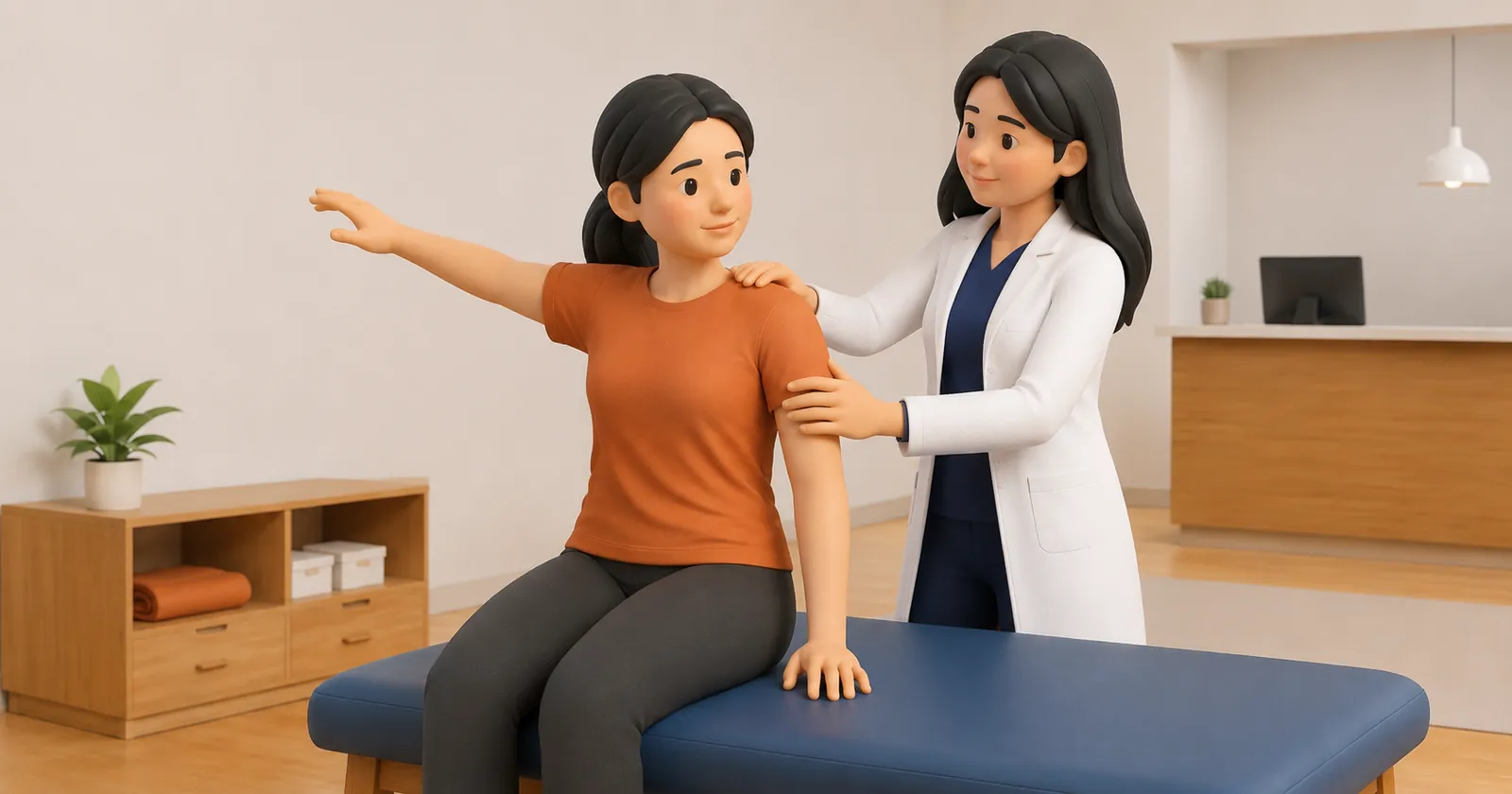
In Indian clinical practice, patients frequently endure months of severe nocturnal pain while receiving ineffective passive heat therapy or, conversely, undergoing aggressive, forceful joint manipulation that tears inflamed tissues. High-level clinical evidence and orthopedic guidelines confirm that adhesive capsulitis is a self-limiting biological condition that responds remarkably well to stage-matched physiotherapy. By tailoring interventions specifically to the physiological irritability of each clinical phase, physiotherapists can dramatically accelerate capsular remodeling and restore full pain-free functional elevation without surgery.
1. Pathophysiology and the Diabetes-Capsulitis Connection
To understand why frozen shoulder behaves so differently from simple rotator cuff tendinopathy, clinicians must examine the micro-cellular environment of the glenohumeral capsule. The disease process is triggered by a sustained chronic inflammatory cascade involving elevated pro-inflammatory cytokines, specifically Interleukin-1 (IL-1), Interleukin-6 (IL-6), and Tumour Necrosis Factor-alpha (TNF-alpha). This persistent synovial inflammation stimulates the transformation of normal resting capsular fibroblasts into contractile myofibroblasts, leading to dense type I and type III collagen deposition.
The anatomical consequence is profound capsular contracture. The normal joint volume of the glenohumeral joint, which typically holds 15 to 20 millilitres of synovial fluid, shrinks drastically to less than 3 to 5 millilitres. The dependent fold of the inferior joint capsule (the axillary pouch) becomes completely obliterated by fibrotic adhesions, and the coracohumeral ligament thickens into an unyielding fibrous band, selectively blocking external rotation.
In India, where type 2 diabetes affects over 100 million individuals, the link between glucose dysregulation and frozen shoulder is particularly acute. Prolonged hyperglycaemia causes non-enzymatic glycosylation of collagen fibres throughout the body, forming Advanced Glycation End-products (AGEs). In the shoulder capsule, AGEs create abnormal, rigid covalent cross-links between collagen molecules, making the tissue stiff, brittle, and highly resistant to mechanical stretching. Consequently, diabetic patients experience longer freezing phases, greater pain intensity, and a higher propensity for bilateral involvement (affecting both shoulders).
2. The Three Clinical Stages and Pathological Characteristics
Successful rehabilitation hinges entirely on diagnosing the patient exact stage of capsular pathology. Applying aggressive end-range stretching during the early inflammatory phase is one of the most common medical errors, accelerating synovial irritation and worsening disability.
| Clinical Stage | Pathological State | Dominant Clinical Symptoms | Capsular Range of Motion | Safe Clinical Physiotherapy Protocol |
|---|---|---|---|---|
| Stage 1: Freezing (2 to 9 Months) | Active synovial inflammation, hypervascularity, severe capsular pain signaling | Severe aching pain at rest; excruciating nocturnal pain waking patient when rolling onto shoulder | Pain limits motion before true mechanical capsular block; early loss of external rotation | High-irritability protocol: submaximal pendulum swings, active-assisted elevation, sleep positioning pillows; NO aggressive stretching |
| Stage 2: Frozen (4 to 12 Months) | Angiogenesis subsides; dense collagen fibrosis and capsular contracture dominate | Resting pain diminishes to a dull ache; sharp pain occurs only at sudden mechanical end-range | Profound capsular end-feel block in classic capsular pattern: External Rotation > Abduction > Internal Rotation | Moderate-irritability protocol: Grade III/IV Maitland capsular glides, prolonged low-load stretching, doorway external rotation |
| Stage 3: Thawing (12 to 24 Months) | Spontaneous capsuloligamentous remodeling; gradual resorption of excess collagen | Pain is minimal or absent; primary complaint is functional stiffness and muscular weakness | Steady progressive recovery of active and passive range of motion toward physiological baseline | Low-irritability protocol: aggressive end-range stretching, overhead eccentric loading, scapular stabilizer strengthening (serratus anterior) |
3. Three-Phase Stage-Matched Rehabilitation Protocol
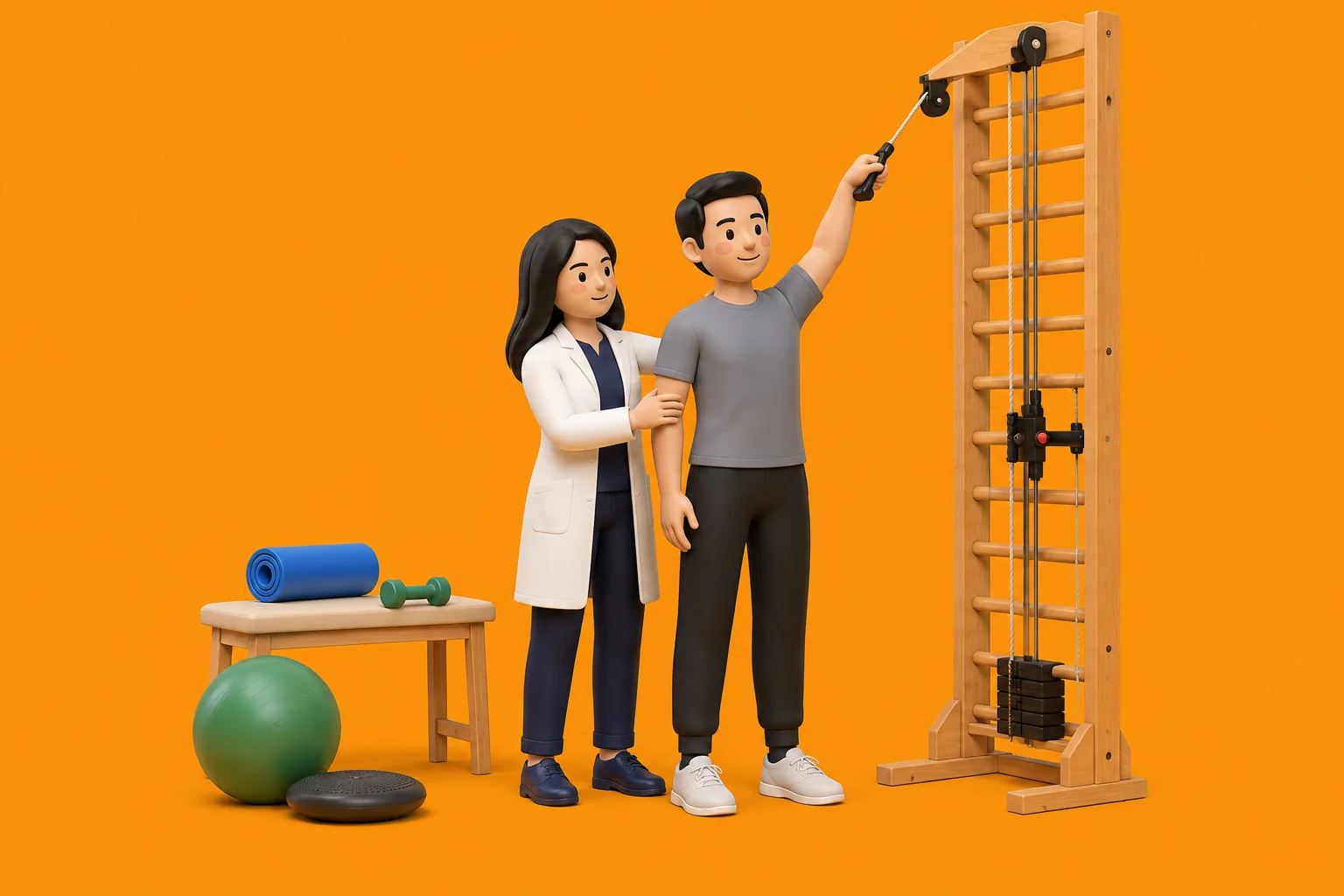
Stage-matched exercise protocols ensure tissue safety while steadily expanding functional mobility. The following evidence-based routine guides patients from acute sleep disturbance to full functional reach.
Three-Phase Stage-Matched Shoulder Capsular Rehabilitation Protocol
Objective: Modulate acute synovial inflammation, expand fibrotic capsular volume, and rebuild overhead kinetic chain strength.
- 1Phase 1 (Freezing Phase, Synovial Fluid Pumping and Pain Modulation): Perform Codman Pendulum Swings. Lean forward supporting your unaffected arm on a dining table. Let the affected arm hang relaxed like a dead weight. Use gentle torso sway to swing the arm in small clockwise and counter-clockwise circles (15 cm diameter) for 2 minutes, 3 times daily. Pair with supine wand-assisted elevation within pain-free limits (up to 90 degrees).
- 2Phase 2 (Frozen Phase, Low-Load Prolonged Capsular Stretching): Perform the Sleeper Stretch to mobilize the posterior capsule. Lie on your affected side with elbow bent at 90 degrees. Use your unaffected hand to gently press your wrist down toward the mattress into internal rotation until a firm, comfortable stretch is felt behind the shoulder. Hold for 30 seconds; complete 3 repetitions.
- 3Phase 3 (Thawing Phase, Doorway External Rotation and Scapular Upward Rotation): Stand in a doorway with elbow bent at 90 degrees and forearm resting against the door jamb. Step gently forward to stretch the anterior capsule into external rotation. Progress to Wall Slides with an elastic band around your wrists, driving upward to reactivate the serratus anterior and lower trapezius. Complete 3 sets of 10 repetitions.
- 4Nocturnal Positioning Rule: When sleeping on your unaffected side, hug a thick pillow across your chest to support the affected arm, preventing the shoulder from dropping into adduction and stretching the inflamed anterior capsule.
4. Interventional Procedures: Corticosteroids, Hydrodilatation, and Surgery
When severe pain in the freezing phase prevents sleep and halts all therapeutic exercise, targeted medical interventions can provide a powerful therapeutic window. An ultrasound-guided intra-articular corticosteroid injection delivered into the glenohumeral joint capsule significantly dampens the acute cytokine storm, providing substantial pain relief within 48 to 72 hours and allowing immediate engagement with physiotherapy.
For stubborn cases in Stage 2, capsular hydrodilatation (injecting 20 to 40 mL of sterile saline combined with local anaesthetic under radiological guidance) physically distends and stretches the contracted capsule from within. In contrast, historical Manipulation Under Anaesthesia (MUA), where a surgeon forcefully breaks capsular adhesions, has fallen out of clinical favor due to risks of humeral shaft fracture, labral tearing, and rotator cuff rupture.
Frequently Asked Questions
How long does it take to fully recover from frozen shoulder in India?
In non-diabetic individuals following a stage-matched physiotherapy programme, the total clinical course typically spans 9 to 15 months, with significant functional recovery achieved by month 6. However, in individuals with long-standing type 2 diabetes or poor glycemic control (HbA1c > 8.0%), capsular collagen cross-linking is significantly more resistant, extending the total recovery timeline to 18 to 24 months. Early physiotherapy intervention in Stage 1 significantly shortens overall disability.
Why is frozen shoulder pain significantly worse at night when sleeping?
Nocturnal shoulder pain is driven by two physiological factors. First, when lying supine, gravity no longer draws the humerus downward, allowing the humeral head to migrate superiorly and compress inflamed synovial tissues. Second, resting quietly in a dark room reduces competing sensory stimuli, heightening the central nervous system perception of inflammatory pain. Sleeping on the affected side directly compresses the hypervascular, inflamed capsule, while sleeping on the opposite side without a supporting pillow allows the arm to drop into painful adduction.
Should a patient with frozen shoulder force their arm past sharp pain to stop stiffness?
No. Forcing the shoulder through severe, sharp pain during the freezing phase triggers protective muscle guarding and exacerbates capsular synovitis, ultimately prolonging stiffness. All stretches during the early phase must remain strictly within a comfortable, pain-free range (NPRS under 3/10). In the later frozen and thawing phases, stretching should produce a firm, tight stretching sensation, but never sharp inflammatory pain.
Can frozen shoulder return in the same arm after full recovery?
Recurrence of adhesive capsulitis in the exact same shoulder is extraordinarily rare (less than 1% to 2% of clinical cases). However, individuals who develop frozen shoulder face an estimated 20% to 30% chance of developing the condition in their opposite (contralateral) shoulder within 5 years, particularly if they have underlying type 2 diabetes or autoimmune thyroid disease.
How does BookPhysio.in assist patients recovering from frozen shoulder?
BookPhysio.in connects patients across India with verified musculoskeletal physiotherapists specializing in shoulder rehabilitation, manual capsular joint mobilization, and diabetic exercise therapy. Patients book clinic consultations or convenient home visits with transparent per-session fees (₹400 to ₹1,500 clinic, ₹600 to ₹2,000 home visits) and zero platform commission.
Related condition guides

BookPhysio.in Editorial Team
The BookPhysio.in editorial team writes and maintains this content, checking it against reliable clinical sources. Content follows our medical review policy: general information only, and no page claims a clinical review until a named registered physiotherapist has signed it off.
Read our medical review policy