
Pelvic Floor Rehabilitation After Hysterectomy: Preventing Vault Prolapse and Incontinence in India
In short
Removing the uterus compromises pelvic suspension ligaments, leaving the vaginal vault vulnerable to prolapse. Discover clinical pelvic floor rehabilitation protocols.
In this guide (5 sections)
Hysterectomy: the surgical removal of the uterus: is one of the most frequently performed major surgeries among women in India. In fact, large-scale public health surveys reveal an alarming reality: Indian women undergo hysterectomy at significantly younger ages than women in Western nations, with a national median age of barely 34 to 38 years in semi-urban and rural districts, often performed for benign conditions such as heavy menstrual bleeding (menorrhagia) or fibroids.
Yet, following surgery, women are rarely informed about the biomechanical consequences of removing the central anchor of their pelvic anatomy. Months or years later, many women begin experiencing a heavy dragging sensation in their pelvis, urinary leakage when laughing or sneezing, or a distressing visible bulge at the vaginal opening: the hallmarks of Vaginal Vault Prolapse. Specialized pelvic health physiotherapy provides essential rehabilitative care that re-establishes pelvic support and prevents organ descent.
1. Surgical Biomechanics: Disruption of DeLancey's Level 1 Apical Suspension
In female pelvic anatomy, structural organ support is categorized by DeLancey's three levels of pelvic suspension. Level 1 (Apical Suspension) is the supreme foundation: composed of the uterosacral and cardinal ligament complex, which firmly anchors the upper cervix and uterus to the sacrum and lateral pelvic sidewalls, suspending the pelvic organs like a hammock suspension bridge.
During a total hysterectomy (whether performed via abdominal laparotomy, laparoscopy, or vaginal route), the cervix and uterus are excised. This unavoidably severs the cardinal and uterosacral ligaments. The surgeon constructs a "vaginal cuff" by suturing the upper edges of the vaginal canal together, anchoring it as securely as possible to residual ligamentous stumps.
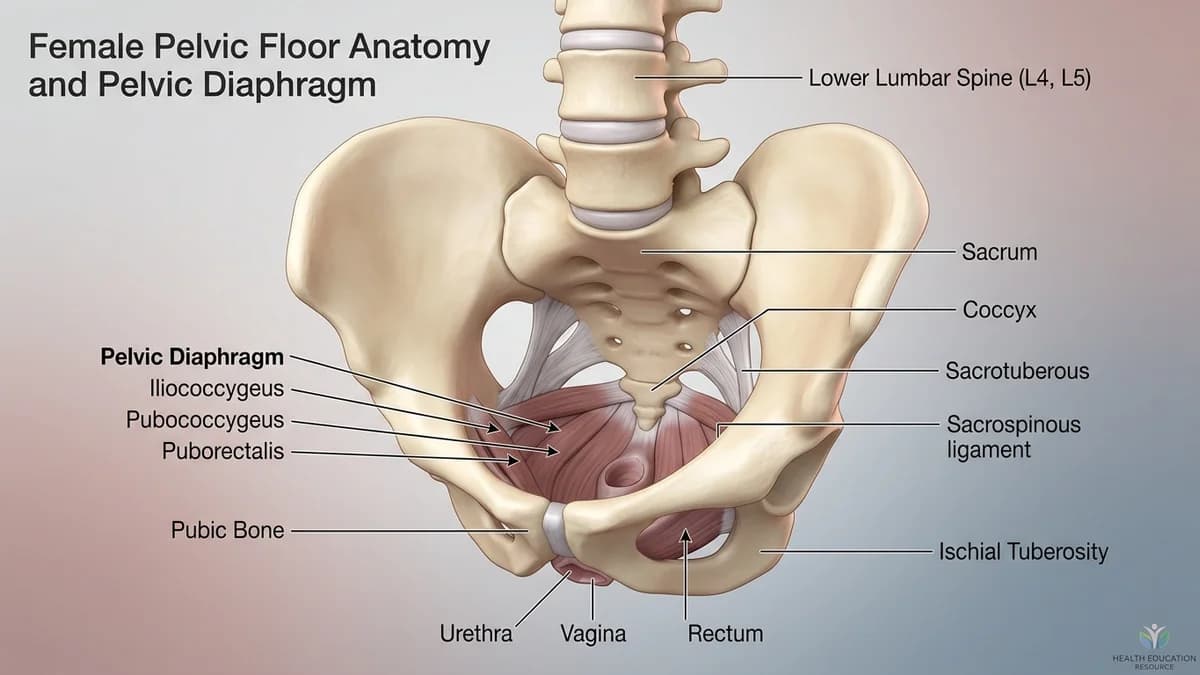
However, without the physical mass of the uterus and its intact ligamentous anchors, the apex of the vagina (the vault) becomes inherently vulnerable to downward intra-abdominal pressure. If the underlying muscular floor: the Levator Ani complex (puborectalis, pubococcygeus, iliococcygeus): is weak, unconditioned, or subjected to chronic straining, the vaginal vault can invert like the finger of a glove, descending toward the introitus (Vaginal Vault Prolapse), frequently dragging the bladder (cystocele) or bowel (rectocele/enterocele) down with it.
| Hysterectomy Procedure | Anatomical Tissue Removed | DeLancey Level 1 Status | Secondary Pelvic Floor Risk Profile |
|---|---|---|---|
| Total Abdominal Hysterectomy (TAH) | Uterus, cervix; large abdominal incision through rectus sheath | Uterosacral & cardinal ligaments severed; abdominal wall weakened | High risk of vault prolapse, urinary incontinence, incisional hernia |
| Laparoscopic / Robotic Hysterectomy | Uterus, cervix; small trocar port incisions | Ligaments transected with thermal coagulation; faster healing | Moderate vault prolapse risk; requires strict intra-abdominal pressure care |
| Subtotal / Supracervical Hysterectomy | Uterine body removed; cervical stump preserved intact | Uterosacral ligaments remain partially attached to cervix | Lower risk of apical vault descent; requires regular cervical screening |
2. Indian Domestic Triggers: Chronic Constipation and Lifting Heavy Vessels
In Indian households, domestic duties create continuous intra-abdominal pressure spikes that accelerate post-hysterectomy prolapse. Homemakers routinely lift heavy steel water containers (handis), large pressure cookers, and wet laundry tubs weighing 10 to 15 kilograms. When an individual holds their breath and bears down (the Valsalva manoeuvre) while lifting, intra-abdominal pressure spikes to over 150 cmH2O: hammering directly against the unanchored vaginal vault.
Furthermore, chronic constipation: exacerbated by low dietary fiber, inadequate hydration in hot climates, and delaying bowel movements: forces women to strain aggressively on the toilet every morning. Years of daily bearing down destroys the healing vaginal cuff. Physiotherapy replaces these destructive habits with "The Knack" (pre-contracting the pelvic floor before lifting) and correct defecation dynamics.
Recovery requires systematic neuromuscular retraining under a certified pelvic health specialist to ensure women regain vibrant, leak-free physical independence.
3. Three-Phase Post-Hysterectomy Pelvic Floor Restoration Protocol
Three-Phase Post-Hysterectomy Vault Protection and Pelvic Strengthening Protocol
Objective: Restore levator ani baseline resting tone, master intra-abdominal pressure management, and prevent organ prolapse.
- 1Phase 1 (The Post-Surgical Healing Window - Weeks 0 to 6 Post-Op): Strictly avoid any heavy lifting exceeding 3 to 4 kilograms. 1. Diaphragmatic Breathing: breathe deeply into your belly and lower ribs; as you exhale, gently imagine your pelvic floor floating upward without clenching your buttocks. 2. The Golden Toilet Rule: never strain or push during bowel movements; place your feet on a 15 cm footstool to straighten the anorectal canal, exhale gently, and let stool pass without bearing down.
- 2Phase 2 (Mastering "The Knack" and Targeted Kegels - Weeks 6 to 12 Post-Op): Once cleared by your surgeon at the 6-week review: 1. Precision Pelvic Floor Contraction: lie on your back; visualize closing your urinary passage and anus, then lifting the muscles up toward your belly button; hold for 5 seconds, then relax completely for 10 seconds; perform 10 repetitions, 3 times daily. 2. "The Knack": actively contract and lift your pelvic floor ONE SECOND BEFORE you sneeze, cough, laugh, or lift an object to brace against the pressure spike.
- 3Phase 3 (Functional Closed-Chain Integration - Months 3 to 6): Progress pelvic floor training into upright functional postures: 1. Seated Ball Squeezes: sit upright on a chair with a soft yoga block or ball between your knees; squeeze the block while simultaneously lifting the pelvic floor; hold for 6 seconds; repeat 10 times. 2. Supported Sit-to-Stands: exhale and lift the pelvic floor as you push through your heels to stand up from a chair.
- 4Breath Holding Cue: Never hold your breath while lifting groceries, children, or cookware. Always exhale on the exertion (the "Blow as you Go" rule).
4. Critical Red Flags: Detecting Vaginal Cuff Dehiscence and Severe Prolapse
While gradual recovery is the norm, acute surgical complications require immediate emergency gynaecological attention. Seek urgent emergency hospital care if you experience sudden, heavy, bright-red vaginal bleeding (soaking more than one sanitary pad per hour) or watery vaginal discharge accompanied by severe pelvic pain within the first 6 to 12 weeks (indicating Vaginal Cuff Dehiscence / wound separation, which is a surgical emergency), a visible tissue bulge protruding completely outside the vaginal opening that cannot be gently pushed back, foul-smelling vaginal discharge with high fever, or complete inability to pass urine (acute urinary retention).
Frequently Asked Questions
How common is vaginal vault prolapse after a hysterectomy?
Clinical studies estimate that without pelvic floor rehabilitation, roughly 10 to 15 percent of women develop significant apical vault prolapse or anterior/posterior wall descent within 5 to 10 years following a hysterectomy: especially if they perform heavy manual labor or suffer from chronic constipation.
When is it safe to begin pelvic floor exercises after my hysterectomy?
Gentle diaphragmatic breathing and subtle pelvic floor awareness can begin within days of surgery while in bed. However, formal active pelvic floor muscle strengthening (Kegels) should only be initiated after your surgeon confirms that the internal vaginal cuff sutures have fully healed at your 6-week post-operative review.
Can pelvic floor physiotherapy replace a pessary or second surgery?
For mild to moderate prolapse (Stage 1 and Stage 2), intensive pelvic floor physiotherapy frequently eliminates dragging symptoms and stops further descent, eliminating the need for surgery. For severe Stage 3 or 4 prolapse, physiotherapy is combined with a supportive silicone pessary to provide complete comfort without major surgery.
Why does coughing or sneezing trigger urinary leakage after a hysterectomy?
During surgery, supportive tissue connections between the bladder neck and anterior vaginal wall are altered. When you cough, a sudden spike in intra-abdominal pressure pushes down on the bladder; if the pelvic floor and urethral sphincter are unconditioned, urine escapes (Stress Urinary Incontinence).
How do I book a private consultation with a pelvic health physiotherapist on BookPhysio.in?
BookPhysio.in connects women across India with certified female pelvic health physiotherapists in absolute privacy. Consultations are available at clinic (₹400 to ₹1,500) or via home visits (₹600 to ₹2,000) with direct per-visit payment and zero platform commission.
Related condition guides


BookPhysio.in Editorial Team
The BookPhysio.in editorial team writes and maintains this content, checking it against reliable clinical sources. Content follows our medical review policy: general information only, and no page claims a clinical review until a named registered physiotherapist has signed it off.
Read our medical review policy