
Straight leg raise test for sciatica: procedure, angles, and accuracy
In short
The straight leg raise test, also known as Lasegue's sign, is a neurodynamic test that assesses sciatic nerve irritability and lumbar disc herniation. Pain radiating below the knee between 35 and 70 degrees indicates true dural tension.

In this guide (5 sections)
What is the straight leg raise test?
The straight leg raise (SLR) test, historically known as Lasegue's sign, is an essential clinical assessment used to detect lumbar disc herniation and sciatic nerve root irritation. It evaluates whether stretching the sciatic nerve reproduces radiating pain down the leg.
Clinical interpretation summary: Pain radiating below the knee between 35 and 70 degrees of hip flexion indicates true sciatic nerve root compromise, most commonly at the L4-L5 or L5-S1 disc levels. Pain above 70 degrees typically represents hamstring tightness or lumbar spine joint stress.
Step-by-step examination technique
Follow this standard protocol to differentiate neurological root irritation from mechanical muscle tightness:
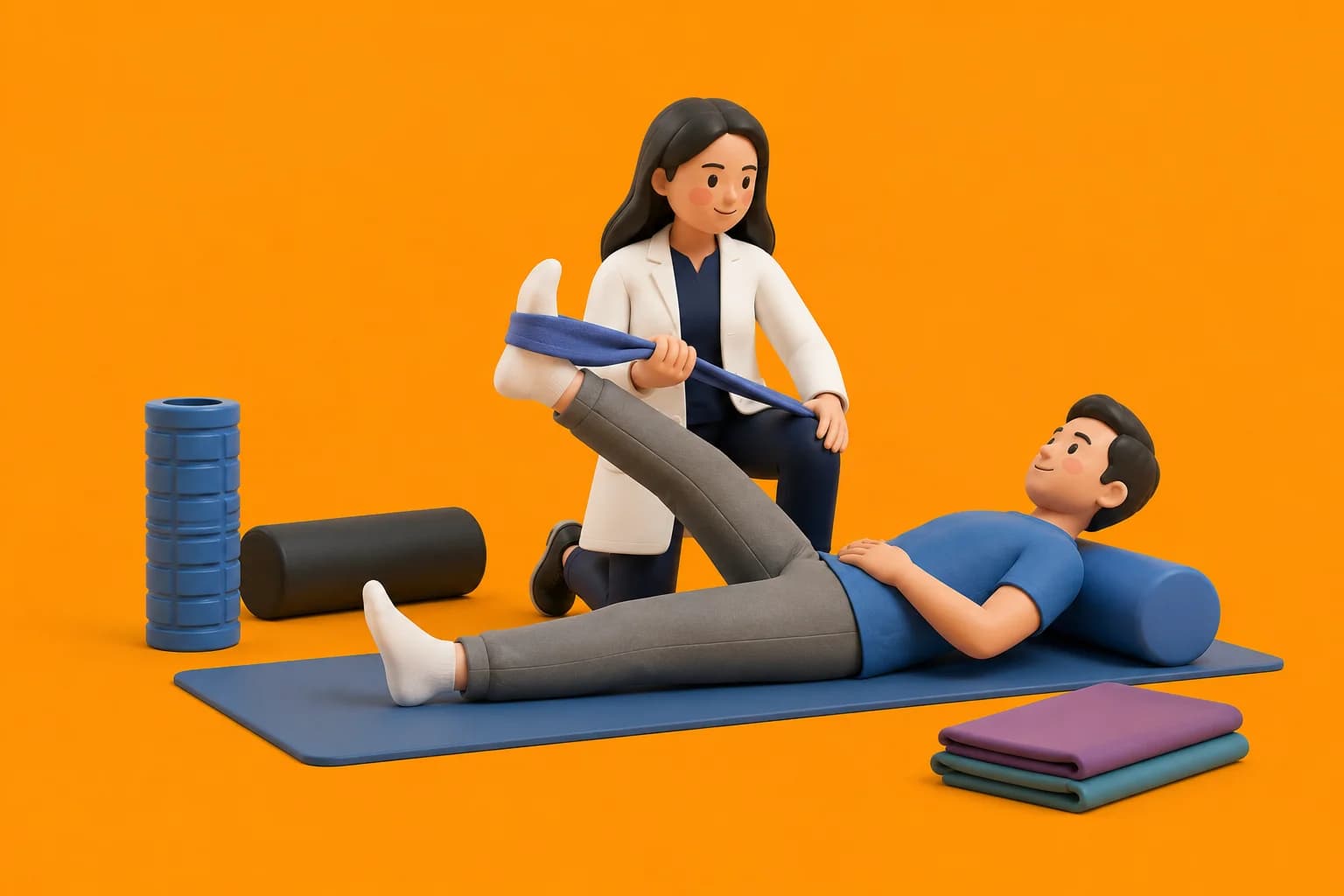
- 1. Initial patient position: The patient lies relaxed in a supine position with the head flat and both legs extended on the treatment plinth.
- 2. Passive elevation: The clinician gently elevates the symptomatic leg by supporting the heel while keeping the knee fully extended.
- 3. Angle monitoring: Note the angle of hip flexion at which the patient first reports the reproduction of familiar leg symptoms.
- 4. Symptom distribution: Determine whether the pain radiates below the knee into the calf or foot, or remains confined to the buttock and posterior thigh.
Angle-by-angle diagnostic interpretation
The angle of hip flexion correlates with anatomical tension along the sciatic nerve and its lumbosacral nerve roots:
| Angle Range | Anatomical Mechanism | Diagnostic Significance | |
|---|---|---|---|
| 0 to 35 degrees | Slack in the sciatic nerve trunk | Nerve roots remain unstretched. Pain indicates hip joint pathology or severe paraspinal spasm. | |
| 35 to 70 degrees | Maximum tension across L4, L5, and S1 nerve roots over intervertebral discs | True positive range for lumbar disc herniation and radiculopathy when radiating below the knee. | |
| Greater than 70 degrees | Sciatic nerve fully elongated without further foraminal excursion | Pain reflects hamstring muscle tightness or sacroiliac joint stress rather than nerve impingement. |
Sensitizing maneuvers: Braggard and Bowstring tests
To confirm that positive symptoms stem from neural tension rather than tight hamstrings, clinicians use sensitizing maneuvers:
- Braggard sign: Lower the leg 5 degrees below the symptomatic angle, then passively dorsiflex the ankle. If radiating electric pain recurs, it confirms neurological tension.
- Bowstring sign: Flex the knee slightly to relieve hamstring tension, then apply deep thumb pressure into the popliteal fossa over the tibial nerve. Reproduction of radicular symptoms confirms sciatic involvement.
- Crossed straight leg raise (Well-Leg Raise): Elevate the unaffected leg. If lifting the asymptomatic leg reproduces radicular pain in the affected leg, it demonstrates high diagnostic specificity (over 90%) for a large central or extruded disc herniation.
When to seek urgent care (Red flags)
While most sciatica responds well to conservative physiotherapy, certain symptoms require immediate emergency medical attention:
- Saddle anaesthesia: Numbness or altered sensation around the groin, buttocks, or perineum.
- Bladder or bowel dysfunction: Inability to urinate, loss of urinary control, or fecal incontinence.
- Progressive motor weakness: Inability to lift the foot (foot drop) or severe sudden leg weakness.
What is a positive straight leg raise test?
A straight leg raise test is considered positive when passive elevation of the leg between 35 and 70 degrees reproduces the patient's familiar radiating shooting pain, numbness, or tingling traveling down the leg below the knee.
Can tight hamstrings cause a false positive SLR test?
Yes. Tight hamstrings cause discomfort in the back of the thigh, which patients may mistake for nerve pain. Clinicians use Braggard's test (ankle dorsiflexion) to differentiate between muscular tightness and genuine nerve tension.
How does physiotherapy help after a positive SLR test?
Physiotherapy addresses the underlying mechanical cause through gentle nerve flossing, directional preference exercises (such as McKenzie extension protocols), core stabilization, and posture retraining to relieve disc pressure on the nerve root.
- Spine Journal: Diagnostic validity of the straight leg raise test for lumbar disc herniation: https://thespinejournalonline.com
- Cochrane Database of Systematic Reviews: Physical examination for lumbar radiculopathy: https://cochranelibrary.com
- British Medical Journal (BMJ): Assessment and management of sciatica in primary care: https://bmj.com

Related recovery guides & articles
BookPhysio.in Editorial Team
The BookPhysio.in editorial team writes and maintains this content, checking it against reliable clinical sources. Content follows our medical review policy: general information only, and no page claims a clinical review until a named registered physiotherapist has signed it off.
Read our medical review policy