
Sweeping and Mopping (Jhadu-Pocha) Lower Back Pain: Lumbar Biomechanics and Ergonomic Physio in India
In short
Bending double with a traditional short jhadu spikes disc pressure by 220%, causing herniations. Discover ergonomic mopping tools and spinal stabilizing physiotherapy.
In this guide (5 sections)
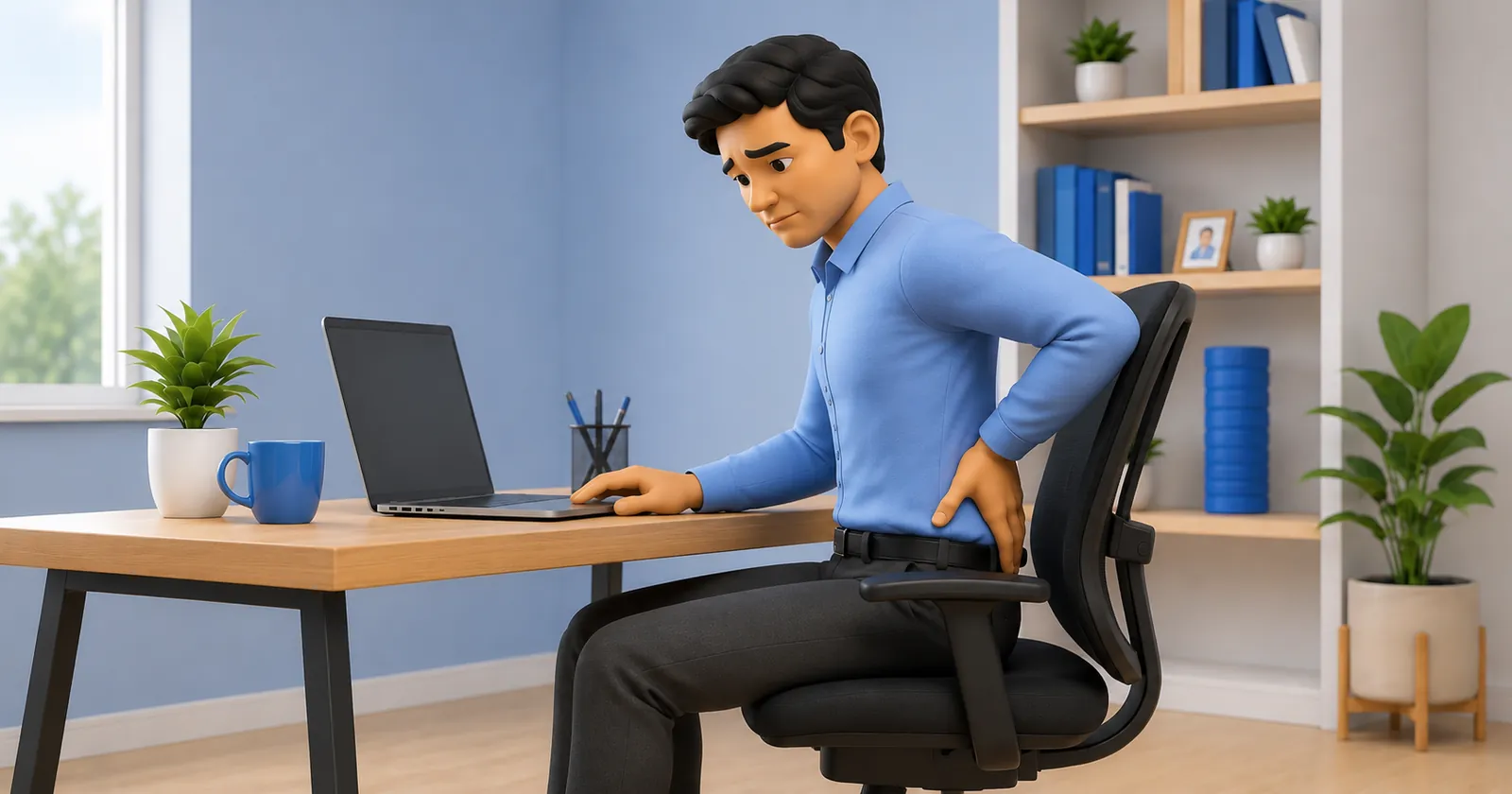
In almost every Indian household, the daily ritual of cleaning floors: sweeping with a traditional grass or plastic broom (jhadu) followed by wet mopping (pocha): is a non-negotiable standard of domestic cleanliness. Whether performed by homemakers, working women, or hired domestic cleaning staff (bai / maid), this chore is the single most common, relentless trigger of acute lumbar disc herniations, sacroiliac joint dysfunction, and chronic lower back pain across urban India.
The culprit is the archaic design of traditional cleaning implements. The standard Indian broom measures barely 70 to 90 centimeters in length, forcing the user to bend double at the waist in sustained, end-range spinal flexion for 30 to 45 minutes every morning. When wet mopping is performed on hands and knees with a rag cloth, the spine is subjected to violent rotational shearing forces. Understanding the spinal biomechanics of cleaning chores and implementing ergonomic tool adaptations protects developing and mature spines from irreversible degeneration.
1. Pathomechanics: Lumbar Intradiscal Pressure and Ligamentous Creep
The lumbar spine is designed to bear compressive loads most effectively when maintaining its natural, lordotic inward curve. In standing neutral posture, intradiscal pressure inside the L4-L5 and L5-S1 intervertebral discs is approximately 100 kPa (baseline 100%). Classic in vivo spinal biomechanics research pioneered by Alf Nachemson demonstrates what happens when a person bends forward at the waist.
When a person flexes forward 60 degrees to use a short-handled broom, intradiscal pressure surges to over 220 percent of baseline. Bending forward causes the gelatinous nucleus pulposus inside the disc to be squeezed posteriorly against the posterior annulus fibrosus: stretching the pain-sensitive posterior longitudinal ligament. When this forward flexion is paired with repetitive side-to-side sweeping rotations, the torsional shear forces rapidly tear microscopic collagen lamellae of the annulus fibrosus, paving the way for acute disc bulges and sciatica.
Furthermore, sustained bending triggers a dangerous biomechanical phenomenon known as "Ligamentous Creep." After 15 to 20 minutes of continuous flexion, posterior spinal ligaments (supraspinous, interspinous, and ligamentum flavum) mechanically stretch and deform, losing their elastic tension. When the cleaner finally straightens up, the stabilizing ligaments are loose, and the paraspinal muscles enter acute, protective hypertonic spasms to prevent spinal collapse: producing that agonizing "catch" where the person cannot stand up straight.
| Posture / Domestic Chore | Lumbar Spinal Alignment | Intradiscal Pressure (% Baseline) | Clinical Pathology Risk Profile |
|---|---|---|---|
| Standing Upright in Neutral Lordosis | Preserved inward lumbar lordosis; balanced core activation | 100% (Baseline) | Optimal load distribution across vertebral endplates and facets |
| Sweeping with Short Broom (Jhadu) | Sustained 60-degree forward lumbar flexion + rotational sweeping | 200% to 220% | High risk of posterior disc protrusion, annular tears, ligamentous creep |
| Floor Mopping on Knees (Pocha) | Deep lumbar flexion + asymmetric shoulder reaching and twisting | 210% to 250% | Extreme sacroiliac joint shear, patellar bursitis, disc herniation |
| Ergonomic Long-Handled Spin Mop | Upright neutral spine; weight shift through lower extremities | 115% to 125% | Protects intervertebral discs; minimal spinal shear; ergonomic posture |
2. Indian Domestic Traditions: Cultural Attachment to Short Brooms and Floor Wiping
In Indian households, the persistence of short brooms is anchored in cultural tradition and folklore. Many elder matriarchs firmly believe that a home can only be truly clean if the sweeper bends close to the floor to see every speck of dust, or that sitting on the floor to do pocha provides "good exercise for women." Furthermore, traditional cleaning staff frequently resist using modern long-handled mops, fearing that modern tools do not clean corner grime as thoroughly.
However, the physical cost of these traditional practices is devastating. Indian women in their thirties and forties present to spine clinics with advanced multi-level L4-L5 and L5-S1 disc desiccations and broad-based protrusions directly traceable to daily domestic cleaning. When a heavy 15-litre water bucket used for mopping is lifted with a flexed, twisted spine to empty into a bathroom drain, the sudden compressive shock routinely triggers acute disc extrusions.
Ergonomic intervention is imperative. Modern cleaning technology must replace archaic stoop labor: substituting short brooms with long-handled tools and teaching clean, hip-hinge movement mechanics.
3. Three-Phase Ergonomic Adaptation and Spinal Decompression Protocol
Three-Phase Cleaning Ergonomics and Spinal Stabilization Protocol
Objective: Eliminate sustained lumbar flexion during chores, decompress posterior disc fibers, and build core endurance.
- 1Phase 1 (The Tool Modernization Mandate - Immediate): 1. Long-Handled Broom: replace all short grass brooms with an ergonomic broom featuring an extendable handle measuring at least 130 to 140 centimeters (handle should reach your shoulder level when standing upright). This allows you to sweep with a completely vertical spine. 2. Spin Mop with Foot Pedal or Wringer: eliminate floor kneeling entirely by switching to a microfiber spin mop with a bucket on wheels. Never lift a full bucket of water; fill and empty it using small mugs or drag it on wheels.
- 2Phase 2 (The Hip-Hinge and Lunge Sweeping Mechanics - Daily): If you must reach under a low bed or sofa, never round your lower back. Execute a Hip Hinge: push your hips backward while keeping your chest open and spine straight, bending from your hip joints rather than your waist. Alternatively, drop into a half-kneeling lunge on one knee (using a soft foam kneeling pad).
- 3Phase 3 (Post-Chore McKenzie Spinal Decompression - Immediately After Cleaning): As soon as you finish sweeping or mopping, immediately counteract the forward flexion with prone extensions: 1. Prone Lying: lie face down on a firm bed or mat for 2 minutes with arms at your sides to allow disc fluid to center. 2. Prone on Elbows (Sphinx Pose): gently prop yourself up onto your forearms, keeping your lower back and buttocks completely relaxed; hold for 1 minute. 3. Standing Back Extension: stand tall, place palms on your lower back, and gently arch backward 10 times.
- 4Bucket Emptying Rule: Never bend over a toilet or low drain with a heavy water bucket. Place the bucket on an elevated stool or use a small mug to scoop water out gradually before tipping the empty bucket.
4. Critical Red Flags: Recognizing Acute Cauda Equina Syndrome
While routine muscle strain produces dull aching, acute disc herniations can compress major neural structures. Seek emergency neurosurgical or orthopaedic hospital evaluation immediately if you experience sudden onset of numbness, tingling, or loss of sensation in your "saddle" region (inner thighs, buttocks, and perineum / toilet area), sudden loss of voluntary bladder control (urinary incontinence) or inability to pass urine (acute urinary retention), sudden loss of bowel sphincter control, or progressive "foot drop" where your foot slaps the floor and you cannot lift your toes when walking.
Frequently Asked Questions
Why does my back catch and seize up when I try to stand straight after sweeping?
This is caused by "ligamentous creep." Sustained bending for 20 to 30 minutes mechanically stretches and deforms your posterior spinal ligaments, temporarily stripping them of their elastic tension. When you attempt to stand upright, your body paraspinal muscles enter an acute protective spasm to stabilize your spine, locking you in a semi-flexed position.
Is mopping on hands and knees (pocha) really good exercise for pregnant or postnatal women?
No. While traditional folklore claims that kneeling floor mopping prepares the pelvis for childbirth, modern obstetric biomechanics proves that the combination of deep flexion, twisting, and bearing weight on hard floors introduces severe asymmetrical shearing across fragile sacroiliac joints and causes acute pubic symphysis pain.
What is the ideal handle length for a sweeping broom or mop?
The broom or mop handle should reach approximately between your chest and nose level (135 to 150 centimeters) when resting vertically on the floor. This length allows you to sweep comfortably with your elbows bent and your spine completely upright without any forward trunk flexion.
How do prone press-ups (McKenzie extensions) help after sweeping?
When you bend forward during chores, the jelly-like nucleus pulposus inside your intervertebral discs is pushed backward. Lying face down and gently arching backward into a prone extension creates anterior mechanical pressure that encourages the disc material to migrate back toward its healthy, central position.
How does BookPhysio.in connect patients with spine physiotherapists across India?
BookPhysio.in connects patients across major Indian cities with certified musculoskeletal and spine physiotherapists experienced in lumbar disc rehabilitation, core stabilization, and household ergonomic audits. Consultations are available in clinic (₹400 to ₹1,500) or via home visits (₹600 to ₹2,000) with direct per-visit payment and zero platform commission.
Related condition guides


BookPhysio.in Editorial Team
The BookPhysio.in editorial team writes and maintains this content, checking it against reliable clinical sources. Content follows our medical review policy: general information only, and no page claims a clinical review until a named registered physiotherapist has signed it off.
Read our medical review policy