
BPO and Call Center Night Shift Workers: Monoaural Headset Strain, Cervical Spondylosis, and Circadian Ergonomics
In short
Cradling phones and unilateral headset wearing drive asymmetric cervical facet jamming in BPO workers; alternating binaural headsets and circadian hydration preserve spinal disks.
In this guide (4 sections)
The Pathomechanics of Unilateral Headset Tilting in Night Shift BPOs
India's Business Process Outsourcing (BPO) and IT-enabled services sector employs over 4.5 million young professionals across major urban centers. Employees frequently work rotating nocturnal shifts (aligned with US, UK, or Australian business hours), handling continuous customer calls for 8 to 10 consecutive hours.
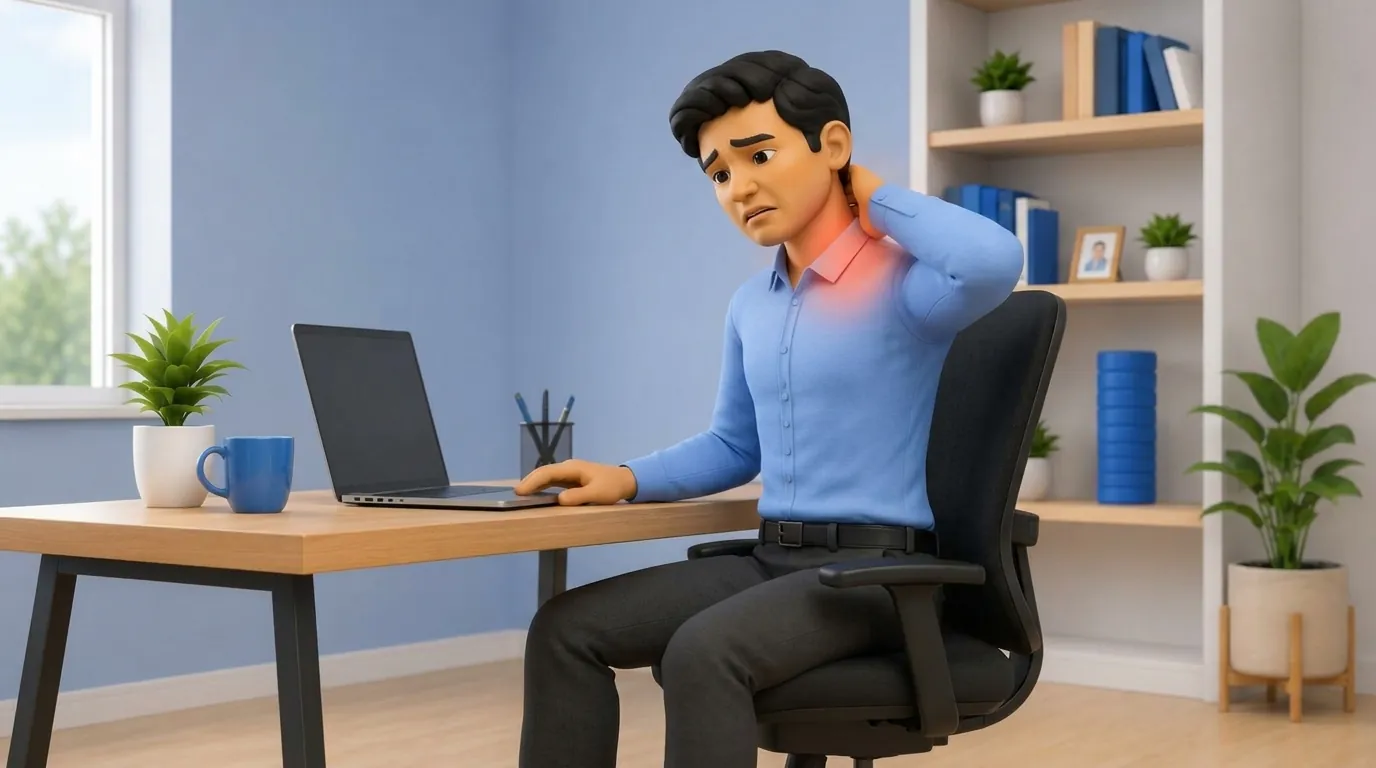
A pervasive occupational defect is the use of monoaural (single-ear) telephone headsets or the habitual cradling of telephone handsets between the ear and elevated shoulder. Lateral head tilting creates asymmetric compressive loading across the ipsilateral cervical facet joints (C2-C3 through C5-C6) and continuous eccentric spasm in the contralateral sternocleidomastoid (SCM) and scalene muscles. Compounded by nocturnal circadian misalignment, blunted melatonin secretion, and high psychological stress, these workers exhibit accelerated cervical degenerative spondylosis before age 30.
BPO Occupational Risk Staging and Physiological Disruption Matrix
| Occupational Factor | Biomechanical & Physiological Impact | Clinical Manifestation / Symptom | Workplace Ergonomic Directive | |
|---|---|---|---|---|
| Monoaural Headset Usage | Asymmetric lateral cervical tilt and rotation toward hearing ear | Unilateral suboccipital headache, cervicogenic vertigo, jaw clenching | BINAURAL HEADSET MANDATE: Lightweight dual-ear padded headset | |
| Nocturnal Circadian Shift | Inverted cortisol rhythm, blunted growth hormone, reduced tissue repair | Early morning disc stiffness, delayed muscle recovery, widespread fatigue | Circadian light therapy; high-protein nocturnal snacks; post-shift dark room | |
| Continuous Voice Strain & Posture | Apical shallow breathing elevates clavicles and first ribs | Thoracic Outlet Syndrome (TOS), numbness in small/ring fingers | Diaphragmatic voice training; lower costal breathing drills | |
| Prolonged Seated Screen Stare | Reduced blink rate (down from 18 to 4/min); forward chin thrust | Dry eye syndrome, blurred vision, compensatory suboccipital cramp | 20-20-20 rule: every 20 mins, look 20 feet away for 20 seconds |
Standardized Clinical Rehabilitation Protocols and Night Shift Pacing
- Binaural Noise-Cancelling Headset Conversion and Alternating Ear Cycles: Prohibit monoaural single-ear headsets; mandate lightweight binaural (dual-ear) noise-cancelling headsets that allow the head to rest perfectly centered over the shoulders; if monoaural headsets must be used, alternate ears every 2 hours.
- Scalene and Upper Trapezius Active Release During Call Queues: Train workers to perform gentle lateral neck stretches between call queues: anchor the hand to the chair seat, gently tilt the ear toward the opposite shoulder, and exhale deeply for 20 seconds to release hypertonic scalene muscle fibers.
- Nocturnal Hydration and Spine Rehydration Architecture: Combat the dehydrating microclimate of air-conditioned call center floors by prescribing 250 mL of water or electrolyte fluid every 60 minutes; spinal discs rely on osmotic rehydration during rest periods to maintain shock-absorbing hydrostatic pressure.
Frequently Asked Questions
Why does working night shifts in a call center make my neck and shoulder ache so severely?
Working at night disrupts your body's natural tissue repair cycles and elevates stress hormones. Combined with wearing a headset on only one ear, your head constantly tilts slightly to one side, jamming the delicate joints on that side of your neck for 9 hours straight.
How can I tell if my neck pain is turning into Thoracic Outlet Syndrome (TOS)?
If you notice that your hand feels heavy, cold, or starts tingling in your ring and pinky fingers, tight neck and chest muscles (scalenes and pectorals) are compressing the nerves and blood vessels traveling down into your arm.
What is the best way to sleep after finishing a graveyard night shift at 6:00 AM?
Wear dark sunglasses on your morning commute home, use blackout curtains to make your bedroom pitch-black, keep the room cool, and sleep with an ergonomic contoured pillow that supports your neck in a neutral, straight alignment.
Related condition guides

Related recovery guides & articles
BookPhysio.in Editorial Team
The BookPhysio.in editorial team writes and maintains this content, checking it against reliable clinical sources. Content follows our medical review policy: general information only, and no page claims a clinical review until a named registered physiotherapist has signed it off.
Read our medical review policy