
Pelvic Organ Prolapse: POP-Q Staging, Pessary Support & Intra-Abdominal Pressure Management
In short
Pelvic organ prolapse causes a distinct feeling of vaginal heaviness or a visible bulge. Discover how conservative physiotherapy, POP-Q staging, and pessary care alleviate symptoms without surgery.
In this guide (5 sections)
Anatomy and Classifications of Pelvic Organ Prolapse
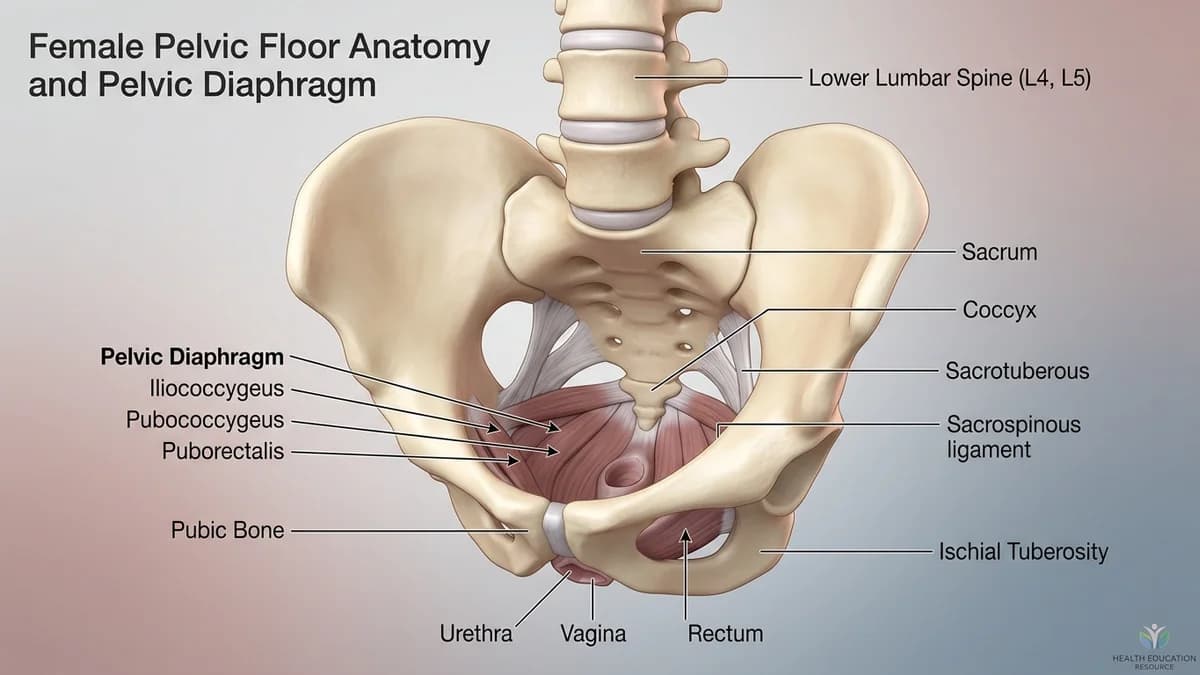
Pelvic organ prolapse (POP) occurs when the pelvic support structures, consisting of the levator ani muscle complex, endopelvic fascial condensations (uterosacral and cardinal ligaments), and the perineal body, become attenuated or torn, allowing one or more pelvic organs to descend into or through the vaginal canal.
Depending on which vaginal wall is affected, prolapse is categorized as anterior (cystocele, involving bladder descent), posterior (rectocele or enterocele, involving rectum or small bowel descent), or apical (uterine prolapse or vaginal vault prolapse after hysterectomy).
POP-Q Staging Framework
The Pelvic Organ Prolapse Quantification (POP-Q) system is the universally accepted standard for objective clinical measurement. It records 6 anatomical landmarks in centimeters relative to the hymenal ring during maximal Valsalva strain.
Physiotherapy is the recognized first-line intervention for Stage 1 and Stage 2 prolapse, effectively reducing symptoms and halting progression toward higher grades.
| POP-Q Stage | Anatomical Position Relative to Hymen | Typical Symptoms | Intervention Pathway | |
|---|---|---|---|---|
| Stage 0 | No descent; leading edge > -3 cm above hymen | None | Preventative pelvic floor conditioning | |
| Stage 1 | Leading edge > 1 cm above hymenal ring | Mild end-of-day pelvic fatigue or fullness | Pelvic floor strengthening and breathwork | |
| Stage 2 | Leading edge between -1 cm and +1 cm of hymen | Bulge sensation, heaviness on prolonged standing | Targeted pelvic PT, lifestyle pacing, pessary evaluation | |
| Stage 3 / 4 | Leading edge extends > +1 cm outside hymen | Visible external bulge, incomplete emptying, splinting | Pessary fitting, specialized conservative PT, surgical consult |
Modulating Intra-Abdominal Pressure (IAP)
The primary driver of prolapse progression is chronic or unmanaged downward pressure pushing against compromised pelvic tissues. Managing intra-abdominal pressure during daily activities is essential.
Breath-holding (the Valsalva maneuver) during bowel movements, coughing, or heavy lifting spikes intra-abdominal pressure to over 100 mmHg, forcing the organs down. Training patients to exhale during physical exertion ('blow as you go') dissipates pressure superiorly through the open glottis.
- Bowel Habit Optimization: Eliminate straining during defecation using a footstool (Squatty Potty position) to straighten the anorectal angle, paired with adequate dietary soluble fibre.
- Submaximal Lift Mechanics: Exhale on the concentric lifting effort while activating the deep transversus abdominis and pelvic floor musculature.
- Pacing Standing Work: Incorporate positional offloading breaks (such as 10 minutes of supine legs-elevated resting) after prolonged standing.
The Role of Vaginal Pessaries
A pessary is a removable medical-grade silicone device inserted into the vagina to provide structural support to prolapsed organs. Modern pessaries (such as ring with support or Gellhorn) allow women to exercise, work, and complete daily tasks completely symptom-free.
Combining pessary use with specialized pelvic floor physiotherapy provides immediate mechanical symptom relief while active exercise builds underlying muscular endurance.
Frequently Asked Questions
Can pelvic floor physiotherapy reverse a prolapse?
For Stage 1 and mild Stage 2 prolapse, targeted physiotherapy can elevate the organ position by 1 to 2 centimeters and significantly relieve heaviness and bulge symptoms. In advanced stages, it stabilizes tissue and prevents worsening.
Is it safe to exercise at the gym with a prolapse?
Yes. Exercise is encouraged. However, high-impact running and heavy breath-holding squats should be modified to low-impact cycling, swimming, and supported strength training until core control improves.
Does having a prolapse mean I will inevitably need surgery?
No. Many women successfully manage prolapse conservatively throughout their entire lives using pelvic floor training, pessaries, and pressure-management ergonomics.
Related condition guides


Related recovery guides & articles
BookPhysio.in Editorial Team
The BookPhysio.in editorial team writes and maintains this content, checking it against reliable clinical sources. Content follows our medical review policy: general information only, and no page claims a clinical review until a named registered physiotherapist has signed it off.
Read our medical review policy