
Stroke rehabilitation at home in India: a caregiver guide
In short
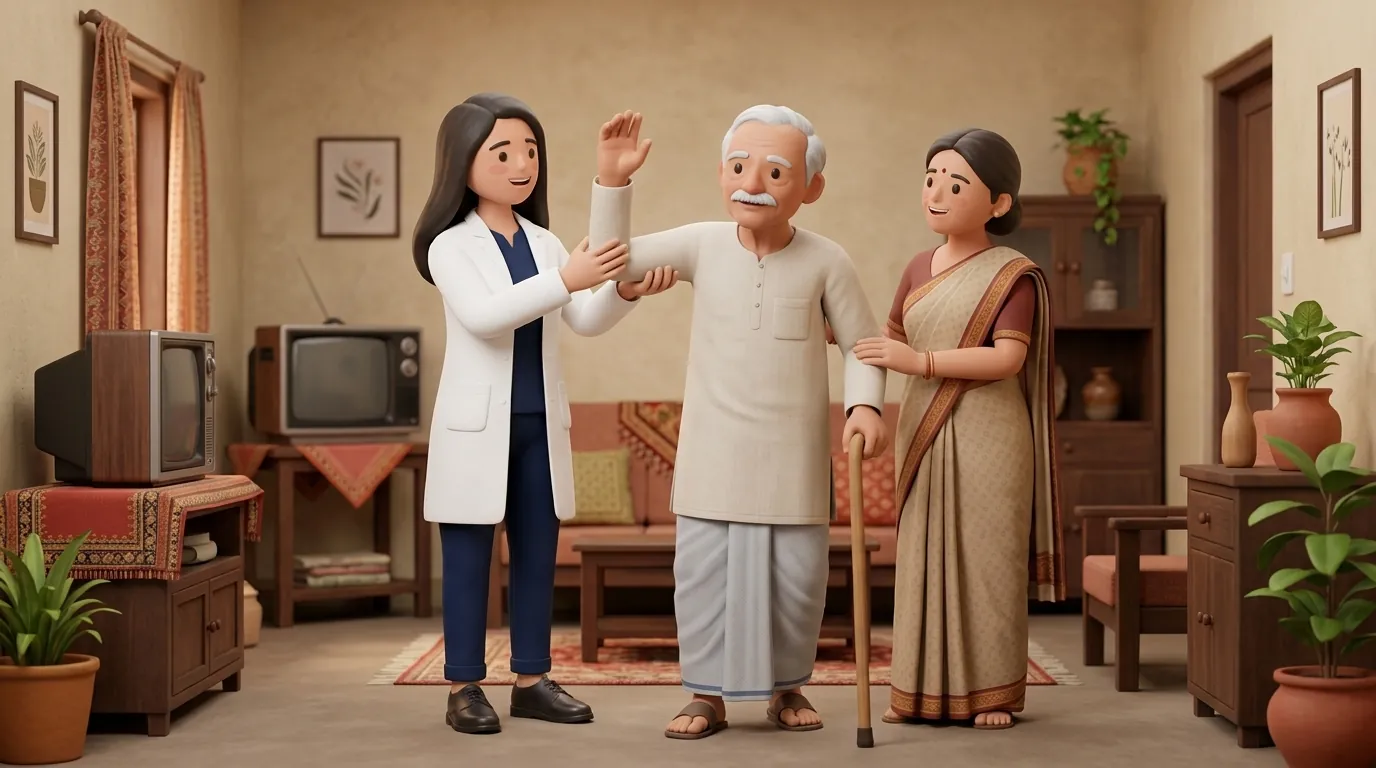
Home rehabilitation can be part of stroke recovery when it is clinically appropriate and coordinated with the person’s wider stroke care. Physiotherapy may address mobility and physical function, while stroke rehabilitation can also involve occupational therapy, speech and language therapy, medicine, nursing, psychology, and other services depending on need.
In this guide (6 sections)
Home rehabilitation can be part of stroke recovery when it is clinically appropriate and coordinated with the person’s wider stroke care. Physiotherapy may address mobility and physical function, while stroke rehabilitation can also involve occupational therapy, speech and language therapy, medicine, nursing, psychology, and other services depending on need.
After discharge, families often become the day-to-day coordinators of recovery. That can make home physiotherapy valuable, but stroke rehabilitation is broader than physiotherapy alone. The safest plan starts with the hospital or stroke-team recommendations and keeps the whole multidisciplinary picture in view.
Use the discharge plan as the starting point
Keep discharge summaries, medication lists, swallowing or communication recommendations, mobility instructions, and follow-up appointments together. Share relevant rehabilitation goals and precautions with the home physiotherapist.
NICE stroke guidance emphasises specialist stroke rehabilitation, multidisciplinary working, agreed care planning, and support after discharge rather than one generic session schedule.
What physiotherapy at home may focus on
Depending on the person, physiotherapy may assess transfers, walking, balance, limb function, endurance, positioning, use of mobility aids, and meaningful household activities. Goals should be individual and linked to participation, not just to isolated movements.
The exercise programme should be developed and overseen by an appropriate clinician. General guidance. Check with a physiotherapist for your situation.
How caregivers can help without taking over
Caregivers can help organise appointments, make the environment safer, reinforce agreed routines, and share observations with consent. They should not invent extra exercises, force difficult movements, or assume that more repetitions are always better.
Ask the rehabilitation team what help is useful and what the person should do independently.
Know the signs of another stroke or medical emergency
New sudden facial weakness, arm weakness, speech difficulty, loss of consciousness, severe sudden neurological change, or another suspected stroke is an emergency, not a physiotherapy issue.
For an emergency, call 112 or go to the nearest hospital. Do not wait for the next home visit.
Frequently asked questions
Can stroke rehabilitation happen only at home?
Some people can receive substantial rehabilitation at home, while others need outpatient, hospital, or specialist services. The right setting depends on clinical needs and local services.
How often should a stroke survivor have physiotherapy?
There is no safe universal schedule for every stroke survivor. Intensity and frequency should come from the rehabilitation plan and individual assessment.
Can family members do the exercises with the patient?
They can support a clinician-approved programme when shown how, but should not add or progress exercises on their own.
Can I book a home physiotherapist on BookPhysio.in?
You can search for physiotherapists who offer home visits in your area. Check the profile and relevant neurological practice information before booking.
If symptoms change fast, follow a major injury, or need urgent care, take the medical route rather than working from search results.
What to expect at a first sessionEvidence reviewed 20 August 2026. General information only.
Find a physiotherapist near you on BookPhysio.in.
Find a physiotherapistSources reviewed
NICE: Stroke rehabilitation in adults (opens in new tab) · BookPhysio.in (opens in new tab)
Related condition guides


BookPhysio.in Editorial Team
The BookPhysio.in editorial team writes and maintains this content, checking it against reliable clinical sources. Content follows our medical review policy: general information only, and no page claims a clinical review until a named registered physiotherapist has signed it off.
Read our medical review policy