
Symphysis Pubis Dysfunction (SPD) in Pregnancy: Physiotherapy and Relief
Conditions and RecoveryIn short
Symphysis pubis dysfunction (SPD) and pregnancy-related pelvic girdle pain make turning in bed, walking, and climbing stairs intensely uncomfortable. Learn safe physiotherapy techniques, pelvic belt guidance, and daily adjustments that help.

Symphysis pubis dysfunction (SPD), often diagnosed as pregnancy-related pelvic girdle pain (PGP), is a condition where the joint connecting the two halves of your pubic bone at the front of your pelvis moves unevenly or becomes painfully inflamed.
Why does the pubic bone hurt during pregnancy?
During pregnancy, elevated levels of hormones including relaxin and progesterone soften pelvic ligaments to prepare the birth canal for delivery. While physiological laxity is normal, asymmetrical weight distribution, postural adaptations, or core muscular imbalances can cause the pubic bones to shear against one another. This produces sharp groin pain, inner thigh tenderness, and clicking sensations.
Everyday modifications to prevent pelvic shearing
Simple adjustments to daily habits dramatically reduce shearing forces across the pubic joint:
- Turning in bed (The Log-Roll Technique): Keep your knees and ankles pressed together, bend both knees, and roll your shoulders and hips as a single unit rather than twisting your pelvis.
- Sitting down to get dressed: Avoid standing on one leg to slip on salwar, trousers, or footwear. Always sit on a firm chair or bed edge to keep both hips level.
- Stair climbing with care: Take stairs one step at a time: lead with your non-painful leg on the way up, and lead with your uncomfortable leg on the way down.
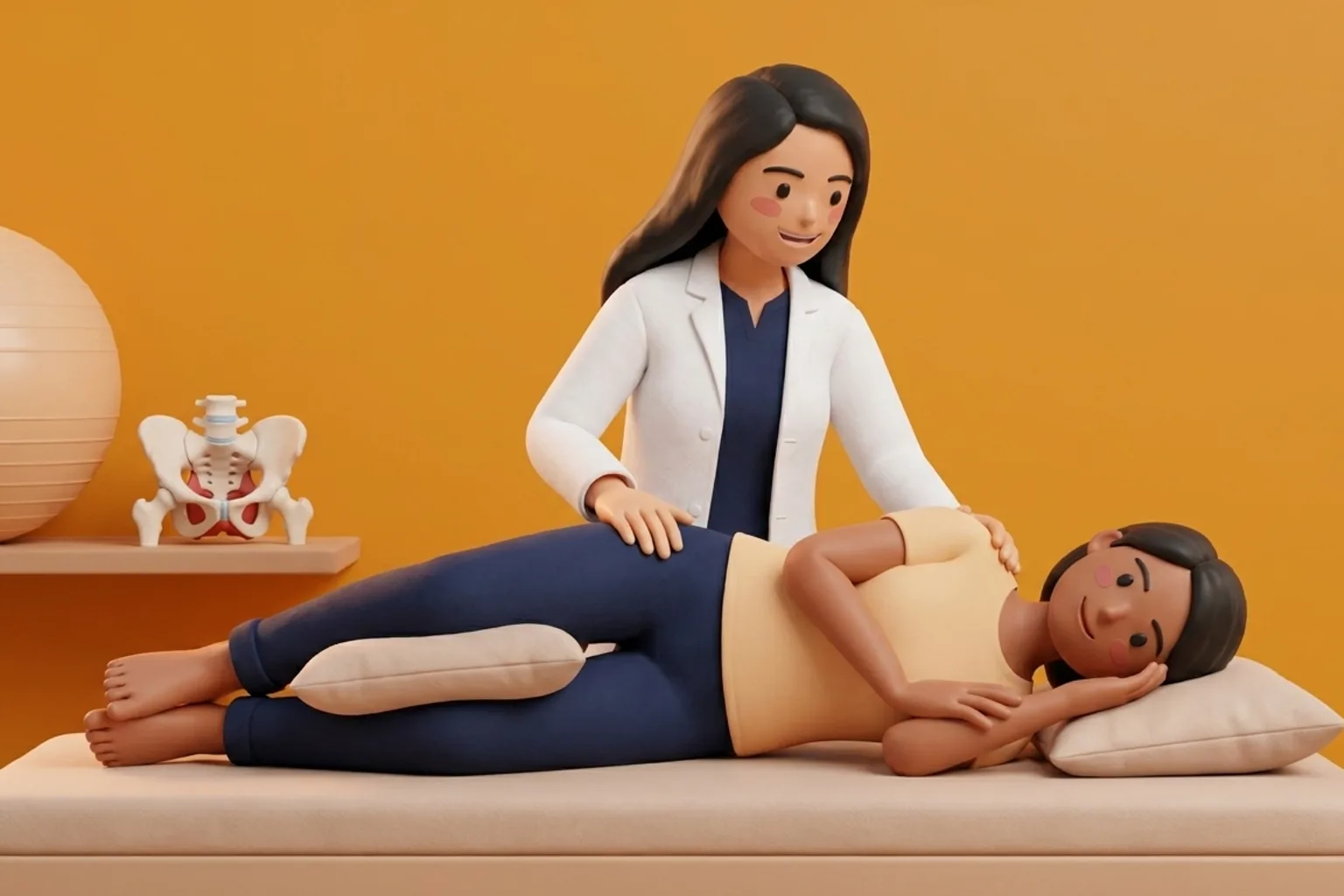
- Side-sleeping support: Place a firm pillow between your knees and ankles to keep your top thigh parallel to the bed, preventing hip adduction.
Physiotherapist-guided pelvic stabilization exercises
Gentle, non-provocative exercises maintain deep pelvic stability throughout the second and third trimesters:
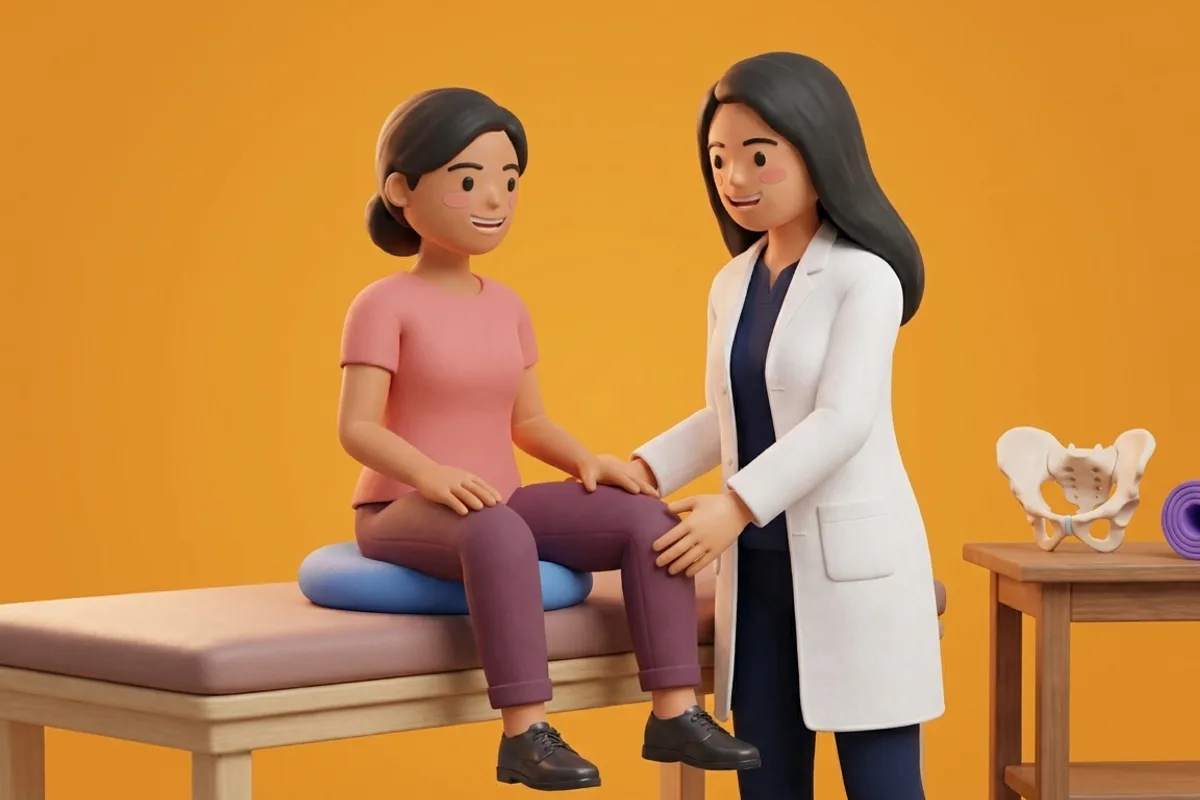
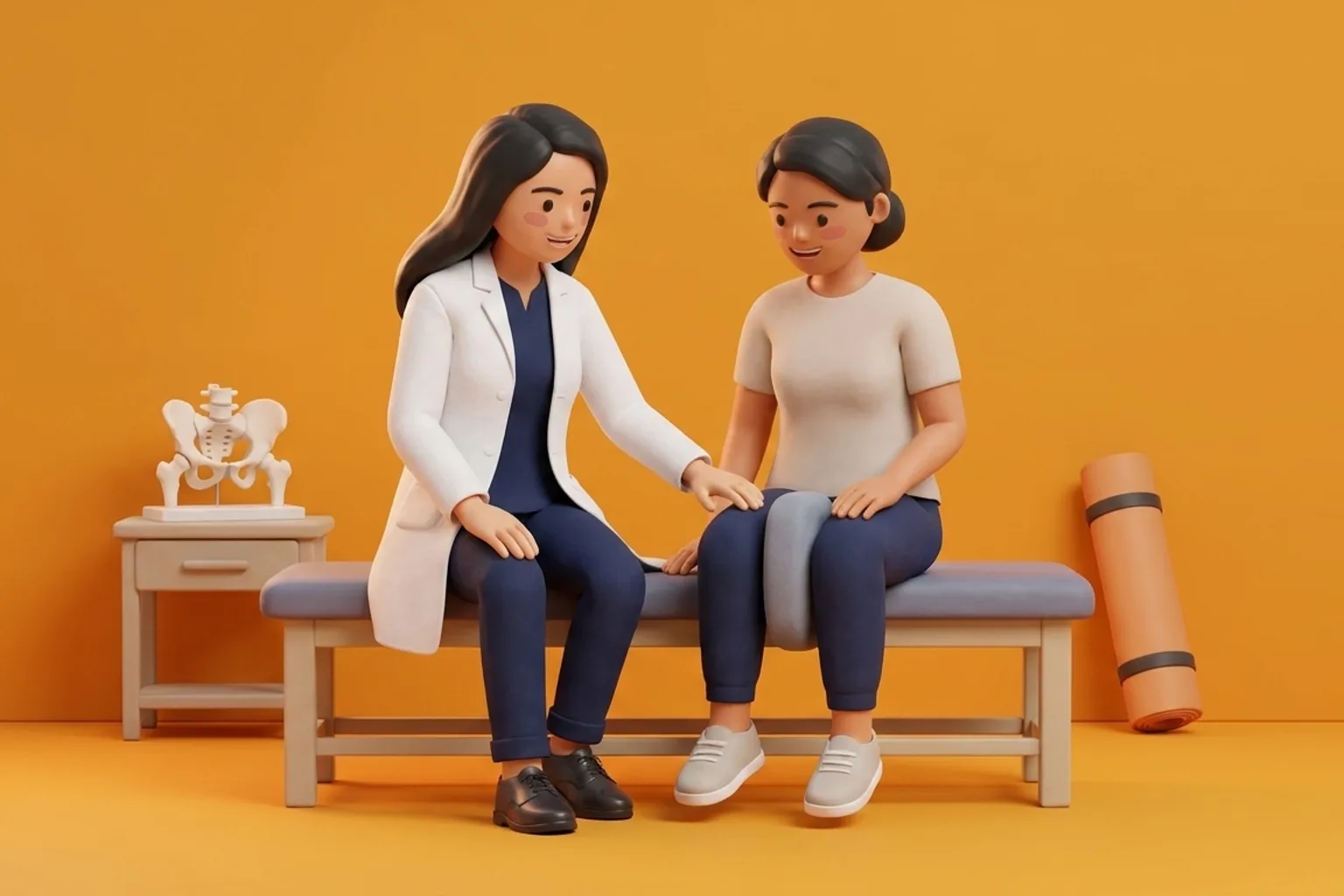
- Seated Adductor Isometric Squeeze: Sit tall with feet flat on the floor. Place a soft Pilates ball or folded cushion between your knees. Gently press inward for 5 seconds while exhaling smoothly; release slowly. Repeat 8 to 10 times.
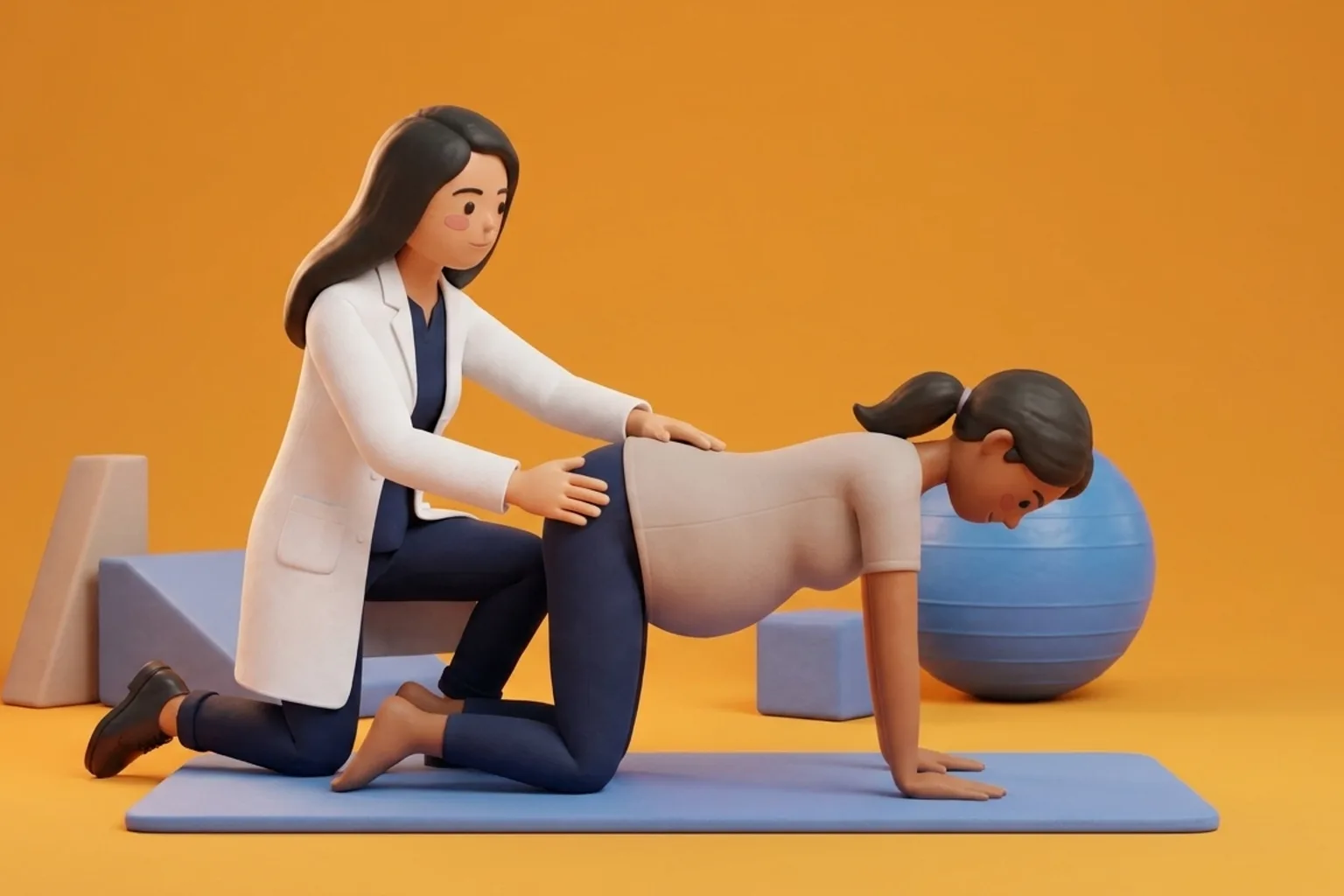
- Transverse Abdominis Engagement: In a comfortable supported seated or four-point kneeling posture, gently draw your lower abdomen towards your spine as if hugging your baby, without tilting your pelvis.
- Pelvic Floor Gentle Co-contraction: Coordinating pelvic floor lifts with diaphragmatic exhalations provides natural internal support for the pelvic ring.
| Intervention | Mechanism of Relief | Practical Consideration |
|---|---|---|
| Sacroiliac / Pelvic Support Belt | Compresses the pelvic ring to reduce joint micro-motion during walking and standing | Wear snugly over pubic bones while active; unfasten when sitting or resting |
| Maternity Body Pillows | Prevents rotational pelvic torsion and knee collapse during nocturnal side-sleeping | Choose pillows firm enough to keep thighs parallel without sagging |
| Home Physiotherapy Visits | Hands-on pelvic alignment checks, manual release, and customised home adaptation coaching | Ideal for pregnant mothers experiencing acute walking limitation who cannot commute |
Labour, delivery and post-partum recovery
Having SPD does not mean you cannot have a vaginal birth. Share your comfort range with your obstetrician and birthing team. Upright, forward-leaning, hands-and-knees, or side-lying positions with supported legs often reduce pubic joint strain compared to flat-back lithotomy postures with wide leg abduction. In the post-partum period, hormone levels normalise and stability gradually returns with guided recovery.
Experiencing pelvic girdle pain or pregnancy back ache? Learn about our dedicated women's health physiotherapy resources.
SPD condition guide →Frequently asked questions
Will symphysis pubis dysfunction go away after giving birth?
For the vast majority of women, SPD symptoms resolve within 6 to 12 weeks post-delivery as relaxin levels decline and ligaments regain stiffness. A postnatal physiotherapy check-up helps restore core strength.
Can I do squats or lunges with pregnancy pelvic pain?
Avoid deep wide squats, lunges, and asymmetrical single-leg loading exercises while experiencing acute pain. Focus on symmetrical, supported movements with feet hip-width apart.
Can a physiotherapist perform manual therapy during pregnancy?
Yes. Qualified physiotherapists trained in women's health provide safe, gentle joint mobilisation, soft tissue release, and ergonomic guidance tailored to every stage of pregnancy.
Evidence reviewed 5 September 2026. General information only. BookPhysio.in is a booking platform, not a clinic.
Sources reviewed
Pelvic Obstetric and Gynaecological Physiotherapy (POGP) UK Guidelines; Royal College of Obstetricians and Gynaecologists (RCOG) PGP Guidance.
Ready to see a physiotherapist?
Find verified physiotherapists in your city for clinic visits and home visits. Compare fees and real availability, then pay directly at your session.
Top cities for home visits & clinic care:
Related condition guides
BookPhysio.in Editorial Team
Editorial Team
The BookPhysio.in editorial team writes and maintains this content, checking it against reliable clinical sources. Content follows our medical review policy: general information only, and no page claims a clinical review until a named registered physiotherapist has signed it off.
Read our medical review policy