
Postnatal Pelvic Girdle Pain (PGP) and Symphysis Pubis Dysfunction: Stability Physio in India
In short
Agonizing pubic bone pain and clicking when turning in bed indicates pelvic girdle dysfunction. Discover evidence-based pelvic stability exercises and physio.
In this guide (5 sections)
For millions of new mothers across India, the joy of welcoming a newborn is overshadowed by an excruciating, deeply debilitating physical agony located directly at the front of the pubic bone or deep in the buttocks. Simple, basic movements become terrifying trials: turning over from one side to the other in bed produces a sickening clicking or popping sensation accompanied by sharp pain, climbing stairs feels like the pelvis is tearing in half, and standing on one leg to slip on a salwar or saree is mechanically impossible.
This condition is Pelvic Girdle Pain (PGP) and Symphysis Pubis Dysfunction (SPD). During pregnancy and the postpartum period, a combination of pregnancy-related hormonal softening (relaxin and progesterone) and the immense physical demands of carrying and delivering a baby leaves the pelvic ring unstable. In Indian joint families, where women are expected to resume domestic chores, squat, or sit on the floor, untreated SPD can persist for months or years. Specialized pelvic health physiotherapy restores pelvic symmetry, stabilizes lax joints, and enables pain-free motherhood.
1. Pathomechanics: The Pelvic Ring, Form Closure, and Force Closure
The human pelvis operates as a closed biomechanical ring composed of three articulated joints: two posterior Sacroiliac (SI) joints connecting the sacrum to the iliac bones, and the anterior Symphysis Pubis joint connecting the two pubic bones with a fibrocartilaginous disc and dense pubic ligaments. Because it is a closed ring, movement or displacement at any one joint directly forces displacement at the other two.
Pelvic stability relies on two cooperative mechanisms: 1. Form Closure: the interlocking bony contours and dense ligaments that hold the joints together passively. 2. Force Closure: the dynamic muscular slings (the deep abdominal transversus abdominis, pelvic floor, multifidus, gluteus maximus, and adductors) that actively clamp the pelvic ring shut during weight-bearing.
During pregnancy, relaxin and progesterone increase ligamentous laxity, allowing the pubic joint gap to widen from a normal 4 to 5 millimeters up to 8 or 9 millimeters to facilitate childbirth. When the infant is delivered, form closure is temporarily compromised. If the dynamic force closure muscles are inhibited, fatigued, or unconditioned, every asymmetric step: putting weight onto one leg while the other swings: creates vertical shearing forces across the unstable pubic joint, tearing sensitive periosteal nerve endings and precipitating agonizing Symphysis Pubis Dysfunction.
| Daily Activity / Movement | Kinematic Pelvic Alignment | Joint Shear Stress Level | Ergonomic & Physiotherapy Solution |
|---|---|---|---|
| Turning Over in Bed (Asymmetric Leg Roll) | One leg crosses midline; maximum torsional pelvic ring shear | Extreme; triggers sharp pubic pop and sacroiliac subluxation | The "Log Roll": keep knees squeezed together; turn pelvis as one unit |
| Climbing High Stairs Step-by-Step | Single-leg stance + deep hip flexion; vertical pubic shear | Severe; concentrates entire body weight onto one pubic bone | Take stairs one step at a time ("good leg up, bad leg down"); use handrail |
| Getting In / Out of Auto-Rickshaw or Car | Wide straddle abduction; violent distraction across pubic symphysis | Severe; strains weakened superior pubic ligament | Place plastic bag on seat; sit first with knees together, then swivel both legs |
| Symmetric Bilateral Glute Bridging | Equal bilateral hip loading; clamps posterior pelvic ring | Zero shear; optimal force closure activation | Foundational rehabilitation exercise; rebuilds gluteal force closure |
2. Indian Domestic Realities: Floor Sitting, Low Diwans, and Asymmetric Baby Carrying
In Indian households, traditional postpartum habits frequently aggravate pelvic girdle dysfunction. Many new mothers sleep on low beds or floor mattresses (gaddas), requiring them to perform deep asymmetrical lunges to stand up while carrying their baby. Furthermore, sitting cross-legged on the floor (Sukhasana) for feeding or prayers places maximum distraction stress across the fragile anterior pubic symphysis.
Additionally, mothers frequently carry their growing 5-to-8-kilogram infant resting perched on one hip (the classic "hip hitching" posture) while preparing feeding bottles or supervising chores. Hitching the baby on one hip drops the opposite pelvis, jamming one sacroiliac joint while forcing the pubic bones into a continuous asymmetric scissor shear.
Simple domestic adaptations provide immediate relief: switching to symmetric front baby carriers, wearing supportive pelvic compression belts, and mastering safe symmetrical bed transfers.
3. Three-Phase Symmetrical Pelvic Ring Stabilization Protocol
Three-Phase Symphysis Pubis and Pelvic Girdle Stabilization Protocol
Objective: Eliminate asymmetrical joint shear, rebuild muscular force closure, and master safe postpartum domestic mobility.
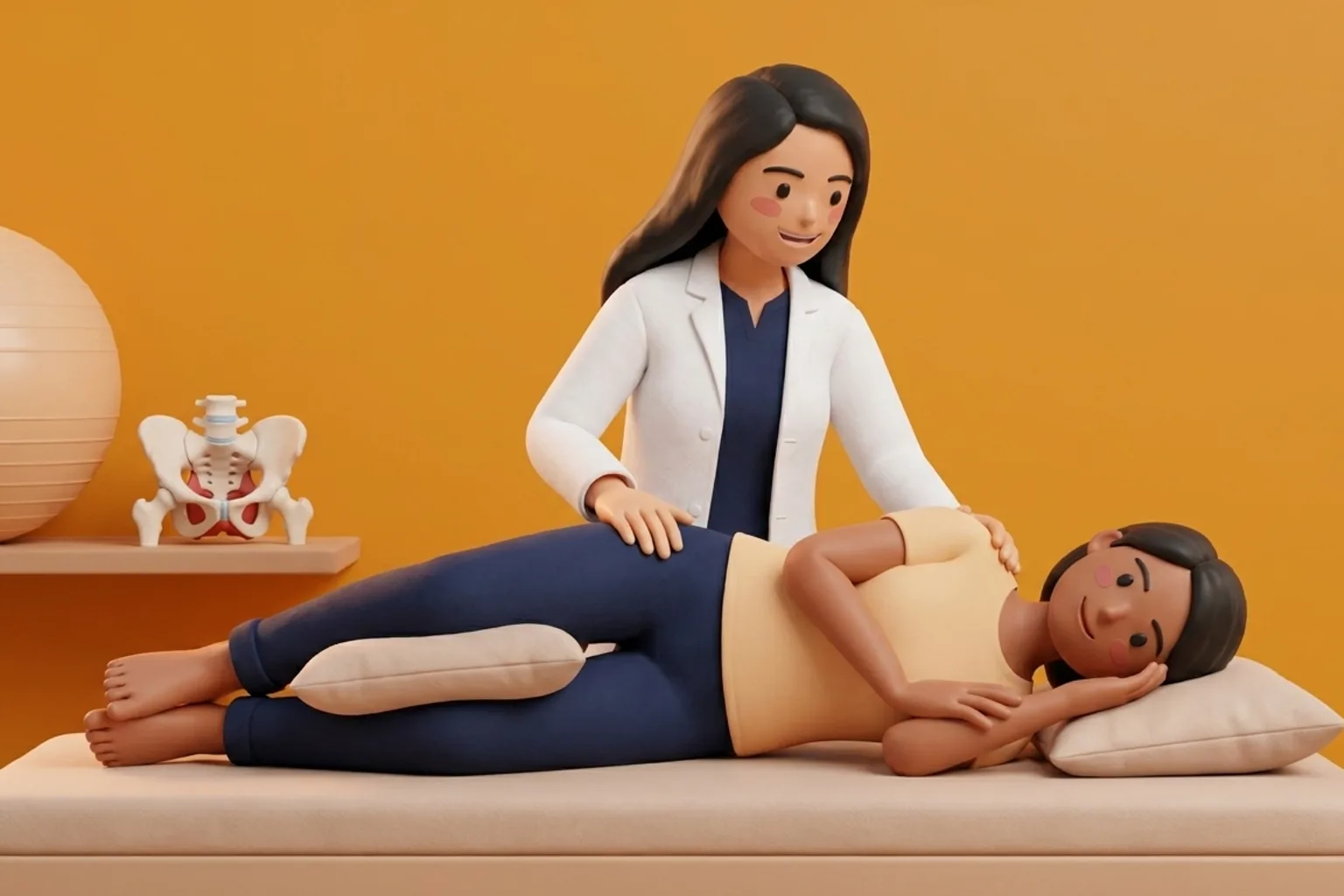
- 1Phase 1 (The Pelvic Compression Belt and Symmetrical Transfer Rules - Immediate): 1. Trochanteric Pelvic Belt: wear a specialized non-elastic pelvic compression belt strapped firmly around the widest part of your hips (over the greater trochanters and pubic bone, well below your waist). This provides mechanical artificial form closure, instantly reducing joint shear by 60%. 2. The Log-Roll Bed Technique: NEVER roll in bed by moving one leg first; squeeze a firm pillow between your knees, tighten your pelvic floor, and roll your entire body (shoulders, torso, and knees) together like a solid log. 3. Getting Dressed: always sit down on a chair to put on underwear, pants, or salwar; never stand on one leg.
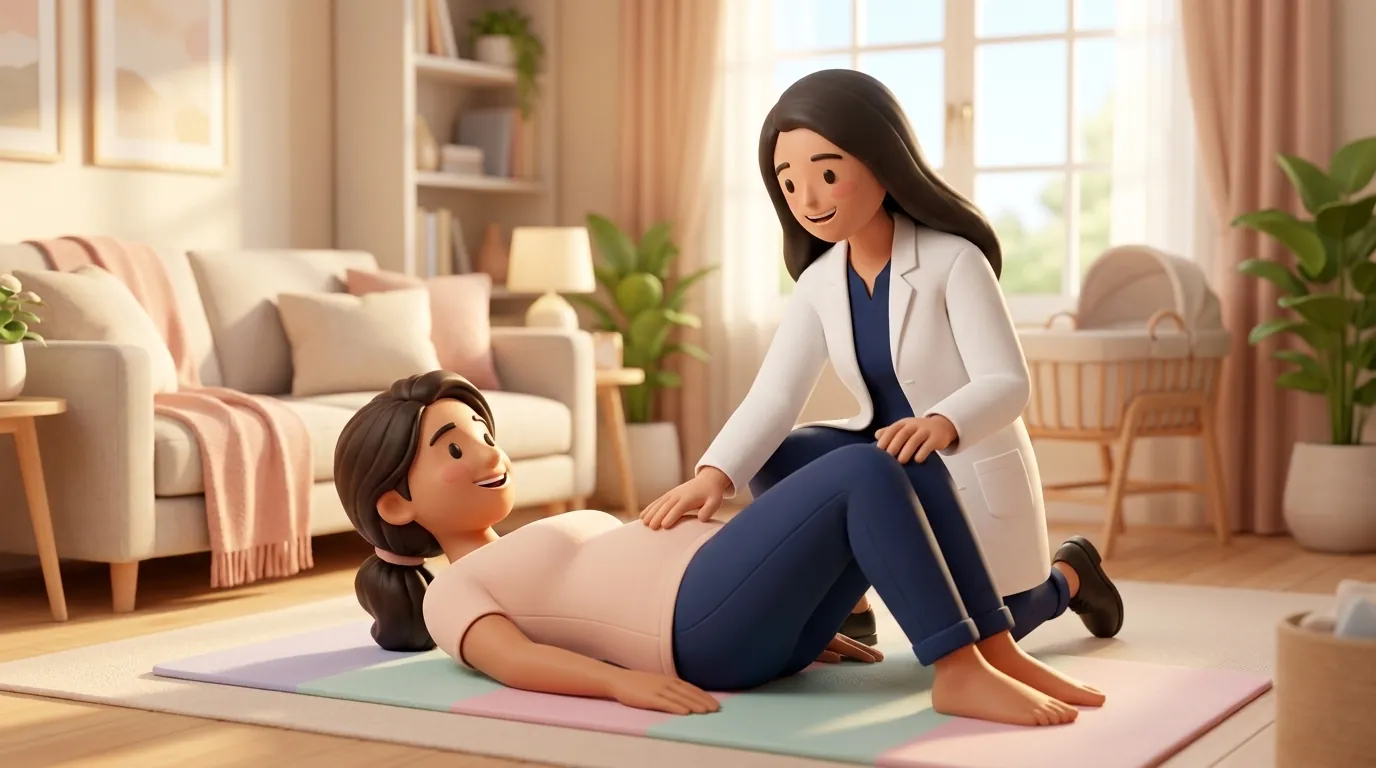
- 2Phase 2 (Isometric Symmetrical Co-Contraction - Daily): 1. Isometric Adductor Squeezes: lie on your back with knees bent; place a soft rubber ball or firm yoga block between your knees; gently squeeze the ball at 50% effort for 5 seconds, exhaling smoothly; repeat 10 times to balance bilateral pubic forces. 2. Isometric Abductor Presses: place a loop resistance band around the outside of your knees; press gently outward for 5 seconds; repeat 10 times.
- 3Phase 3 (Gluteal Force-Closure Rebuilding - 4 Days Weekly): 1. Bilateral Glute Bridges with Ball: lie on your back, knees bent, ball squeezed between knees; squeeze glutes and raise your hips off the floor until your body forms a straight line from knees to shoulders; hold for 3 seconds; perform 3 sets of 10 repetitions. 2. Clamshells with Neutral Pelvis: lie on your side, knees bent at 90 degrees; keeping feet glued together, gently raise top knee without letting your pelvis roll backward; perform 2 sets of 10 reps per side.
- 4Car Transit Cue: When getting into an auto-rickshaw or car, do not lead with one foot. Back up to the seat, sit down with both buttocks firmly on the seat with knees together, then swivel both legs into the vehicle simultaneously.
4. Critical Red Flags: Recognizing Diastasis Symphysis Pubis and Septic Sacroiliitis
While classical PGP responds predictably to conservative stabilization, acute structural ruptures or infections require immediate orthopaedic attention. Seek emergency hospital evaluation if you experience sudden, severe inability to bear any weight on either leg after delivery accompanied by a palpable, wide gap at your pubic bone (suggestive of an acute Diastasis Symphysis Pubis with ligament rupture exceeding 10 to 15 millimeters on X-ray/ultrasound), high spiking fever, rigors, and excruciating unilateral buttock pain that throbs constantly even when lying completely still (indicating Septic Sacroiliitis or pelvic osteomyelitis), or symptoms of deep vein thrombosis (DVT): such as severe, tender, hot swelling in one calf.
Frequently Asked Questions
How is Pelvic Girdle Pain (PGP) different from ordinary postpartum back pain?
Ordinary back pain is centered in the muscular lumbar spine above the beltline. Pelvic Girdle Pain is localized lower down: deep in the buttock cheeks (sacroiliac joints), radiating into the back of the thighs, or sharply focused at the anterior pubic bone (pubic symphysis), accompanied by severe pain during single-leg weight-bearing like walking or climbing stairs.
Will breastfeeding hormones prevent my pelvic ligaments from tightening up?
While breastfeeding maintains slightly elevated levels of prolactin and relaxin, hormonal levels drop significantly after delivery compared to pregnancy. Ligaments gradually regain baseline stiffness over the first 4 to 6 months postpartum. However, dynamic muscular strengthening (force closure) is the true key to stability, regardless of breastfeeding status.
Can I have a normal vaginal delivery in future pregnancies if I had severe PGP?
Yes, absolutely! Having PGP does not automatically mean you require a Caesarean section in future pregnancies. Planning ahead with a pelvic health physiotherapist, maintaining optimal hip mobility, and choosing supportive labor positions (such as all-fours or side-lying rather than wide-straddle lithotomy) ensures a safe vaginal birth.
How tight should a trochanteric pelvic support belt be worn?
The belt should be positioned low across the pelvis (over the bony bumps on the sides of your hips and directly over the pubic bone) and tightened to provide snug, comforting compression: similar to a supportive handshake. It should not be pulled so tight that it restricts breathing or digs uncomfortably into your skin.
How do I book a specialized postnatal pelvic physiotherapist through BookPhysio.in?
BookPhysio.in connects mothers across major Indian cities with certified female pelvic health physiotherapists skilled in PGP management, pelvic belt fitting, and postpartum rehabilitation. Transparent session fees range from ₹400 to ₹1,500 in clinic and ₹600 to ₹2,000 for home visits, with zero platform commission and direct payment per visit.
Related condition guides

BookPhysio.in Editorial Team
The BookPhysio.in editorial team writes and maintains this content, checking it against reliable clinical sources. Content follows our medical review policy: general information only, and no page claims a clinical review until a named registered physiotherapist has signed it off.
Read our medical review policy