
Thoracic Outlet Syndrome (TOS): Neurovascular Compression, Scalene Release, and Physiotherapy in India
In short
Arm numbness, tingling, and heavy aching often originate at the thoracic outlet. Learn the three compression tunnels, neurovascular testing, and specialized physiotherapy.
In this guide (5 sections)
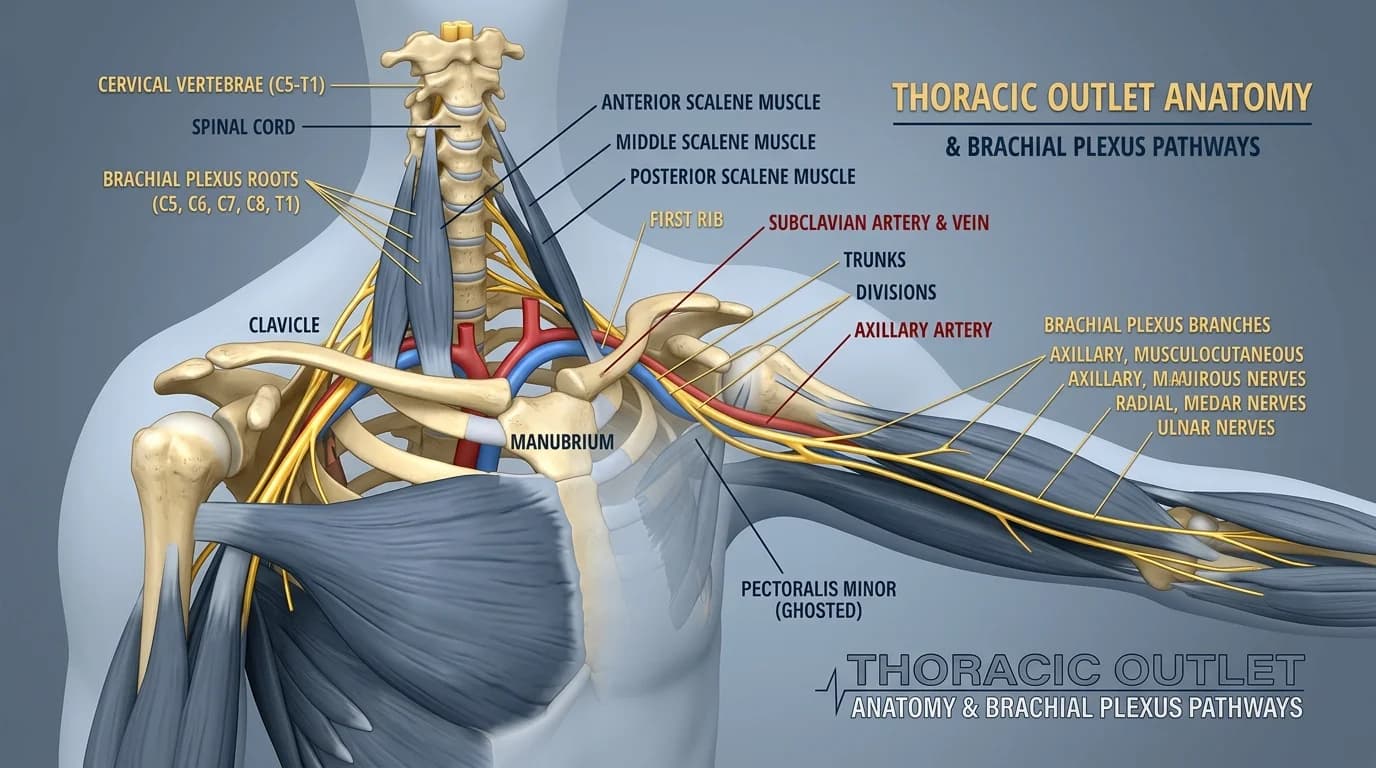
Thoracic Outlet Syndrome (TOS) encompasses a complex group of disorders characterized by extrinsic compression of the brachial plexus nerve trunks and/or subclavian blood vessels as they traverse the narrow anatomical passageway between the base of the neck and the axilla. Patients suffering from TOS frequently endure years of diagnostic confusion, misdiagnosed with cervical radiculopathy, carpal tunnel syndrome, or fibromyalgia before receiving an accurate clinical evaluation.
In India, thoracic outlet syndrome is increasingly prevalent among IT desk workers, dental surgeons, students spending long hours over study tables, and overhead sports athletes. Neurogenic TOS (nTOS) accounts for over 90 to 95 percent of all clinical cases, causing deep, diffuse aching in the neck, shoulder, and arm, accompanied by numbness, paresthesias (pins and needles), and weakness radiating into the ring and little fingers (C8-T1 dermatome). True arterial or venous TOS (accounting for less than 5% of cases) represents a vascular emergency requiring prompt surgical evaluation.
1. Anatomical Entrapment Tunnels: Scalene, Costoclavicular, and Pectoralis Minor
The neurovascular bundle must navigate three distinct anatomical choke points, any of which can become stenotic due to muscular hypertrophy, postural collapse, or congenital anomalies (such as a cervical rib or fibrous band).
| Anatomical Space | Boundaries | Primary Pathological Cause | Provocative Physical Test |
|---|---|---|---|
| 1. Interscalene Triangle | Anterior scalene muscle anteriorly, middle scalene muscle posteriorly, superior surface of first rib inferiorly | Hypertrophy or spasm of scalenes due to apical breathing; presence of anomalous cervical rib | Adson's Test: neck extended and rotated to symptomatic side while inhaling deeply |
| 2. Costoclavicular Space | Clavicle anteriorly, first rib posteriorly and inferiorly, subclavius muscle and costoclavicular ligament | Depressed shoulder girdle, carrying heavy shoulder bags, clavicle malunion after fracture | Military Brace Test (Costoclavicular Test): shoulders drawn back and downward firmly |
| 3. Subpectoral / Pectoralis Minor Space | Pectoralis minor muscle anteriorly, coracoid process superiorly, ribs 3 to 5 posteriorly | Adaptive shortening of pectoralis minor from rounded-shoulder forward head posture | Wright's Test / Hyperabduction Test: arm elevated to 180 degrees in abduction and external rotation |
2. Modern Occupational Drivers in Indian Urban Professionals
Prolonged sitting in poorly configured workstations: hunched over laptops without external monitors, using non-supportive chairs, and cradling smartphones between ear and shoulder: drives a classic Upper Crossed Syndrome. The deep cervical flexors and serratus anterior become weak and inhibited, while the pectoralis minor, upper trapezius, and scalenes become chronically shortened and hypertonic.
Furthermore, stress-induced shallow breathing patterns cause overuse of the scalene muscles as accessory respiratory muscles. Instead of using the diaphragm, patients breathe by elevating their ribcage with their neck scalenes thousands of times each day. This chronic scalene overuse elevates the first rib directly into the brachial plexus cords, causing constant neurovascular entrapment. Physiotherapy re-educates proper diaphragmatic mechanics and restores scapular elevation.
3. Three-Phase Decompression and Neurodynamic Protocol
Targeted rehabilitation decompresses the anatomical tunnels and restores normal neural sliding through the brachial plexus.
Phase 1: Diaphragmatic Breathing and Scalene Self-Release
Objective: Eliminate accessory neck muscle breathing hyperactivity and drop the elevated first rib.
- 1Sit comfortably in a supportive chair with one hand on your chest and one hand on your lower belly.
- 2Inhale slowly and deeply through your nose for 4 seconds, focusing entirely on expanding your lower belly outward against your hand.
- 3Ensure your upper chest and neck muscles remain completely motionless and relaxed.
- 4Exhale slowly through pursed lips for 6 seconds, letting your belly sink inward.
- 5Repeat for 10 calm breath cycles. This immediately downregulates scalene muscle tone and lowers the first rib.
Phase 2: Corner Doorway Pectoralis Minor Stretch
Objective: Lengthen the contracted pectoralis minor to widen the subcoracoid space and decompress the cords.
- 1Stand in an open doorway with your elbow bent to 90 degrees and placed against the doorframe at slightly above shoulder height.
- 2Step forward with one leg until you feel a comfortable, gentle stretch across the front of your chest near your armpit.
- 3Gently rotate your torso away from the doorframe to deepen the stretch.
- 4Ensure you do not arch your lower back or shrug your shoulder upward.
- 5Breathe diaphragmatically and hold steadily for 30 seconds. Do not push into numbness or tingling.
Phase 3: Brachial Plexus Neurodynamic Gliding (Median and Ulnar Sliders)
Objective: Restore physiological longitudinal excursion of the brachial plexus without provoking neural inflammation.
- 1Stand tall with your arm out to the side at shoulder height, elbow bent at 90 degrees and palm facing your face.
- 2As you gently straighten your elbow and extend your wrist backward (pulling the nerve distally), tilt your head toward your outstretched hand (slackening the nerve proximally).
- 3Then, as you bend your elbow back toward your face (slackening distally), tilt your head away from your hand (pulling proximally).
- 4Perform this fluid 'flossing' motion smoothly 10 times in rhythm. Never hold an aggressive end-range stretch.
Venous TOS (subclavian vein thrombosis, often termed Paget-Schroetter syndrome) and Arterial TOS require urgent emergency surgical intervention. Seek immediate emergency medical care if you observe: sudden cyanosis (blue/purple discolouration) of your arm or hand; noticeable swelling of the entire limb accompanied by prominent, engorged superficial veins on the shoulder and chest; or sudden coldness, extreme pallor (white fingers), and absent radial pulses.
4. Clinical Settings and Transparent Fee Standards in India
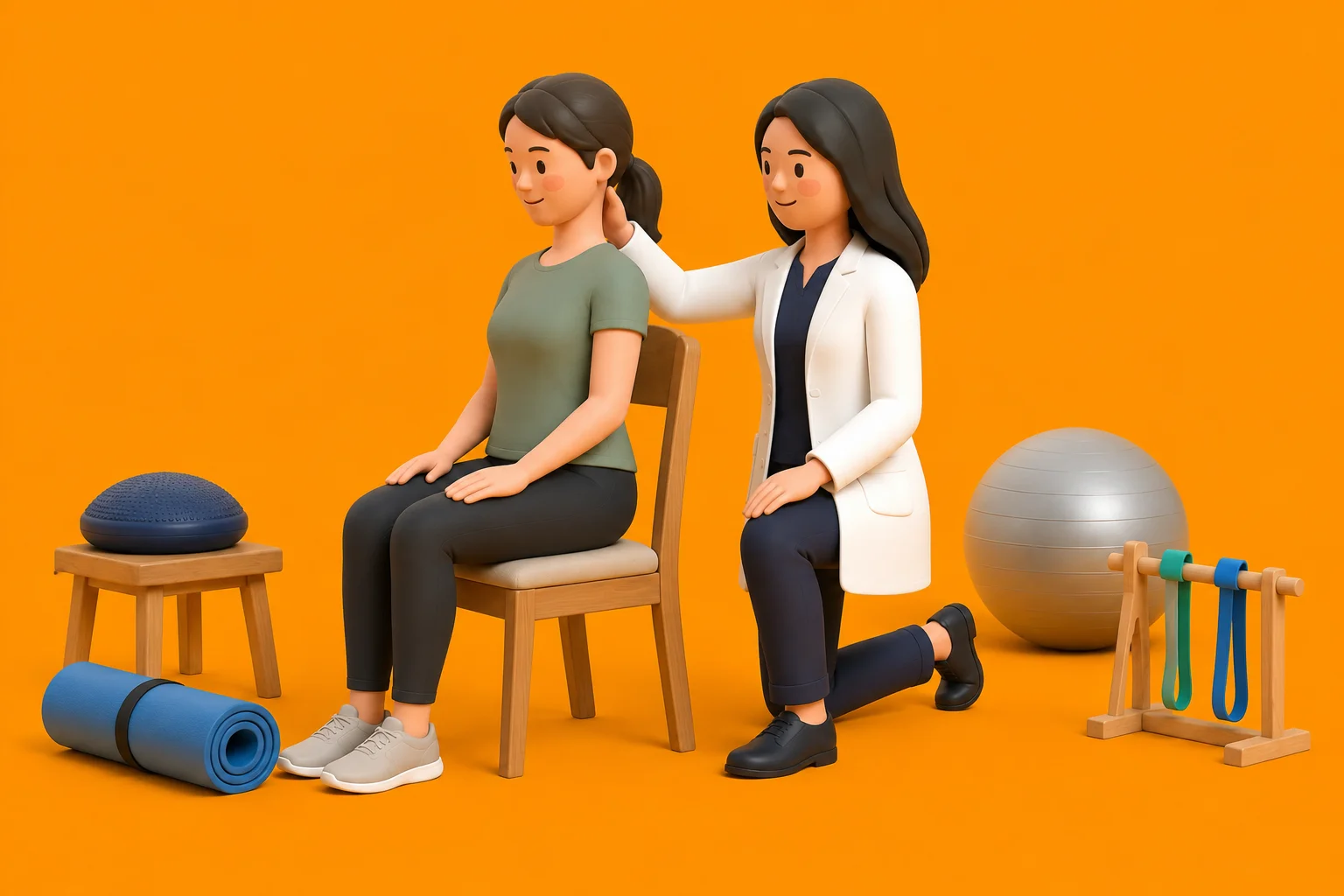
Outpatient clinic physiotherapy provides access to specialized first-rib mobilisation techniques, Mulligan mobilisation with movement (MWM), postural biofeedback, and dry needling for stubborn scalene trigger points. For corporate professionals dealing with severe radiating dysesthesias who work from home, home-visit physiotherapy provides essential workstation ergonomic modifications and sleep positioning setup.
In major Indian cities, clinical physiotherapy sessions for thoracic outlet syndrome typically range from ₹400 to ₹1,500 per visit. In-home physiotherapy sessions range from ₹600 to ₹2,000 depending on clinical expertise and travel distance. Transparent direct payments ensure clinical trust.
5. Frequently Asked Questions Regarding Thoracic Outlet Syndrome
How is thoracic outlet syndrome distinguished from a cervical disc bulge?
While both conditions can cause radiating arm pain and numbness, cervical radiculopathy typically originates from a single nerve root (e.g., C6 causing thumb numbness, or C7 causing middle finger pain) and is aggravated by neck movements like Spurling's test. In contrast, neurogenic TOS typically affects the lower trunk of the brachial plexus (C8-T1), causing symptoms in the ring and little fingers, and is aggravated by carrying heavy bags, working with hands elevated overhead, or depressed shoulder positions (Roos elevated arm stress test).
Can having an extra rib (cervical rib) cause thoracic outlet syndrome?
Yes. A congenital cervical rib (an extra rib arising from the seventh cervical vertebra) occurs in roughly 1 percent of the population. While many individuals with a cervical rib remain completely symptom-free throughout life, the presence of the rib or an associated fibrous band narrows the interscalene triangle. When combined with poor posture, trauma, or repetitive overhead work, it can provoke neurovascular compression. Even in the presence of a cervical rib, conservative physiotherapy focused on postural retraining is the first-line treatment before considering surgical resection.
Why does my hand go numb when I blow-dry my hair or paint a wall?
Lifting your arms overhead into abduction and external rotation dramatically narrows both the costoclavicular space and the subpectoral tunnel behind the pectoralis minor. In individuals with tight pectoralis minor muscles or an elevated first rib, this overhead position scissors the brachial plexus and axillary blood vessels, rapidly provoking numbness, tingling, and heavy muscular fatigue.
Should I wear a backpack or shoulder bag if I have TOS?
Avoid carrying heavy bags with a single shoulder strap on the affected side. A heavy shoulder strap presses directly down upon the clavicle and first rib, pinching the costoclavicular tunnel, while forcing the neck scalenes to contract forcefully to stabilize your head. If carrying a bag is necessary, use a lightweight, ergonomically designed backpack with wide, padded straps and a chest buckle, or use a rolling briefcase.
How long does physiotherapy take to relieve thoracic outlet syndrome symptoms?
With diligent adherence to diaphragmatic breathing re-education, postural alignment exercises, nerve gliding, and ergonomic desk adjustments, most patients with neurogenic TOS experience meaningful relief within 6 to 12 weeks. Consistency in modifying provocative daily habits: such as avoiding continuous overhead reaching and resting forearms on desk supports: is essential to prevent symptoms from returning.
Related condition guides



BookPhysio.in Editorial Team
The BookPhysio.in editorial team writes and maintains this content, checking it against reliable clinical sources. Content follows our medical review policy: general information only, and no page claims a clinical review until a named registered physiotherapist has signed it off.
Read our medical review policy