
Physiotherapy for Multiple Sclerosis and Spinal Mobility: Managing Spasticity, Balance and Fatigue
In short
Specialized neuro-physiotherapy helps people with multiple sclerosis and spinal conditions manage spasticity, overcome neuro-fatigue, and maintain independent walking. Learn evidence-based rehabilitation protocols.
In this guide (8 sections)
Multiple sclerosis and spinal cord conditions alter nerve impulse transmission between the brain and muscles, leading to spasticity, muscular weakness, sensory changes, and profound fatigue. Specialized neuro-physiotherapy builds functional neuroplasticity, manages muscle stiffness, and protects independent walking ability.
Understanding neurological spasticity and motor fatigue
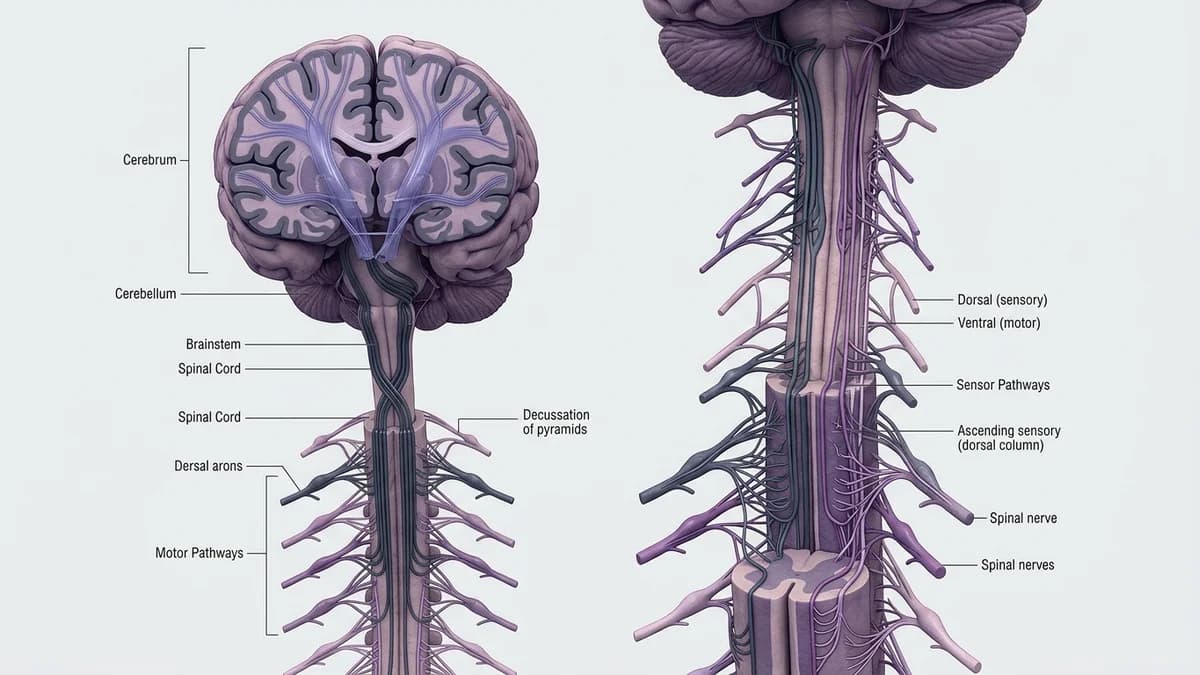
In multiple sclerosis and upper motor neuron spinal cord conditions, damage to the protective myelin sheath disrupts the regulatory signals traveling down the corticospinal tracts. Without regular descending inhibitory signals, peripheral stretch reflexes become hyperactive. This creates spasticity: an involuntary, velocity-dependent increase in muscle resistance to stretch.
Unlike ordinary muscular tiredness after a workout, neurological fatigue in MS is a distinct central phenomenon caused by the brain expending extra metabolic energy to route signals around demyelinated lesions. A crucial clinical consideration is Uhthoff’s phenomenon: a temporary exacerbation of weakness and sensory blur when core body temperature rises even slightly from exercise, warm weather, or hot baths.
| Clinical Consideration | Physiological Challenge | Physiotherapy Solution |
|---|---|---|
| Uhthoff’s Phenomenon | Body temperature elevation temporarily blocks conduction along demyelinated axons. | Pre-cooling with cool hydration, misting, air conditioning, and interval pacing. |
| Extensor Spasticity | Involuntary stiffening of calf and quadriceps muscles impeding knee flexion during walking. | Sustained static stretching (greater than 60 seconds) and reciprocal antagonist activation. |
| Foot Drop | Weakness of the tibialis anterior muscle causing toes to drag during the swing phase of gait. | Gait retraining, functional electrical stimulation (FES), and lightweight ankle-foot orthoses. |
| Central Neuro-Fatigue | Exhaustion that does not correlate directly with physical exertion level. | Application of the 4P energy conservation framework: Pacing, Prioritising, Planning, Posture. |
Evidence-based neuro-physiotherapy exercises
Perform these exercises during your most energetic part of the day, typically in the morning or after an afternoon rest period.
Prolonged Gastroc-Soleus Calf Elongation
Objective: Inhibit hyperactive stretch reflexes and prevent ankle plantarflexion contractures.
- 1Stand facing a wall with both hands resting flat against the surface at chest height.
- 2Step your tighter leg straight back, keeping your rear heel pressed firmly into the floor with toes pointing straight forward.
- 3Bend your front knee smoothly until you feel a firm, comfortable elongation in the back calf.
- 4Maintain this position calmly for 60 to 90 seconds without bouncing. Slow, steady tension allows the neuro-inhibitory Golgi tendon organs to relax the muscle.
- 5Step forward gently, shake out the leg, and repeat on the other side.
Quadruped Cross-Body Stability and Weight Shift
Objective: Train deep core balance and coordinated trunk motor control across multiple spinal segments.
- 1Get onto your hands and knees on a comfortable exercise mat, with hands directly under shoulders and knees under hips.
- 2Find a neutral spinal posture without arching or rounding your back.
- 3Slowly shift your body weight diagonally toward your left knee and right hand.
- 4Reach your left arm straight forward while extending your right leg straight back, holding the level position for 3 to 5 seconds.
- 5Return smoothly to hands and knees and alternate sides.
Task-Specific Sit-to-Stand Retraining
Objective: Maintain functional quadriceps power, hip extension, and transfer independence.
- 1Sit on a firm, sturdy chair with your feet placed shoulder-width apart, pulled slightly back under your knees.
- 2Hinge forward from your hips ("nose over toes") to shift your center of gravity over your feet.
- 3Press firmly through your heels to stand tall, focusing on squeezing your gluteal muscles at the top.
- 4Pause for 2 seconds while standing upright with shoulders back.
- 5Hinge hips backward and slowly control your descent back onto the seat without plopping down.
Energy conservation: The 4P framework
- Pacing: Break tasks into manageable intervals. Rest before you become completely exhausted rather than working until total fatigue sets in.
- Prioritising: Focus physical energy on meaningful personal activities. Delegate or automate routine chores where feasible.
- Planning: Organize your weekly schedule to balance active days with lighter restorative days. Keep frequently used items within arm’s reach at home.
- Posture: Maintain supported seating ergonomics while working or eating to avoid draining energy through poor spinal alignment.
In-clinic vs home visit neuro-physiotherapy
In specialized neurological clinics, patients benefit from access to parallel bars, body-weight support harness treadmills, and robotic gait retraining systems. However, for individuals managing fluctuating mobility or spasticity, home visit physiotherapy ensures functional transfers (bed to wheelchair, toilet transfers, car transfers) are practiced in the exact environment where you live every day.
In Indian cities, specialized neuro-physiotherapy home visits typically cost ₹700 to ₹2,000 per session, and outpatient clinic appointments range from ₹500 to ₹1,600. BookPhysio.in connects you with verified neuro-physiotherapists with direct payment and zero platform markups.
Uhthoff's phenomenon: Managing heat sensitivity in Indian summers
A critical clinical challenge for individuals with Multiple Sclerosis (MS) in India is Uhthoff's Phenomenon: a temporary worsening of neurological symptoms (blurriness, profound fatigue, limb weakness) triggered by small elevations in core body temperature (as little as 0.5 degrees Celsius). In Indian summers, ambient temperatures exceeding 40 degrees Celsius pose an acute barrier to physical activity.
Neuro-physiotherapy mitigates thermal stress through targeted pre-cooling strategies: exercising in air-conditioned rooms, consuming ice-slurry drinks before sessions, wearing cooling vests or damp bandanas, and scheduling training in early morning hours. Controlled exercise does not cause disease relapse; it preserves neural connectivity, muscle mass, and psychological resilience.
Prolonged static stretching for lower limb spasticity
Spasticity in MS results from upper motor neuron lesions that disinhibit gamma motor neurons, causing exaggerated stretch reflexes. Quick, ballistic stretching triggers sharp muscle spasms. Neuro-physiotherapists utilize prolonged, low-load static stretches held for 60 to 90 seconds (such as standing on a wedge board or prone quadriceps positioning) to fatigue muscle spindles, normalize muscle tone, and prevent debilitating joint contractures.
Frequently asked questions
Will physical exercise trigger a relapse in multiple sclerosis?
No. Multiple randomized clinical trials confirm that tailored exercise does not increase relapse rates. While you may experience temporary symptom flare-ups due to heat sensitivity (Uhthoff’s phenomenon), this is a temporary conduction slowdown, not disease progression or myelin damage.
How is neuro-physiotherapy different from regular gym exercises?
General gym training focuses primarily on raw muscle hypertrophy, which can actually increase spastic co-contraction if performed improperly. Neuro-physiotherapy emphasizes functional motor control, inhibition of spastic reflexes, sensory re-education, and task-specific neural recruitment.
How can I relieve painful nocturnal muscle spasms at night?
Performing a sustained static calf and hamstring stretch routine directly before bed, taking a lukewarm (not hot) shower, and discussing evening baclofen or magnesium supplementation with your neurologist significantly lowers nocturnal spasm frequency.
Evidence reviewed 7 October 2026. General information only.
Sources reviewed
NICE Guideline NG220: Multiple sclerosis in adults: management; National Multiple Sclerosis Society (NMSS) Recommendations for Exercise and Physical Activity in People with Multiple Sclerosis; Amatya B et al., Specialized multidisciplinary rehabilitation in multiple sclerosis (Cochrane Database of Systematic Reviews); Harvey LA, Physiotherapy rehabilitation for people with spinal cord injuries (J Physiother); Motl RW & Sandroff BM, Benefits of exercise training in multiple sclerosis (Curr Neurol Neurosci Rep).
Can regular physiotherapy slow down the progression of Multiple Sclerosis?
While physiotherapy does not alter the underlying autoimmune demyelinating disease course (which requires disease-modifying therapies), comprehensive neuro-rehabilitation significantly slows functional disability, preserves cardiovascular capacity, combats fatigue, and maintains independent walking for years longer than sedentary care.
How does BookPhysio.in connect MS patients with specialized neuro-physiotherapists?
BookPhysio.in connects patients across major Indian cities with verified neurological physiotherapists skilled in spasticity management, gait re-education, and assistive technology fitting. In-home visits (₹600 to ₹2,000) eliminate exhausting travel, with direct per-visit payment and zero platform commission.
Related condition guides


BookPhysio.in Editorial Team
The BookPhysio.in editorial team writes and maintains this content, checking it against reliable clinical sources. Content follows our medical review policy: general information only, and no page claims a clinical review until a named registered physiotherapist has signed it off.
Read our medical review policy