
How to Find the Best Physiotherapist for Your Condition (Not Just Who Is Nearby)
In short
Choosing a physiotherapist based only on clinic proximity or casual word-of-mouth often leads to mismatched care. Discover why clinical sub-specialisation matters, how to verify credentials, and how BookPhysio connects you with the right specialist for your condition.
In this guide (4 sections)
When severe back pain strikes, an athlete tears an ACL, or an elderly parent suffers a stroke, most families in India make a rushed decision. They open a search engine to look for a physiotherapy clinic near them and select the nearest location, or ask a relative who recommends a physiotherapist who treated their neck stiffness years ago. While clinic proximity is convenient, physical therapy is not a generic service. Choosing a practitioner based purely on geographic proximity or casual hearsay often leads to prolonged rehabilitation, generic heat packs, and delayed functional recovery.
Why clinical specialisation matters in physiotherapy
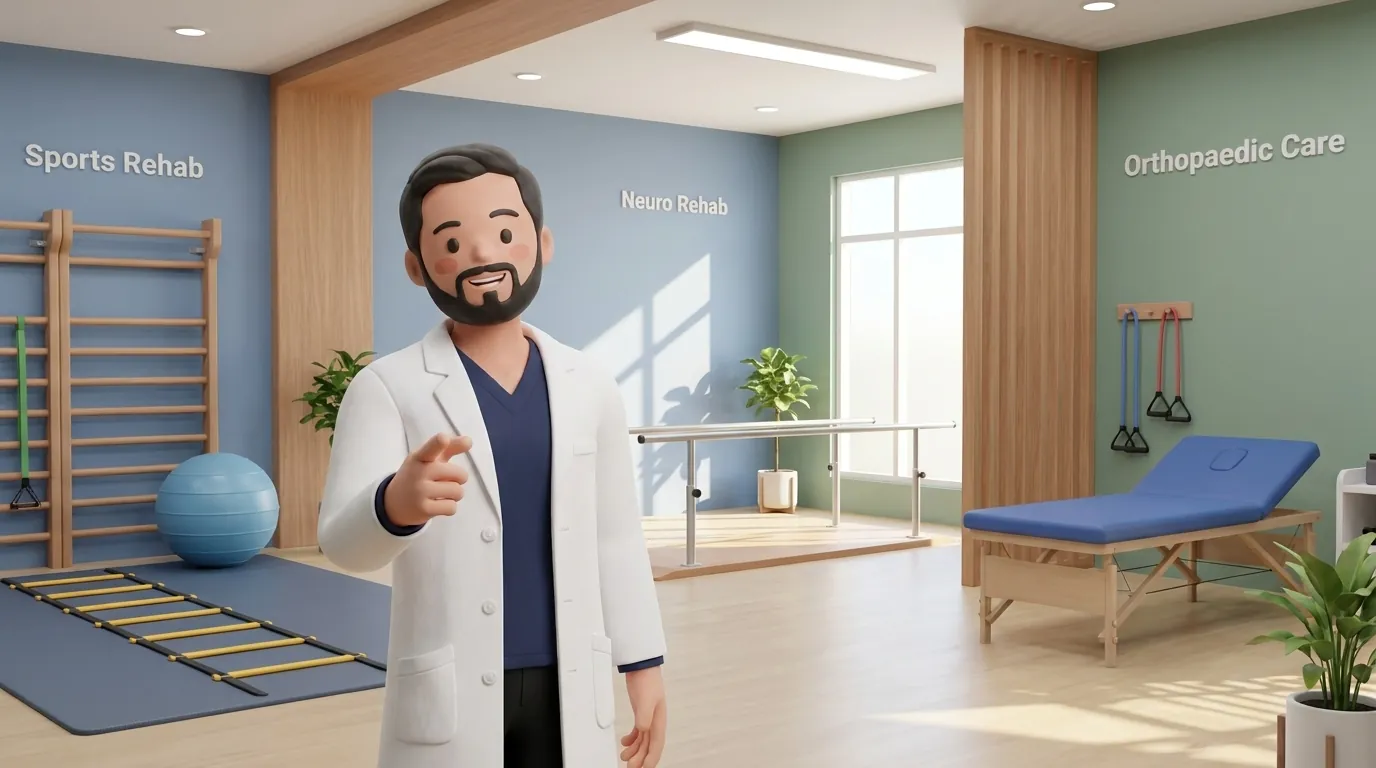
Modern physical rehabilitation is divided into distinct postgraduate disciplines (Master of Physiotherapy - MPT). Just as you would not consult a dermatologist for cardiac rehabilitation, physical therapy requires matching your specific medical diagnosis with a clinician who possesses advanced training in that domain:
- Neurological Physiotherapy (MPT Neuro): Focuses on central and peripheral nervous system disorders including stroke hemiparesis, Parkinson's disease, spinal cord injury, and Bell's palsy. Treatment emphasizes neuro-facilitation, motor relearning, and balance retraining rather than standard fitness exercises.
- Orthopaedic & Spine Physiotherapy (MPT Ortho): Specialises in spinal disc herniation, sciatica, cervical spondylosis, osteoarthritis, and postural syndromes. Treatment focuses on manual joint mobilisations, spinal stabilization, and progressive load management.
- Sports Physiotherapy (MPT Sports): Tailored for active individuals and athletes recovering from ligament reconstructions (such as ACL and meniscus surgery), rotator cuff tears, and muscle strains. Emphasizes biomechanical analysis, force production, and validated return-to-sport testing.
- Paediatric Physiotherapy (MPT Paediatrics): Dedicated to infants and children with developmental delays, cerebral palsy, and congenital torticollis, utilizing developmental facilitation and family-centred therapeutic play.
- Cardiopulmonary Physiotherapy (MPT Cardio-Pulmonary): Focuses on post-coronary bypass (CABG) recovery, COPD, bronchiectasis, and ICU step-down rehabilitation through airway clearance and structured exercise reconditioning.
- Women's Health & Pelvic Floor Physiotherapy: Provides specialized management for pregnancy-related pelvic girdle pain, postnatal diastasis recti, and pelvic floor dysfunction.
The limitations of proximity and casual word-of-mouth
Selecting a clinic purely because it is 500 metres from your home carries hidden clinical risks:
- The passive machine trap: Many generic neighbourhood centres rely primarily on passive electrical modalities (such as ultrasound, shortwave diathermy, or IFT). While these offer temporary comfort, clinical guidelines confirm that active therapeutic exercise and manual techniques produce lasting tissue healing and functional recovery.
- Mismatched clinical skill sets: A clinician with superb skills in managing office ergonomics and posture may have little experience handling complex spasticity or gait ataxia in a stroke patient.
- Unverified credentials: Casual recommendations rarely verify whether a practitioner holds statutory registration with a State Physiotherapy Council or NCAHP. In India, unaccredited short courses and gym certifications are sometimes misrepresented as physical therapy qualifications.
| Rehabilitation Factor | Proximity / Casual Recommendation | Specialty-Matched via BookPhysio.in |
|---|---|---|
| Selection Basis | Geographic convenience or casual neighbour advice | Matched precisely to your medical condition and clinical discipline |
| Credential Verification | Often unverified self-declarations | Verified against State Council or central NCAHP statutory registers |
| Assessment Depth | Brief 10-minute visual inspection followed by heat pack | Structured 45-to-60-minute physical evaluation and SOAP documentation |
| Rehabilitation Focus | Excessive reliance on passive electrical machines | Evidence-based active exercise, manual therapy, and movement re-education |
| Visit Mode Flexibility | Forced travel to clinic regardless of acute pain or mobility limitations | Clear choice between equipped clinics or comfortable home visits |
How BookPhysio.in connects patients with verified specialists
BookPhysio.in organizes physiotherapy care around clinical conditions and recognized specialties rather than commercial advertising. Patients can search for specific conditions like Sciatica, Bell's Palsy, Stroke, or ACL Rehabilitation and connect directly with verified practitioners.
1. Is the physiotherapist registered with a statutory State Council or NCAHP? 2. What is their postgraduate training (MPT) in relation to your diagnosed condition? 3. Does their treatment plan emphasize active movement and functional recovery over passive machines alone?
Browse verified physiotherapists by specialty and condition across India. Read transparent practitioner qualifications, compare clinic and home visit options, and book directly with zero platform markup.
Browse Clinical Specialties & ConditionsFrequently asked questions
Is an MPT physiotherapist always required for every condition?
A Bachelor of Physiotherapy (BPT) provides thorough clinical education for general musculoskeletal and rehabilitation care. However, for specialized conditions such as stroke recovery, vestibular vertigo, or complex athletic injuries, a clinician with a Master of Physiotherapy (MPT) in that specific discipline offers deeper diagnostic and therapeutic expertise.
How do I decide between an in-clinic appointment and a home visit?
Home visits are optimal for patients with severe pain, acute post-surgical recovery, stroke, or elderly mobility limitations where urban travel is physically demanding. In-clinic sessions are recommended when late-stage rehabilitation requires clinical gym equipment such as cable pulleys, leg presses, or agility platforms.
Does BookPhysio.in charge patients an extra fee for specialist matching?
No. Patients pay zero platform fees on BookPhysio.in. You pay only the consultation fee set by your chosen physiotherapist directly at your appointment.
Evidence reviewed 17 October 2026. Clinical patient education guide. Consult a registered physiotherapist or medical doctor for personalized diagnosis and care.
Related condition guides




Related recovery guides & articles
BookPhysio.in Editorial Team
The BookPhysio.in editorial team writes and maintains this content, checking it against reliable clinical sources. Content follows our medical review policy: general information only, and no page claims a clinical review until a named registered physiotherapist has signed it off.
Read our medical review policy